The Crake Scar and West Pitts Royalty was owned by the Bishop of Durham and leased to the Duke of Cleveland. Pits were worked on a limited scale prior to the 1870s. The map below is dated 1851 (by William Oliver, Mining Engineer and printed by M. &. M.W. Lambert, lithographers) shows scattered colliery workings north west of Cockfield at Woodland, Crags Carr and Lawton. Cow Close, Copley Bent and Lands are located to the west of Cockfield and north of the River Gaunless. Marked in pencil are Crake Scar Colliery and Marsfield Drift.
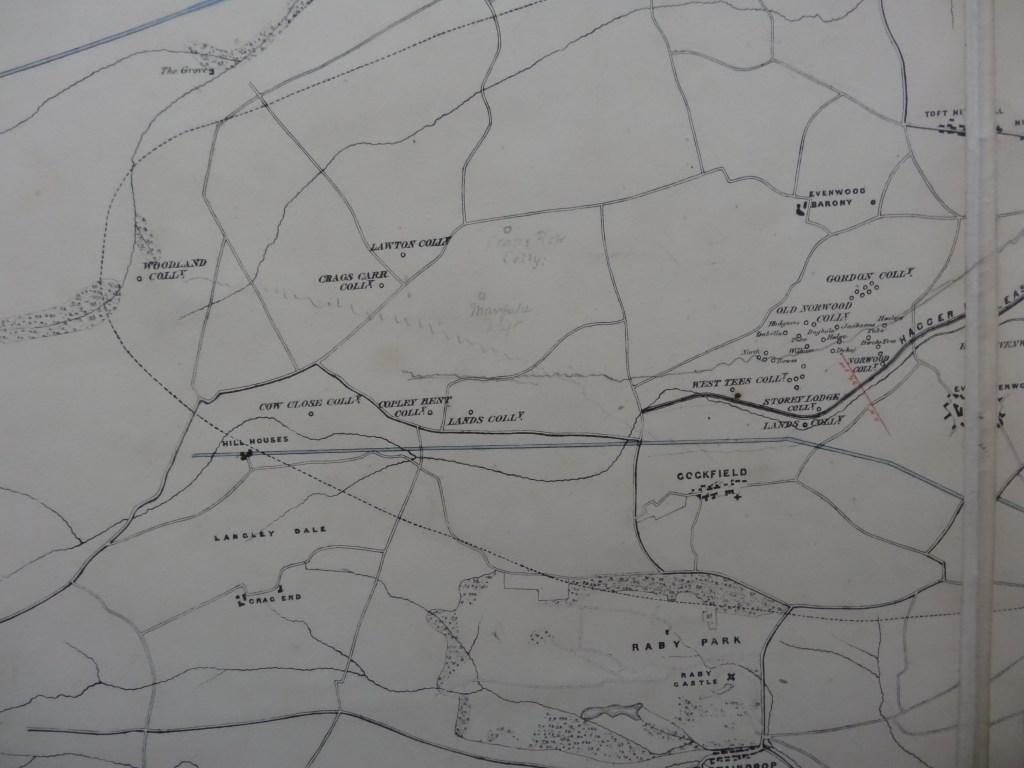
Above: 1851 Oliver’s Map
In 1852, Bell published the, “Plan of the Auckland Coals District, in the County of Durham, being the fifth of a series of plans of the Great Northern Coal Field” which shows a similar situation. The first OS sheet surveyed in 1857 and published in 1859 shows small scale workings but there is no evidence of the Woodland Colliery which should be somewhere near Rowley Lodge. The Crag Scar Colliery could have been the 2 shafts north of Crake Scar Lane and the Lawton Colliery could have been the Crake Scar Colliery (located just east of Crake Scar Farm). There are other workings – another colliery named Crake Scar at the western end of Crake Scar Lane near West Pitts (Edge House P.H.) and there are 9 air shafts to the south of the Lane in the vicinity of Lunton Hill which may indicate that the workings headed southwards. The OS map identifies more small scale workings heading westwards – shafts north and south of the road near the Black Horse P.H., Woodland Fell Colliery and a shaft north of Foul Syke House and 2 shafts near Cust Barn. To the south, there is an old shaft to the east of Cowley.
In 1872, shafts were sunk at Crake Scar, to the north of the earlier colliery sites. In 1881, the Woodlands Pit was sunk to the Brockwell seam. This colliery was to the north of Tile Shed House, north of the village. In 1893, the Pioneer Shaft at Crake Scar Colliery reached the Brockwell. In 1896, the Cowley shaft was sunk to the Brockwell.
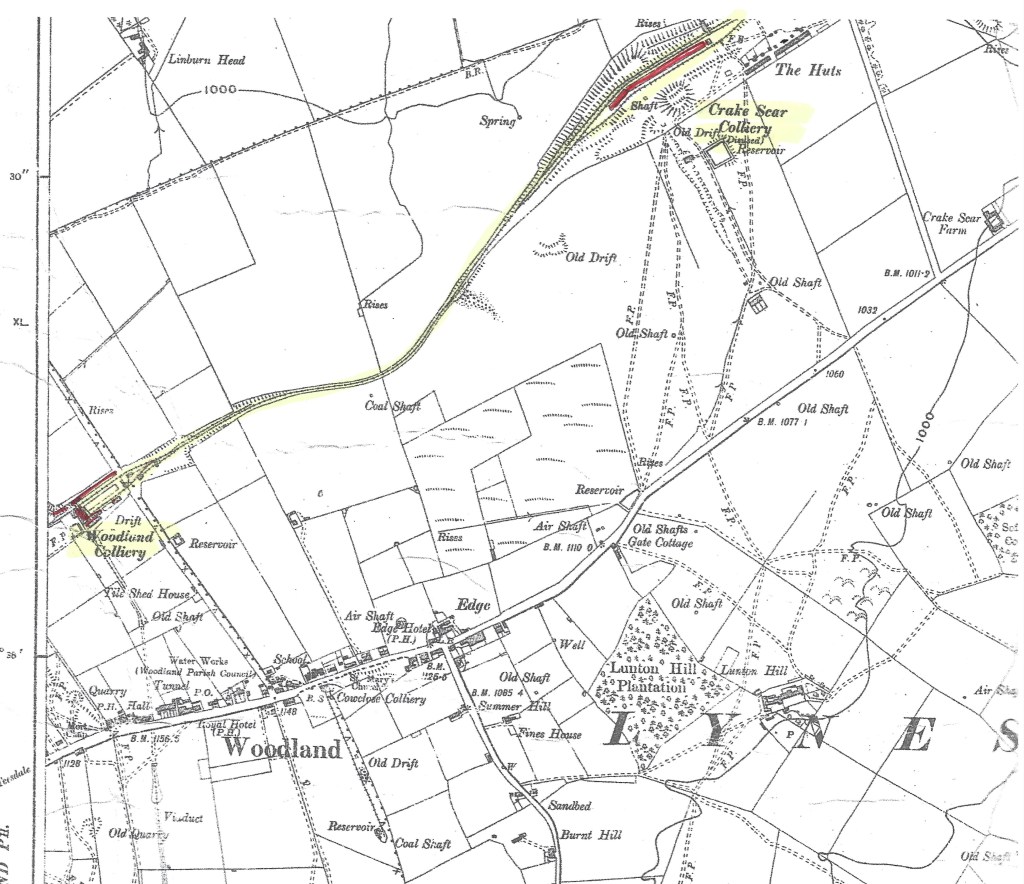
Above: Plan to show Crake Scar and Woodland Collieries
In 1873, the Woodland Branch railway was opened. It left the Bishop Auckland to Barnard Castle line, just east of Gaunless Viaduct. It ran for about 4½ miles and served the Woodland Collieries Company Limited pits and coke ovens at Morley, Crane Row, Crake Scar and Woodland. Woodland Colliery operated 76 coke ovens and Crake Scar Colliery, 103. A tramway ran southwards down the valley to link drift mines at Arn Gill and Cowley to Woodland Colliery. Another tramway went westwards to serve drift mines at Woolly Hills. Until 1911, the branch line was operated by the North Eastern Railway Company.
The Cargo Fleet Iron Co. Ltd (1883-1944) took over the Woodland Collieries Co. Ltd in about 1914, the coke being an essential requirement for the iron and steel industry on Teesside. The line closed about 1921 but it appears that various drift mines worked on through the 1920s into the 1930s.
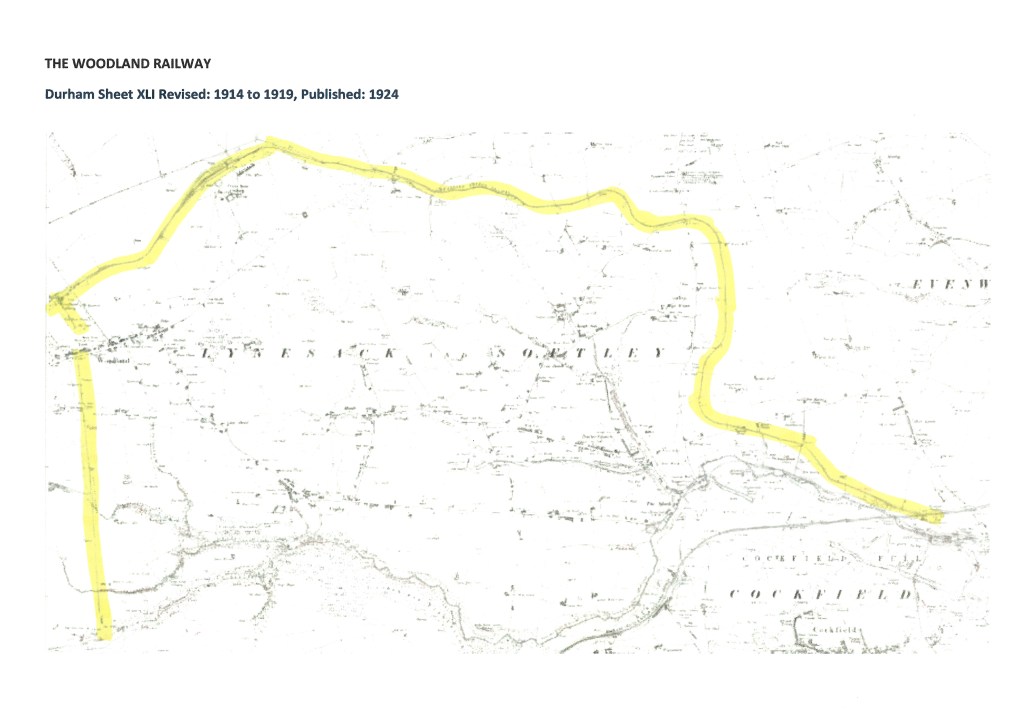
Above: About 1919: A plan to show the route of the Woodland Colliery Railway and the Tramway to Arngill and Cowley Collieries to the south.
For more details on the Woodland Railway (1873-1921) click on the following link:
In August 1913, the following personnel are shown on a photograph as officials of Woodland and Crake Scar Collieries:
- Chas. Johnson Bankmanager
- Ed Pattinson Cokeburner & Heapkeeper
- John Waller Engineer
- J.J. C. Allison Agent & Manager
- Owen Hardy Head Clerk
- John Wallace Under manager
- Luke Timmins Storekeeper & Weighman
- Hutton Hall Undermanager
- John Walton Overman & Master Borer
- J.W. Campbell Surveyor
- Jas Hardy Coke burner & Heapkeeper
- R.T. Waller Assistant Engineer
- W. Wilson Back Overman
- Johnson Back Overman
- J. Paterick Weighman
- Rbt. Shaw Overman
- Alf Beadle Clerk
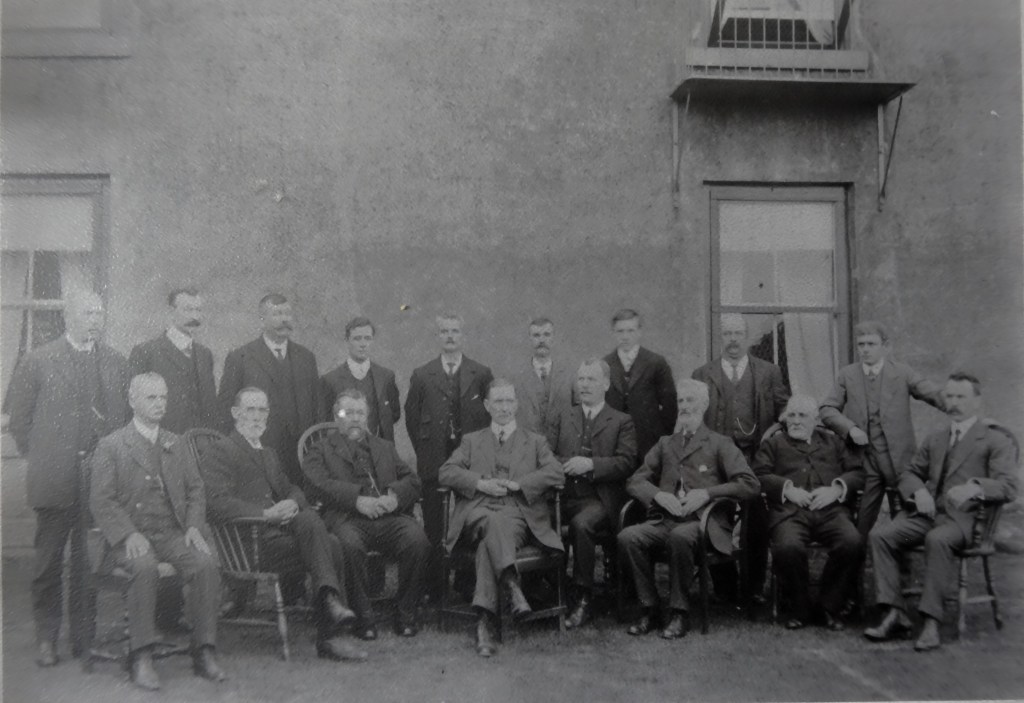
Ed Pattinson (seated 2nd left) had 40 years’ service therefore the Woodland and Crake Scar Collieries must have been established in the area prior to 1873.
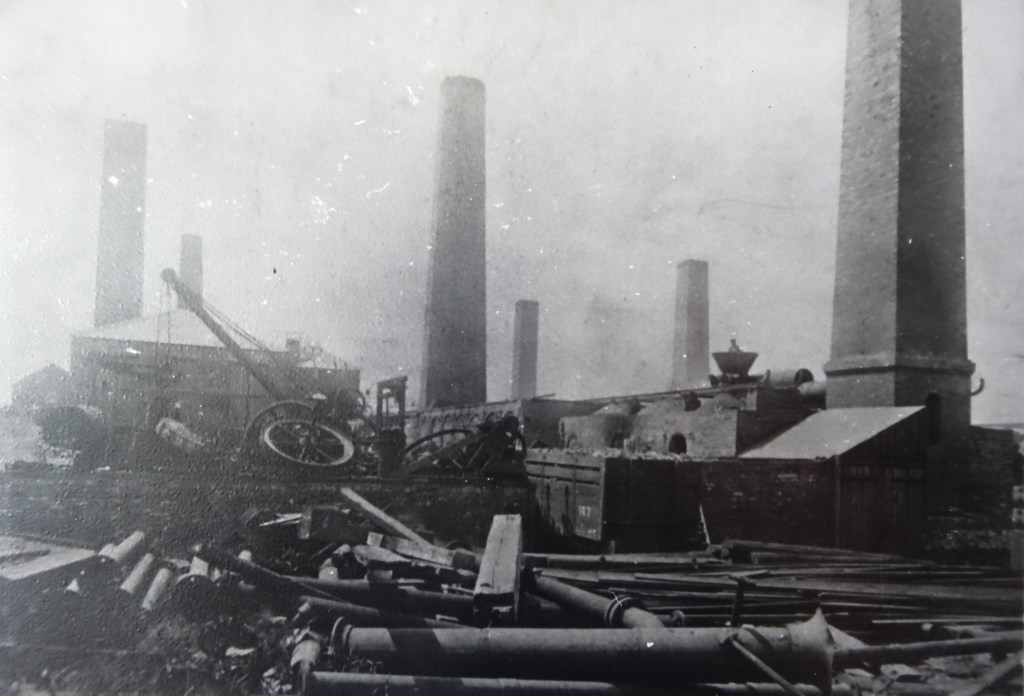
Below: Believed to be Woodland Back Pit (north of Woodland, near Tile Shed Farm).
The photo shows 6 chimneys which appear to serve coke ovens.
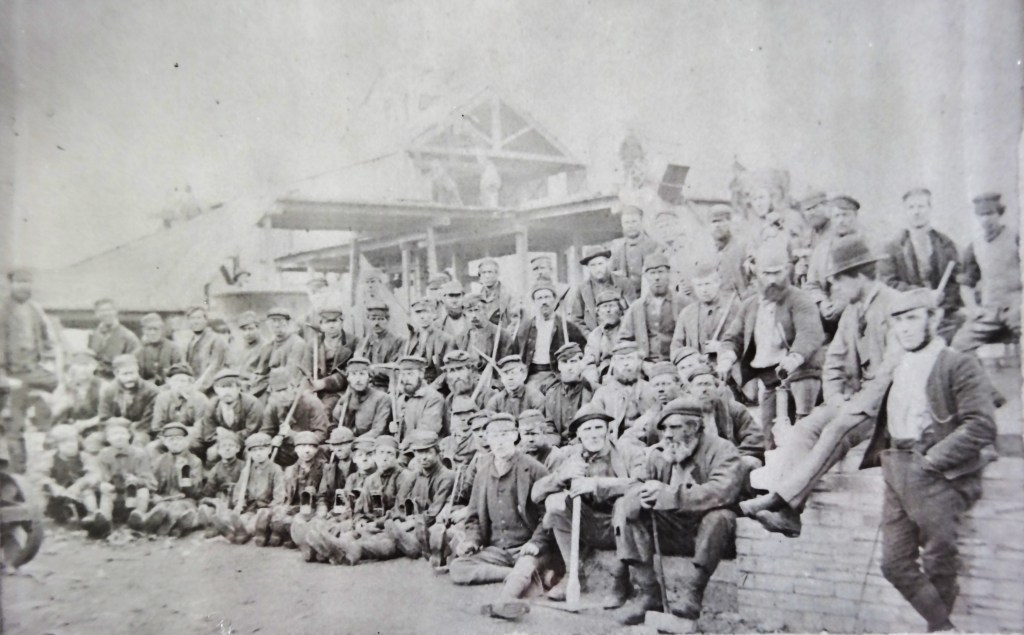
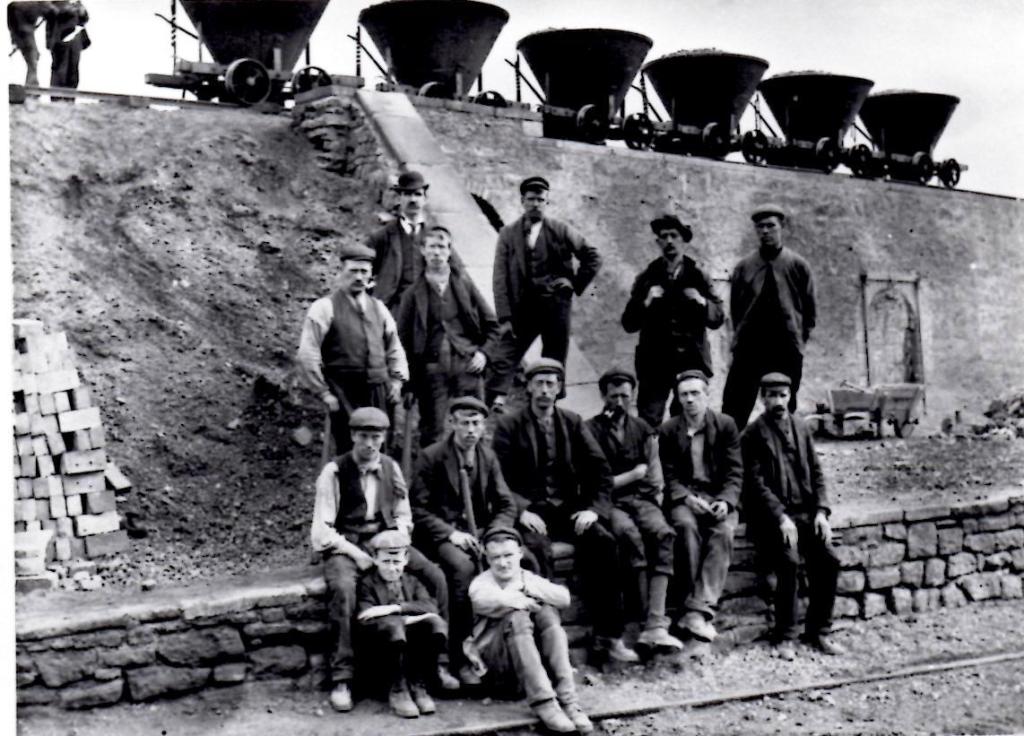
Below: Woodland Colliery
The buildings in the background look as though they are under construction. The older men are holding picks, the boys sitting at the front are holding “midgey lamps” for working underground. The chap to the right hand side of the photo sitting on the brickwork, wearing the hat, looks management.
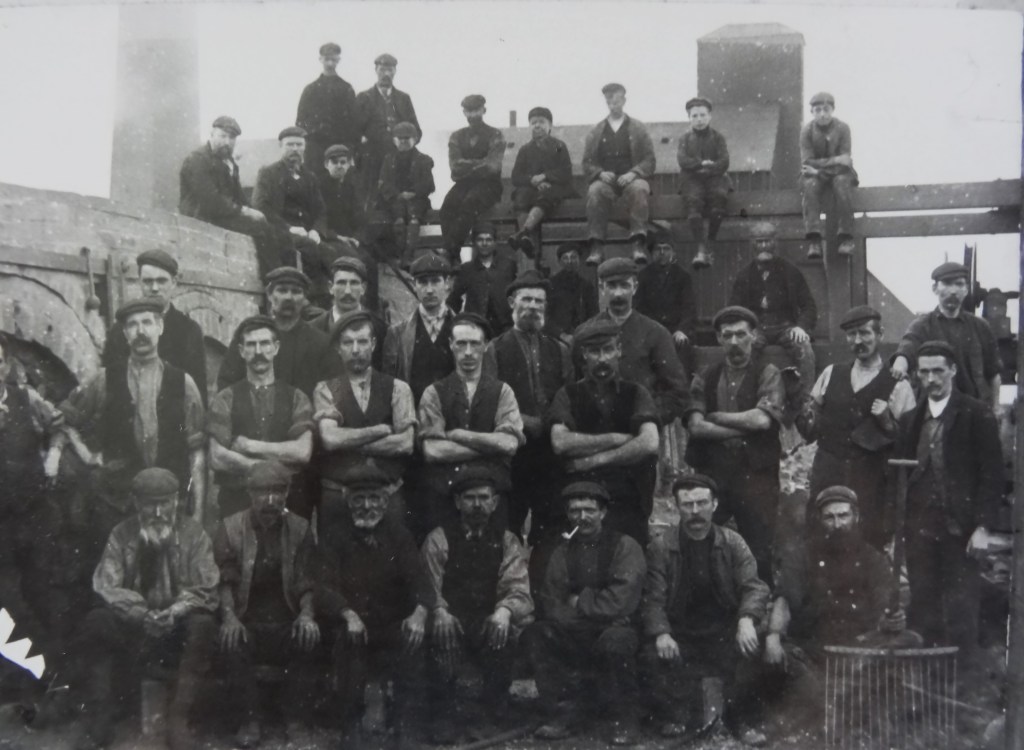
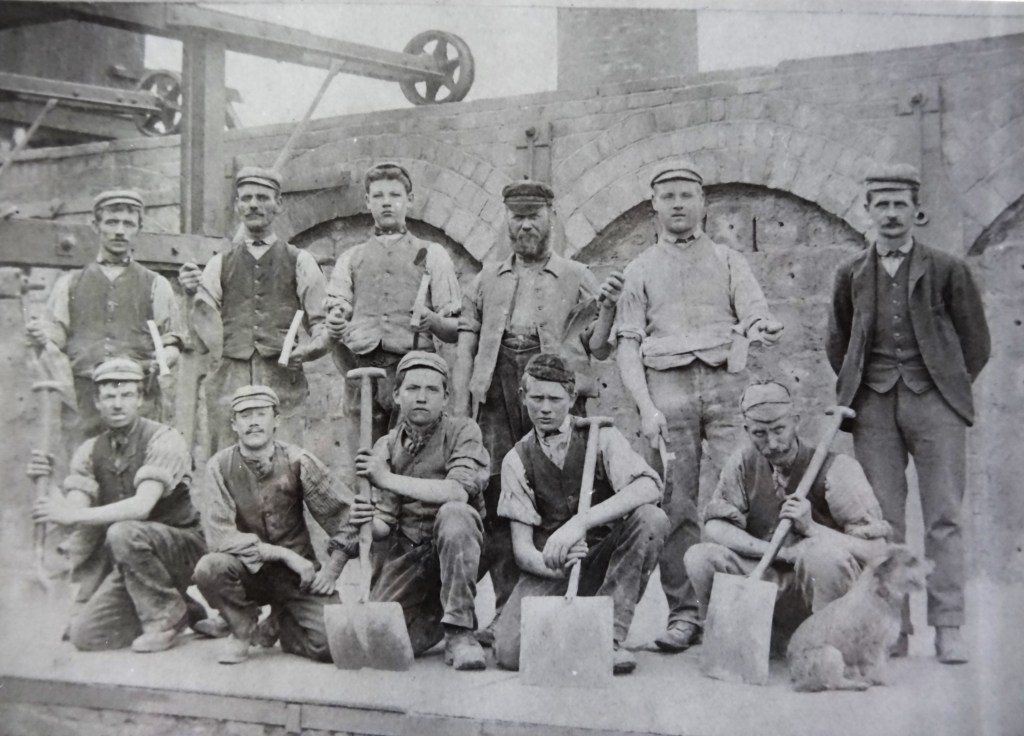
Below: The next 3 photos show Woodland Coke Ovens and coke men.
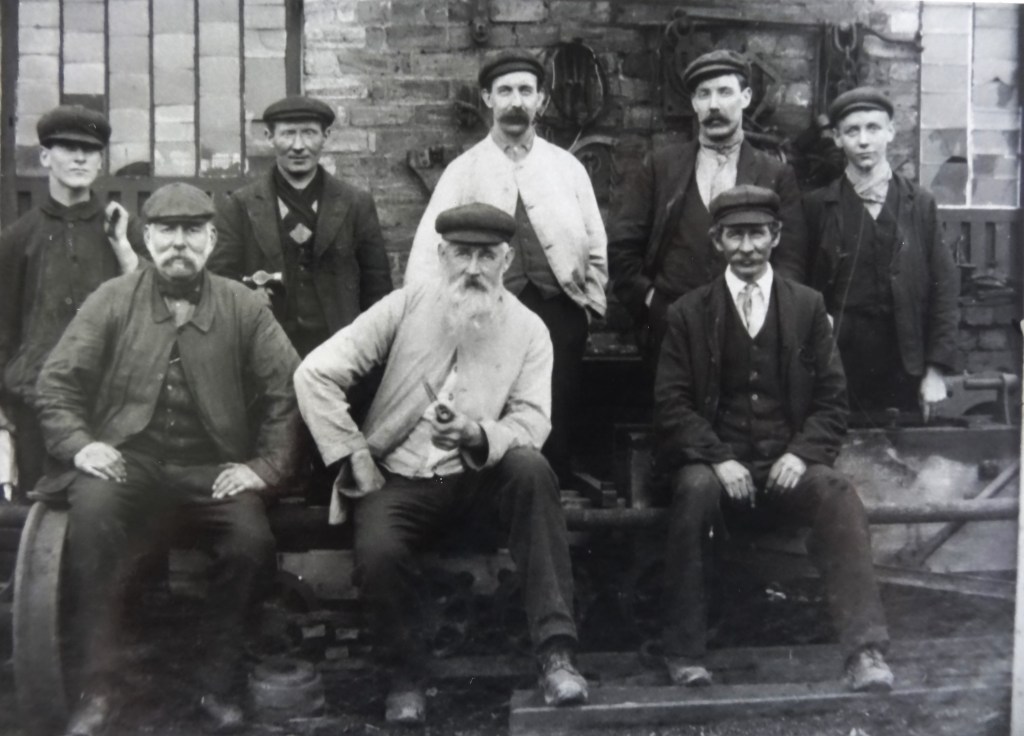
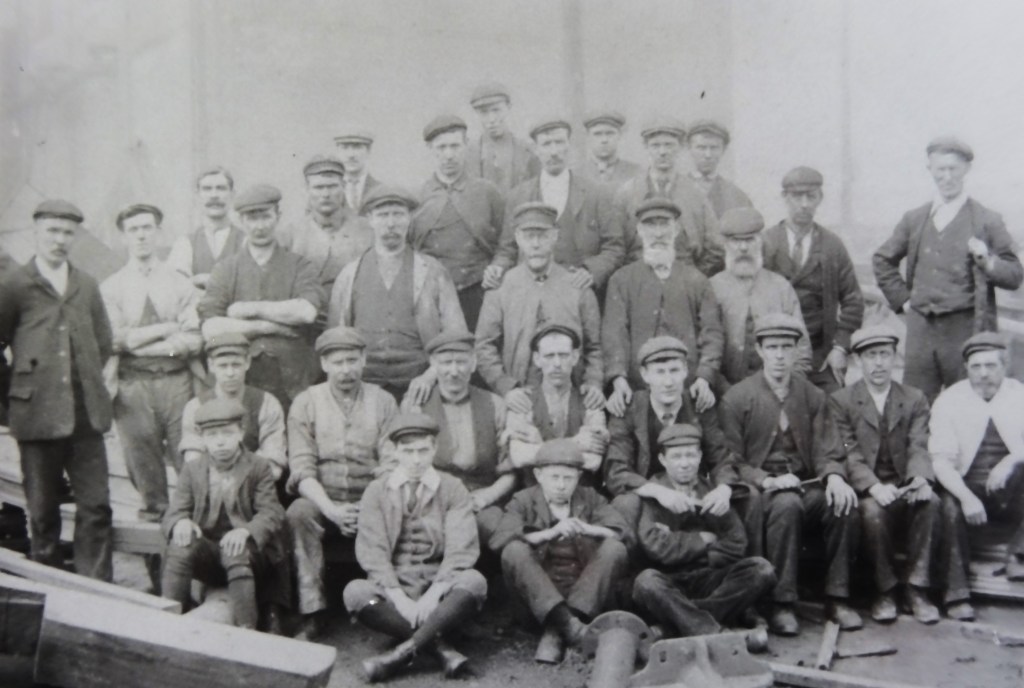
Below: The next 4 photos show Woodland tradesmen, mechanics and blacksmiths
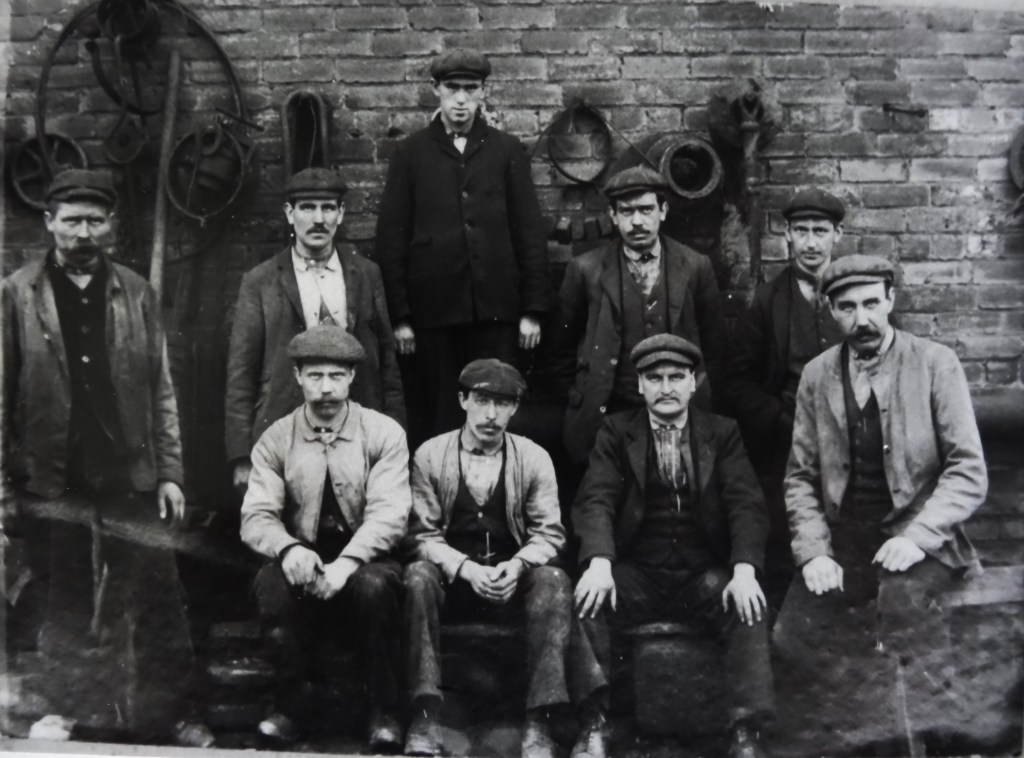
Above: Believed to be, left standing Tommy Wade; seated Joe Lowson (cartwright); “Tinner” Marr; Mark Lee (blacksmith) and Adolphus Gregory
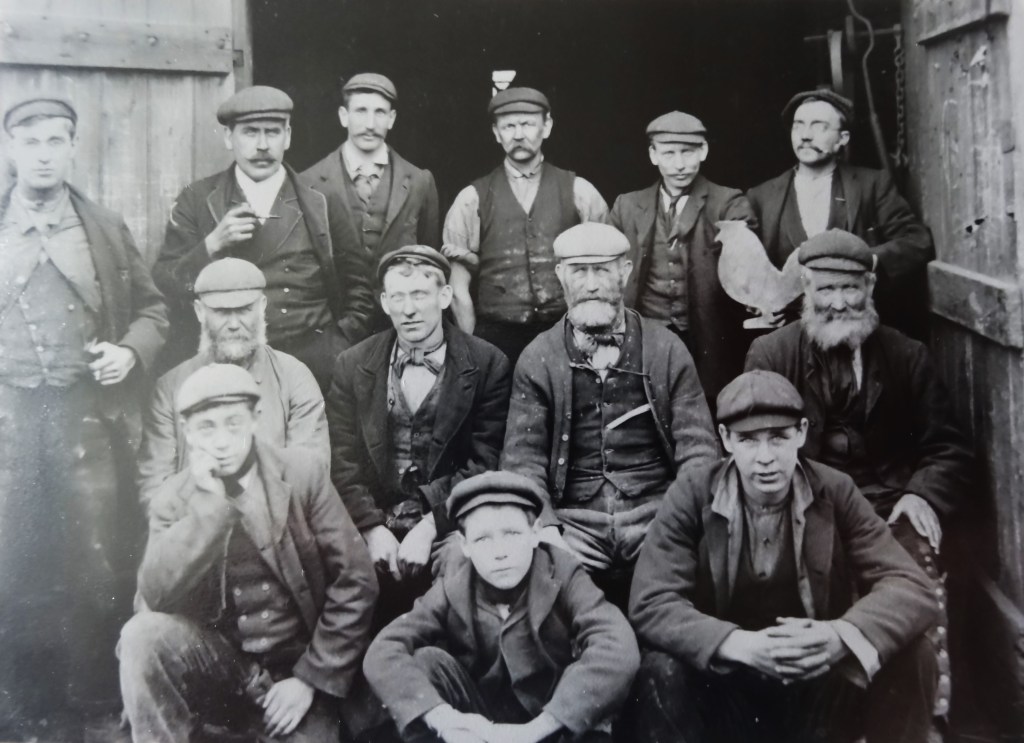
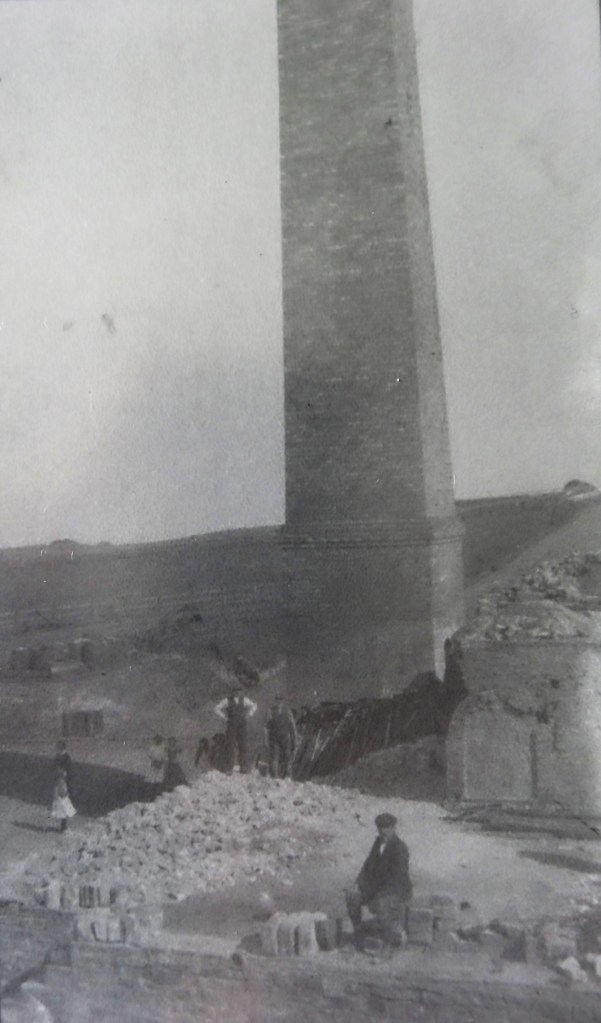
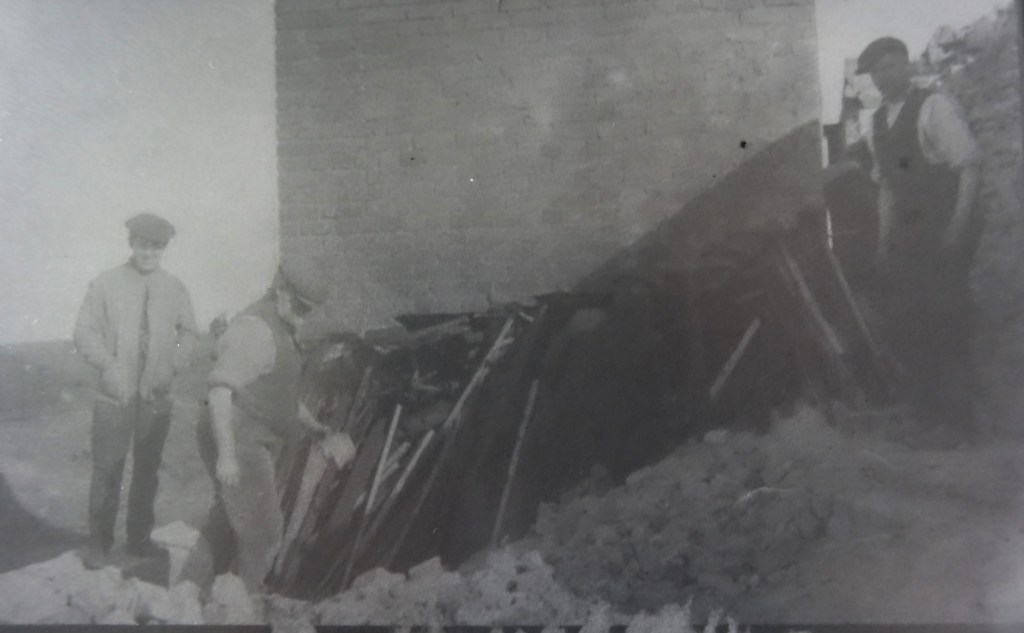
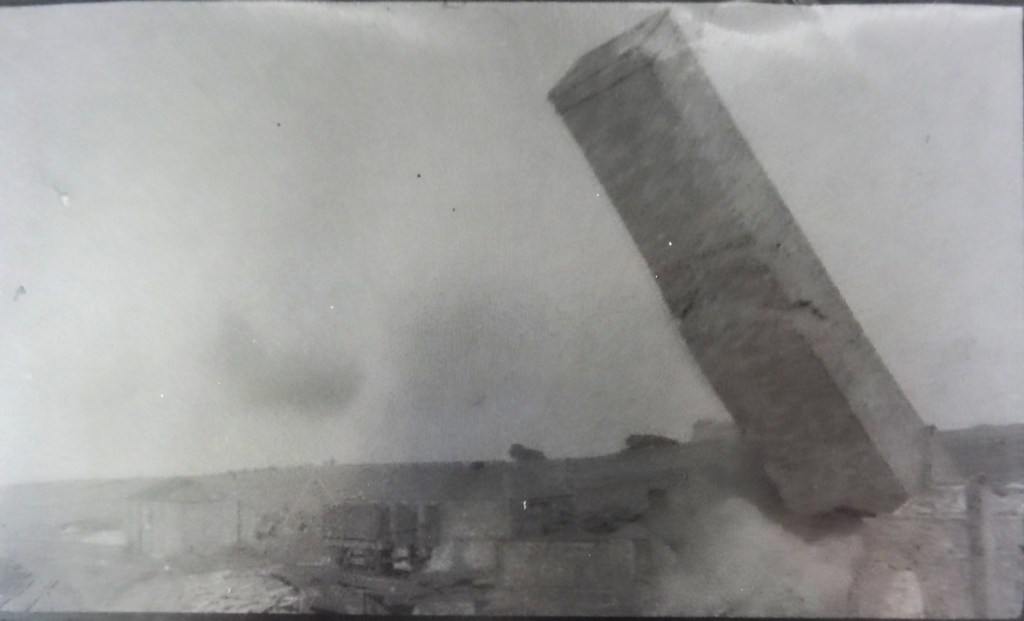
Below: The next 4 photographs show the demolition of a colliery or coke works chimney in June 1914.

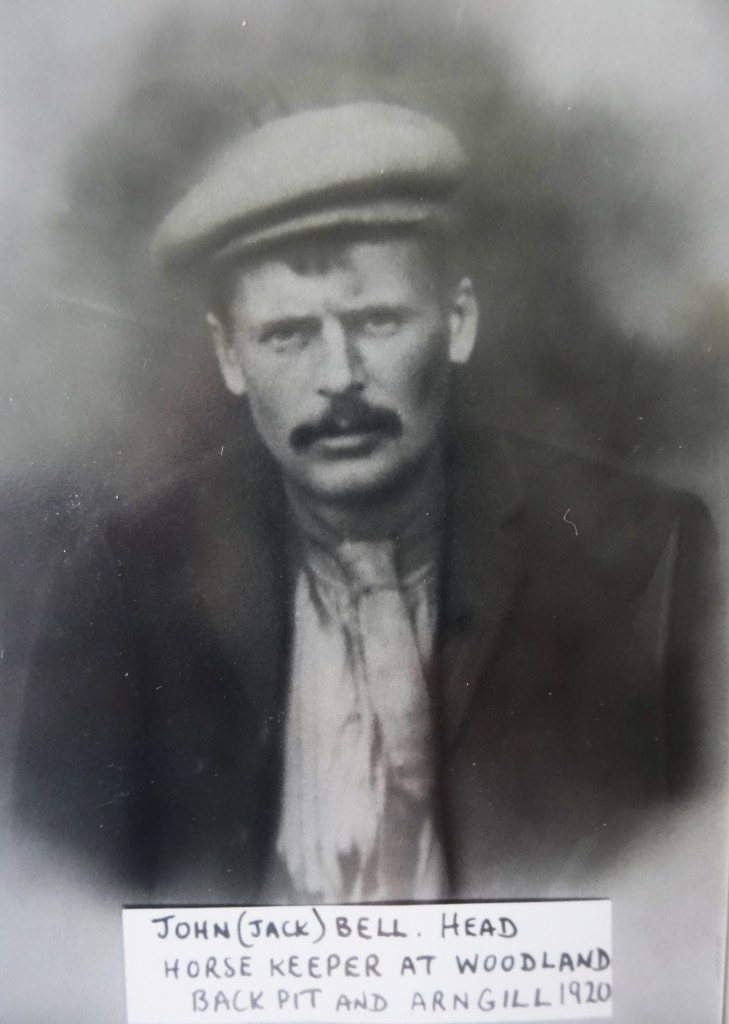
Below: 1920 John (Jack Bell) Head Horse keeper at Woodland Colliery & Arn Gill
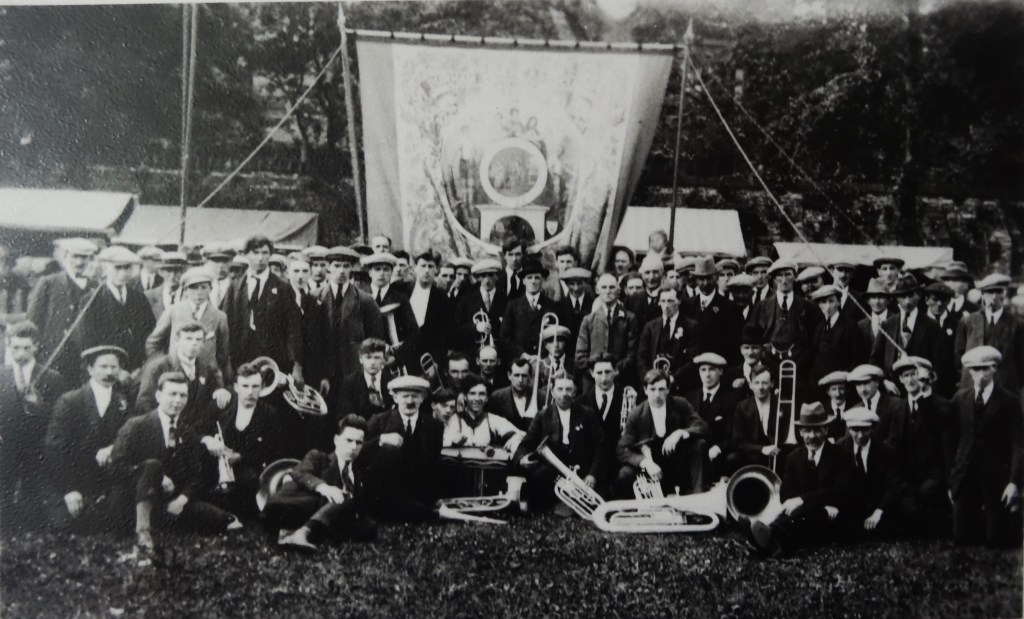
Below: Woodland Colliery DMA Banner and colliery band
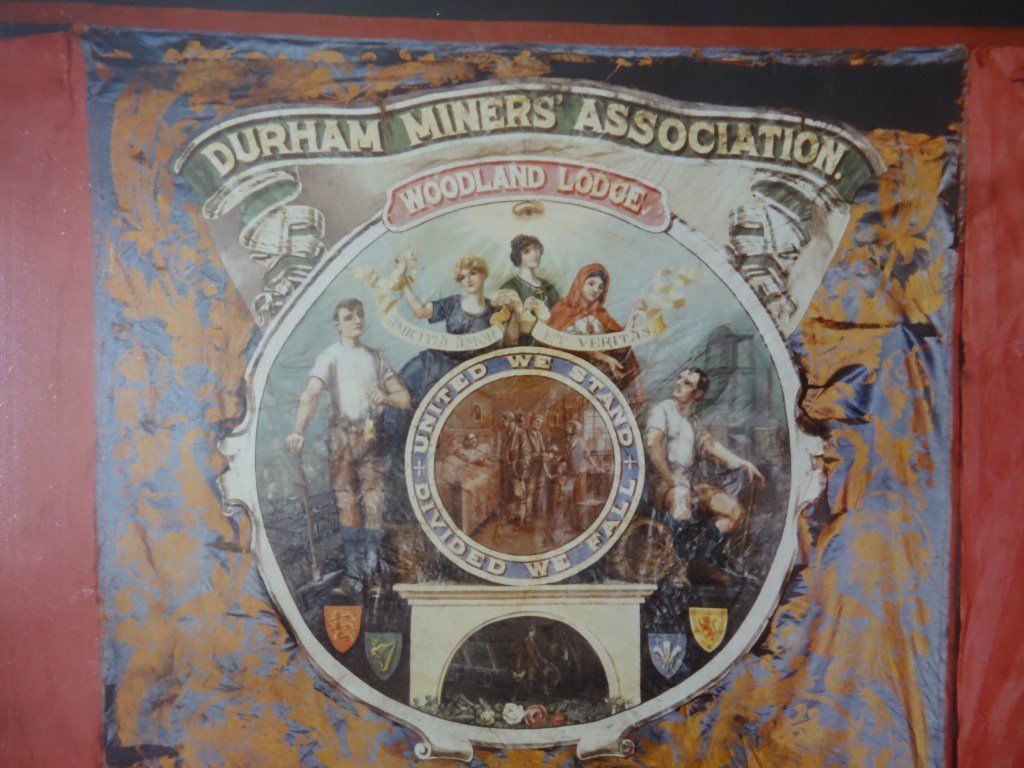
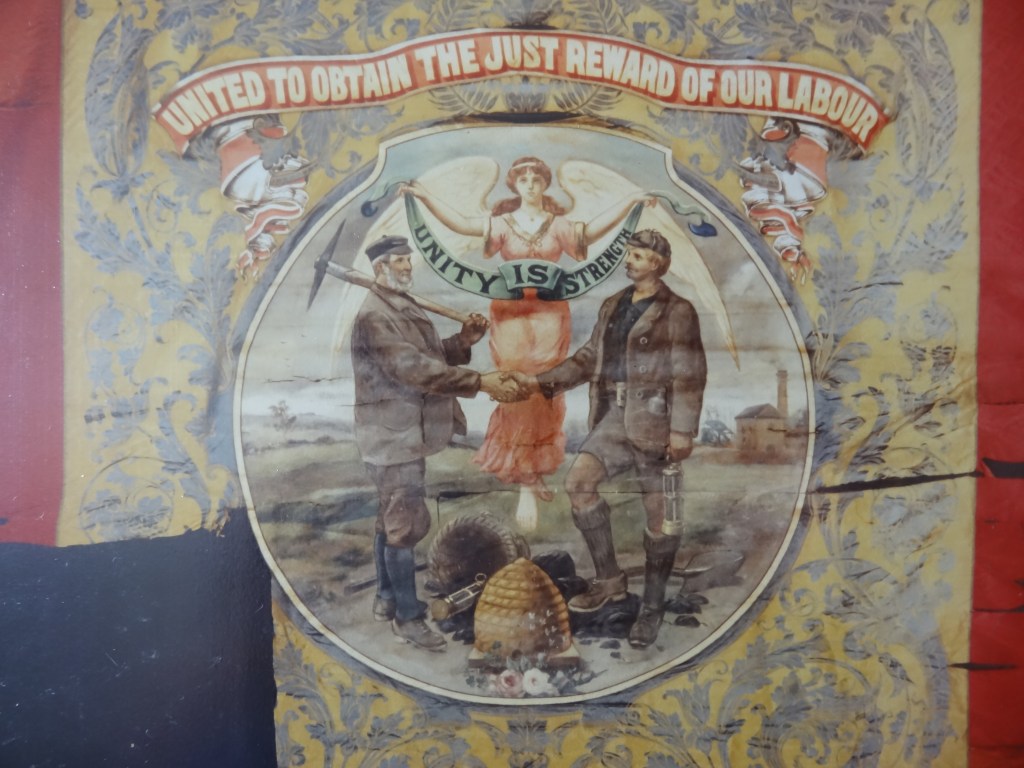
Below: Woodland DMA Banner
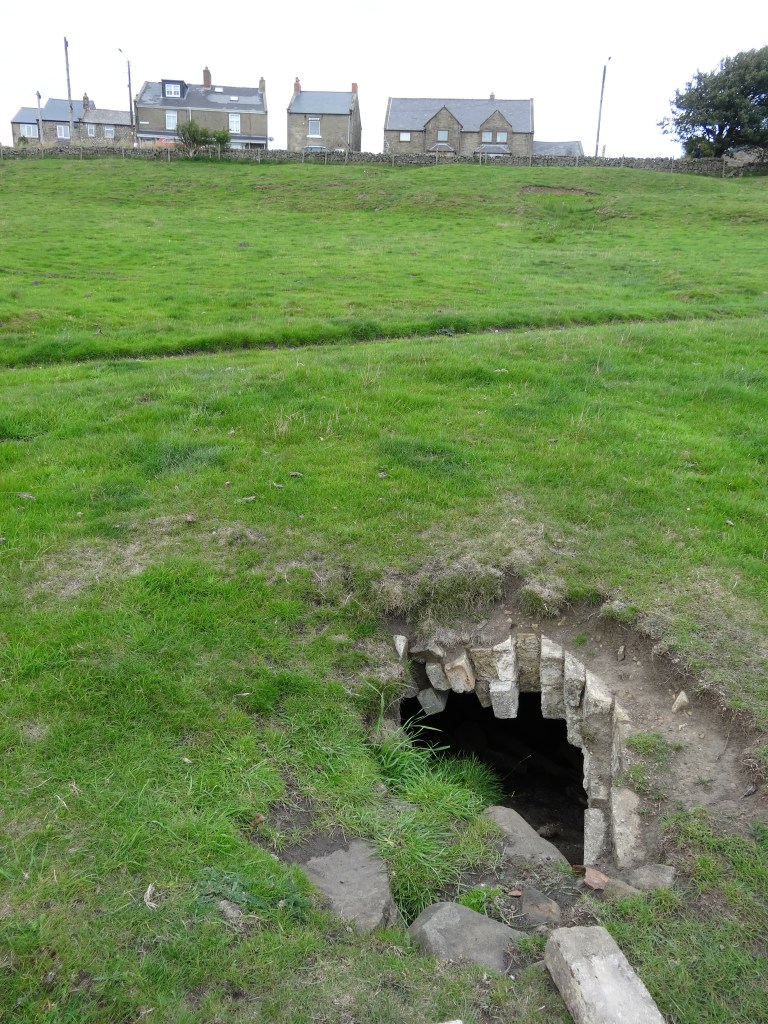
Below: Evidence of the Woodland Tramway which went southwards to Cowley and Arn Gill drift mines. This tunnel went under the main road and surfaced south west of Tile Shed House before entering Woodland Colliery (Back Pit).
 EVENWOOD RAMSHAW & DISTRICT HISTORY SOCIETY