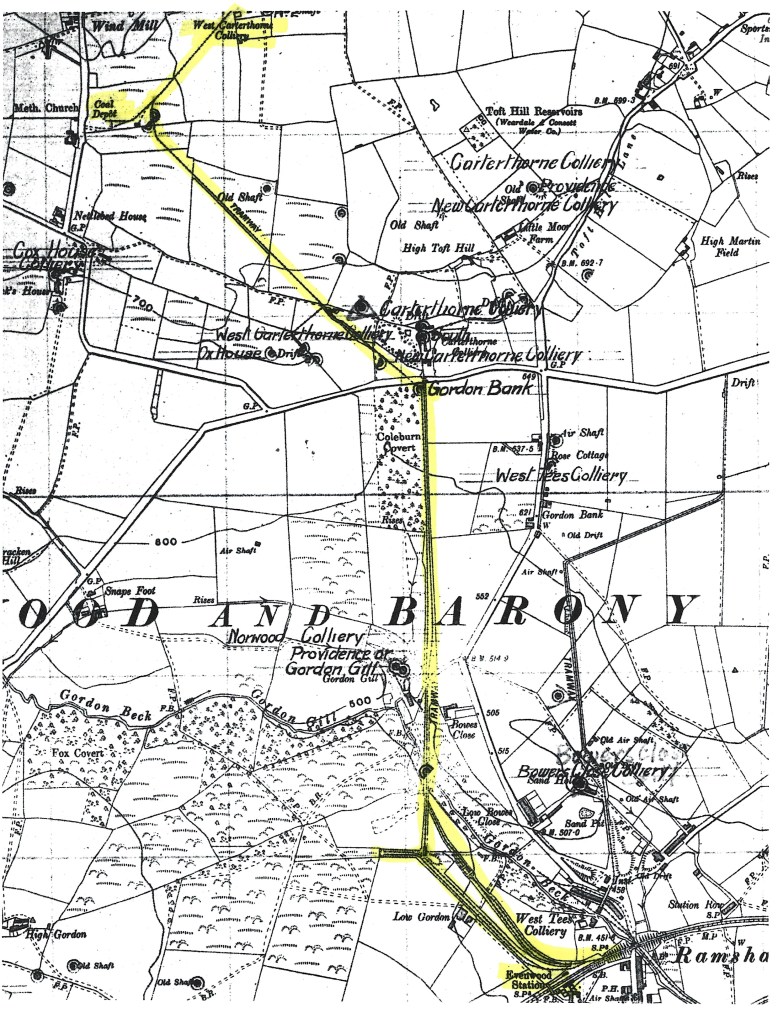
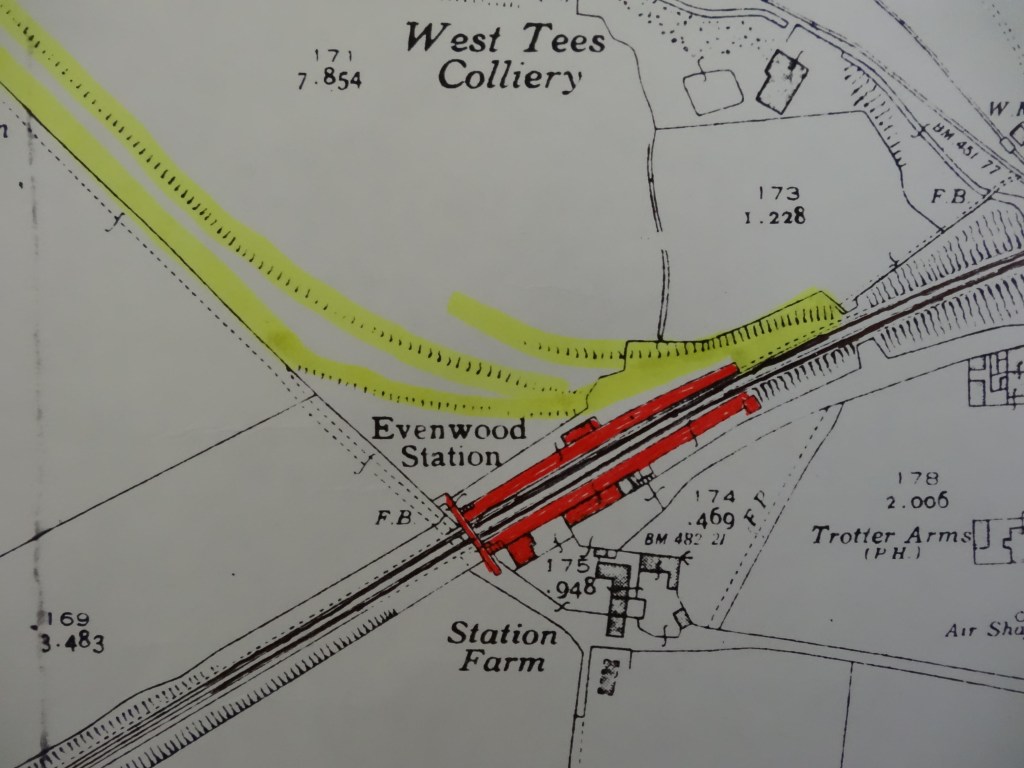
At the turn of the 19/20th century, there were 2 collieries located to the west of Toft Hill – Carterthorne Colliery and West Carterthorne Colliery. They were linked into the NER Bishop Auckland and Barnard Castle line near Evenwood Station by separate tramways which climbed up the valley side to serve the collieries. The area around Toft Hill Hall, Wind Mill and Cock’s House had been worked for coal for many years by small scale concerns but it seems that once Andrew Mein and George Bradford got involved then mining expanded to a more intensive, commercial level.
- Carterthorne Colliery was developed by Andrew Mein (1831-1905) and his son, Henry Johnson Mein (1854-1920).
- West Carterthorne Colliery was developed by George Bradford (1845-1918) and his son Thomas A. Bradford (1886-1966). George Bradford served his mining apprenticeship for the Earl of Durham’s Lambton Collieries. In 1873, he was awarded his Managers Certificate while working at Newbottle Colliery. In 1875, he moved to south west Durham when appointed by Henry Stobart Coal Co Ltd. as manager of its collieries at Witton Park and Escomb. He was promoted to Agent, responsible for the company’s collieries at Etherley George North & South, Etherley Jane, Lands, Morley Green, Newton Cap A & B, and Railey Fell. His mining interest looked elsewhere towards West Carterthorne – whether this was a “sideline” or an interest for the benefit of his sons is unknown. However, by 1900, George Bradford was manager at West Carterthorne Coal Company, a position he held until, at least 1910. In 1914, his son Thomas A. Bradford was recorded as proprietor of the West Carterthorne Colliery Co. By 1914, G.G. Robson was the manager at West Carterthorne. He had previously worked for the Consett Iron Co. Ltd. and the Butterknowle Colliery Co. Ltd. At this time, West Carterthorne Colliery employed 78 men, 62 underground and 16 above. With the international situation worsening, those in the Territorial Force, such as Thomas Bradford, concentrated their efforts on military affairs and his role with the West Carterthorne Coal Co. probably diminished and others such as G.G. Robson were engaged to look after their mining interests. By 1919, S.T. Brass was manager. After the First World War, West Carterthorne Colliery was still working. It closed in 1927 when the Five Quarter, Brockwell and the Main coal seam were abandoned.
Below: about 1924: A plan to show the tramways from West Carterthorne and Carterthorne Collieries to the junction with the NER Bishop Auckland to Barnard Castle Line, near Evenwood Station.
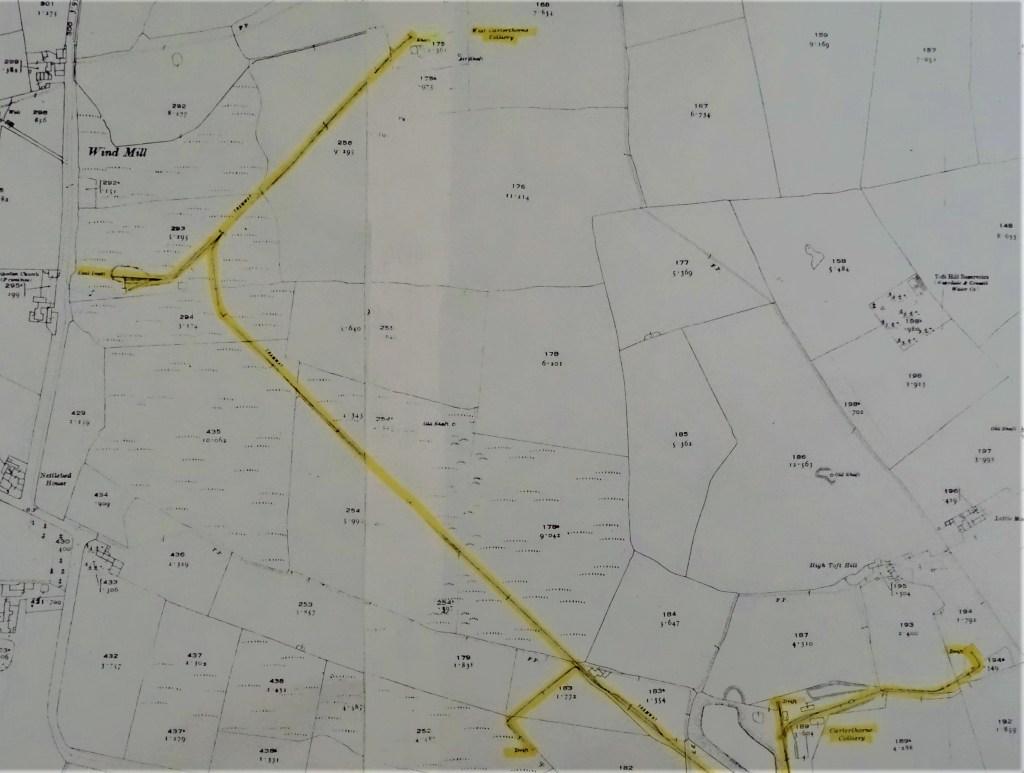
Below: 1921 (Revised 1915) West Carterthorne Colliery to the north of Carterthorne Colliery
The 2 tramways ran alongside each other south of Carterthorne Colliery. There was a junction to the immediate east of Evenwood Station.
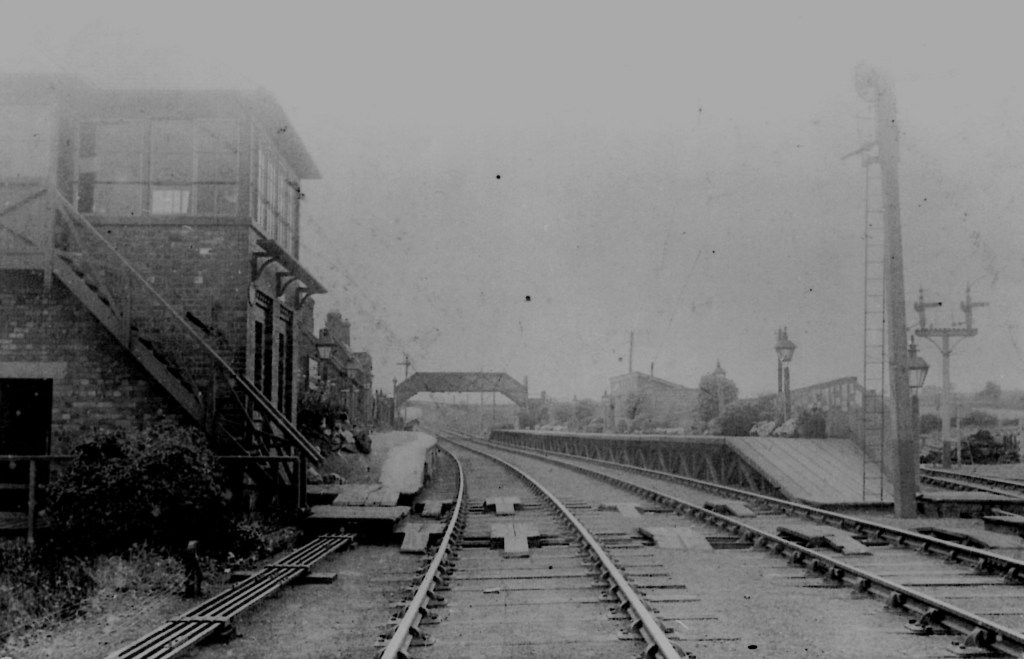
Below: about 1924, the tramway is located to the right on the photo behind the platform.
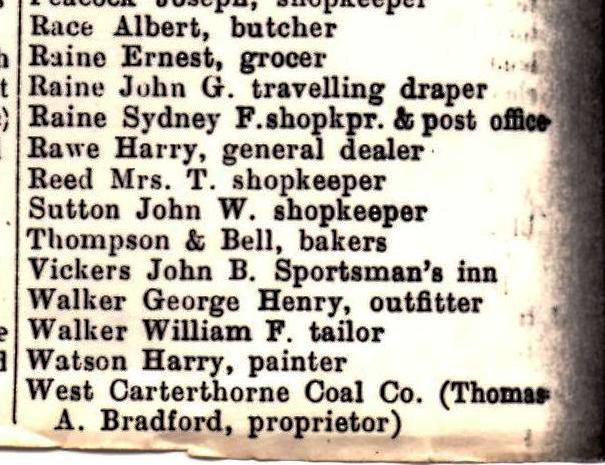
Below: 1914, Extract from Kelly’s Directory
By 1939, little was left of the extensive tramway and its junction near Evenwood Station.
SOME FAMILY NOTES
George Bradford 1845-1918
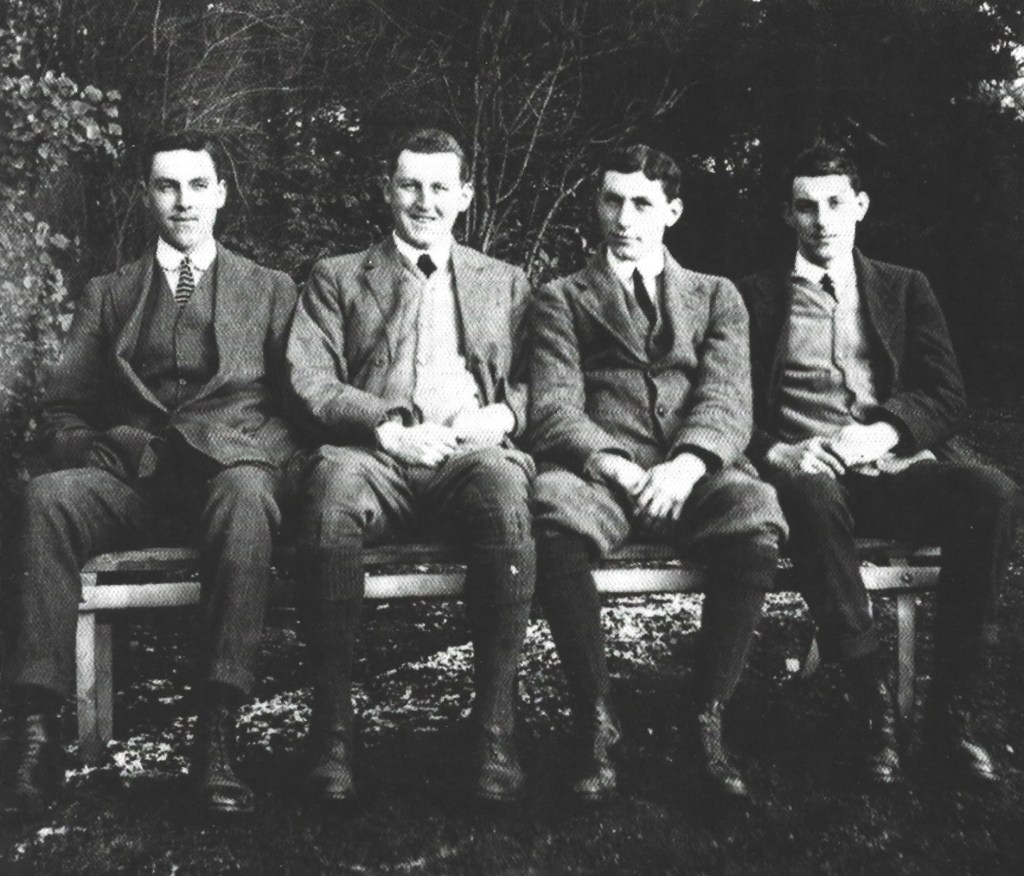
George Bradford was born at Chirnside, near Berwick-on-Tweed, the youngest of 3 brothers, born into an agricultural family. He was educated at Houghton-le-Spring Grammar School. In 1885, at the age of 40, George Bradford married 26 years old Amy Andrews (1859-1951). She came from Kent and they made their home at Carwood House, Witton Park. A son Thomas Andrews Bradford was born, March 1886, followed by 3 brothers, namely George Nicholson April 1887, James Barker December 1889 and Roland Boys February 1892. In 1894, the family moved to Morton Palms Farm, Darlington.
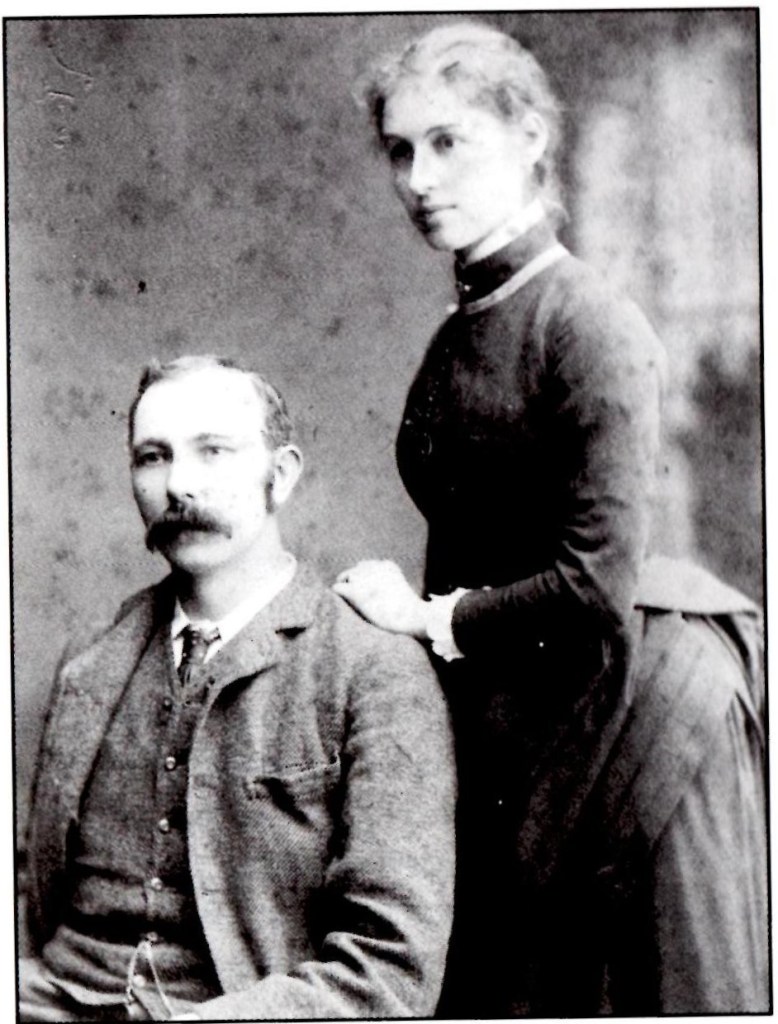
Above: 1885, George and Amy Bradford
Below: 1914 Roland, Thomas, George and James Bradford at Milbanke House, Darlington
Thomas Bradford 1886-1966
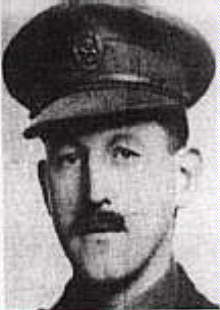
Thomas Bradford had joined the 4th Volunteer Battalion, the Durham Light Infantry (DLI) and received a commission as a Second Lieutenant in 1906, being promoted to First Lieutenant that year. Under the army reforms of 1908, the battalion became the 8th Battalion, DLI (Territorial Force). He was promoted to Captain in 1910 and commanded “D” Company. At the outbreak of war, Thomas being a captain with 8/DLI, was mobilised as part of the Durham Brigade, the Northumbrian Infantry Division (later 151 Brigade, 50th Northumbrian Division). The Division left for France 19 April 1915 and saw action at the Second Battle of Ypres and various positions on the Ypres Salient. By 1916, Thomas had already been awarded the Distinguished Service Order for service in the field and been Mentioned in Despatches on 2 separate occasions. Whilst on leave, in 1916, Thomas Bradford married Rebe Blackett. The 4 Bradford brothers found themselves in the most ferocious battles of World War One – Ypres, the Somme, Zeebrugge. They served with exceptional heroism in the DLI and the Royal Navy. Between them, they were awarded 2 Military Crosses and a DSO, and George and Roland were the only brothers in WW1 to receive the Victoria Cross. Within a year, three of them were dead. Only Thomas survived the war.
Below: Captain T.A. Bradford, 8/DLI
Thomas Bradford most likely kept his commercial interest in the West Carterthorne Colliery until its final closure. He held a directorship with Charlow and Sacriston Collieries. Thomas and Rebe lived at Aden Cottage, on the outskirts of Durham City. He unsuccessfully entered politics and stood as a Conservative, suffering defeats at the 1922 and 1923 elections. In 1939, he was knighted and in 1942, he served as High Sheriff for County Durham. Thomas held many other civil and military positions in the county. He died, aged 80 in 1966.
Acknowledgements & References
“The Fighting Bradfords, Northern Heroes of World War One.” 2003 Harry Moses
Durham Mining Museum website
 EVENWOOD RAMSHAW & DISTRICT HISTORY SOCIETY