In times past, the hamlets of Wackerfield and nearby Hilton were included in the Parish of Staindrop. The registers of the parish church of Staindrop, St. Mary’s, recorded baptisms, marriages and burials.
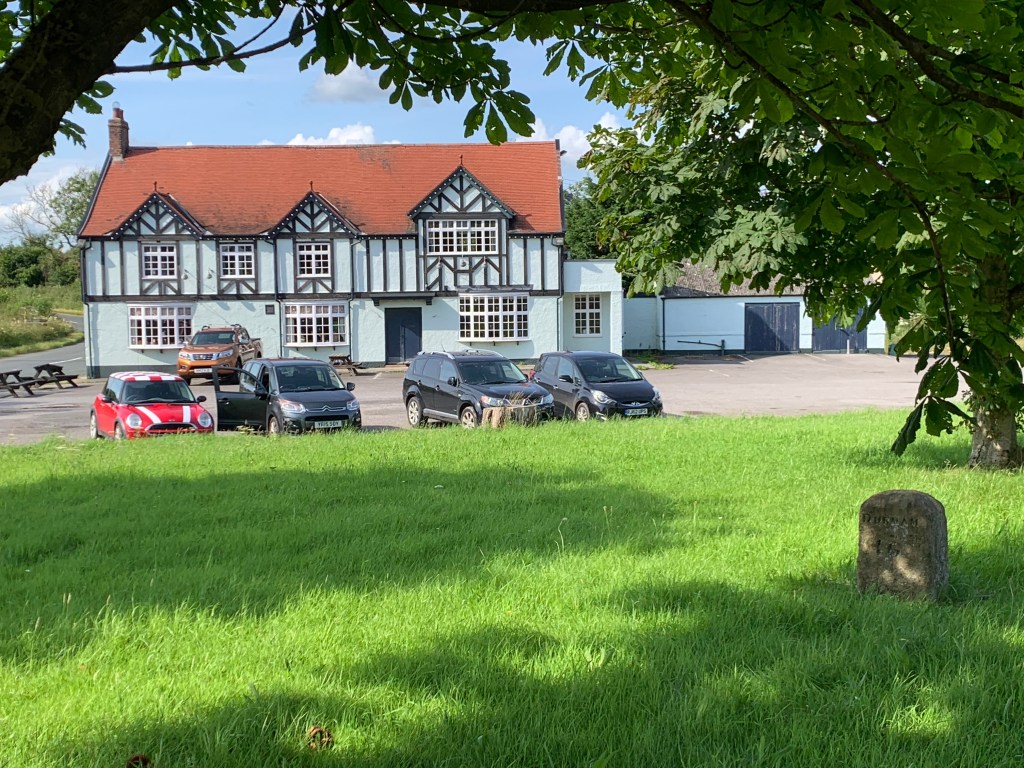
The settlement of Wackerfield, the former public houses, the Black Horse Inn and the Sun Inn all lie near to the Bishop Auckland to Barnard Castle road. From 1748, this road formed part of the toll road which went from Sunderland Bridge to Bowes and linked the Great North Road with the east to west route over the Pennines. Sunderland Bridge is near Croxdale between Spennymoor and Durham. A remnant of the toll road still exists at the Sun Inn – the milestone. It records that Durham is 16 miles and Bowes 18 miles distant.
Below: 2024, the milestone with the former Sun Inn pub in the background
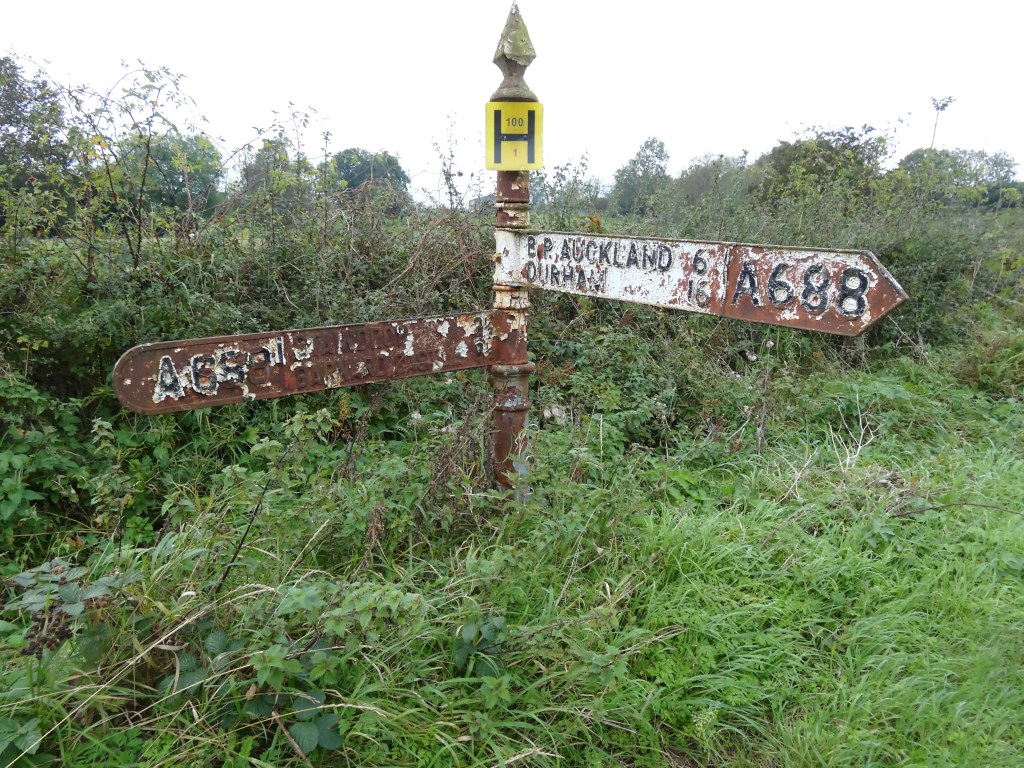
A more recent metal, black & white painted finger signpost is located near the Esperley Lane junction and informs us that Bishop Auckland is 6 miles and Durham is 16 miles to the east, Staindrop is 2½ miles and Barnard Castle is 8½ miles to the west.
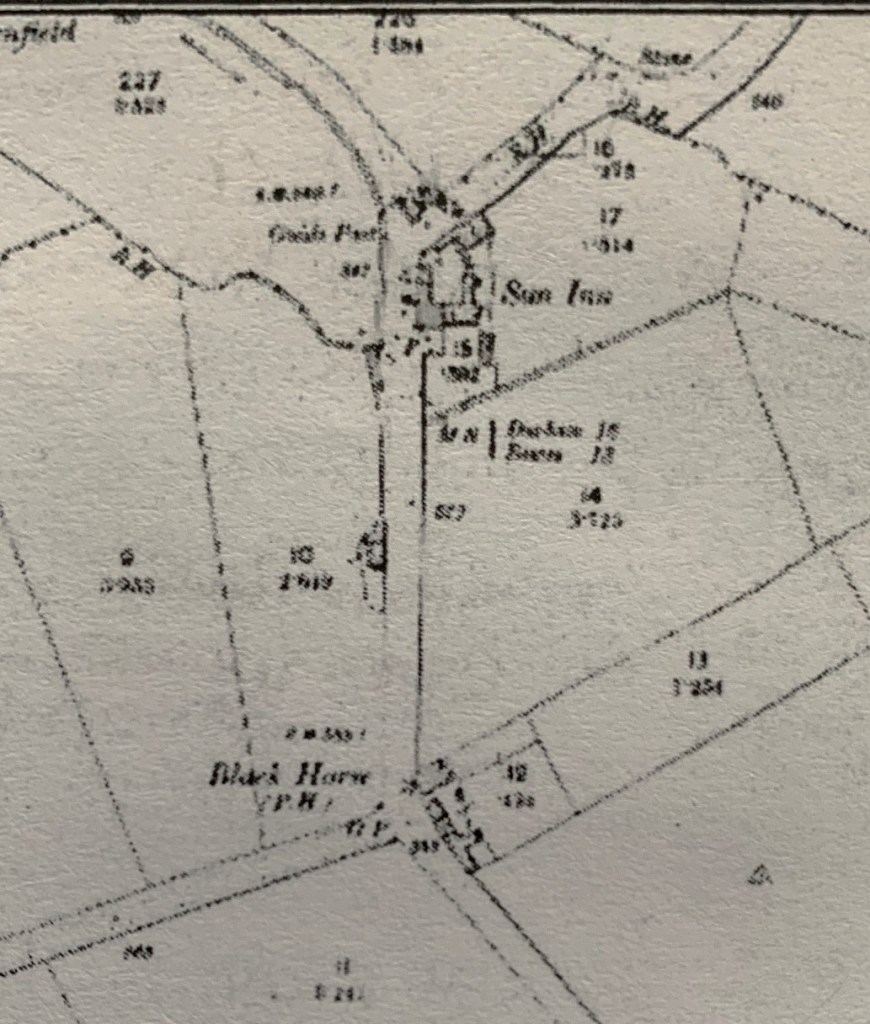
The road at Croxdale, the former A1, is now classified as the A167. The road from Bishop Auckland to Barnard Castle is the A688 and cross Pennine route at Bowes is the A66. The road at the Sun Inn junction was re-aligned to the east of the Sun Inn. The exact year has not been researched but probably in the late 1930s as a job creation scheme when unemployment was particularly high in south west Durham or just after WW2.
Articles about the toll road, New Moors pottery and local brick and tile manufacture are posted elsewhere on this website.
Wackerfield
Wackerfield is located 3 miles north-north-east of Staindrop. It was one of the places said to have been given to the church of Durham by King Canute. In Bishop Langley’s time, the early 15th century, it was held by the Sockburn family then later possessed by the Earl of Westmorland, who was succeeded by the Duke of Cleveland.[2] In 1894, their successor was Lord Barnard who possessed the manorial rights and privileges. Messrs. Powell brothers and Mr. William Brunskill owned other lands. In 1801, the population was 94 and by 1851, it has grown to 136 inhabitants. An 1894 directory names George Garside as the blacksmith, Mrs. Isabella Hall as the victualler of the Sun Inn and R. Parkinson the victualler of the Black Horse. George Neasham farmed Low Mulberry and John Richmond, High Mulberry.[3]
Below: The map shows the original route of the road, to the west of the Sun Inn before it was straightened out.
The Black Horse Inn
Believed to be built about 1730, the earliest reference to it was a newspaper advertisement of 1771 when the inn was put up for sale. Ralph Stockdale was the occupier/tenant and there was 8 acres of land attached.
1841: John Binks (1779-1871) was the publican. He was a widower. His son William (1813-1884), wife Sarah (1817-1888) and their sons John and William also lived there. William took over the running of the establishment. William’s sons did not follow their father’s calling as a publican, both worked as platelayers on the railways.
There are 3 press reports:
- 1863: A court case found Irishmen, Patrick and John McDonough, guilty of assaulting Michael Larry of Ingleton, after a drinking session in the Black Horse. The defendants were each fined 5 shillings with an additional £1 costs.[4]
- 1877: William Binks was found guilty of selling brandy containing 49% water. He was fined £1 and had to pay costs.[5]
- 1883: John Watson, an Irish hawker, had to answer 3 charges of false pretences against him, one of which was brought by Mrs Binks. He was committed to trial.[6]
John Binks died in 1871, William in 1884 and Sarah in 1888.
Richard Parkinson (1829-1906) was the next landlord, having previously worked as a tile maker, presumably at Hilton Tarn brick and tile works, near Wackerfield. He died in 1906, aged 77.
James Walker Welsh (1850-1937) was the next landlord. Originally, from Houghton-le-Spring, he was a tailor by trade. After moving to Evenwood he married Mary Ann Featherstone in 1877, having 3 children Dora (bc.1877), Robert (bc.1879) and Esther (bc.1881). Mary died in 1883. James re-married. He and his second wife Sarah Ann Watson had 5 children – William (bc.1888), Edward Watson (bc.1890), Maggie (bc.1893), Kate (bc.1897) and George (bc.1900).
Below: A much photocopied photograph of the Black Horse Inn when James Welsh was landlord.
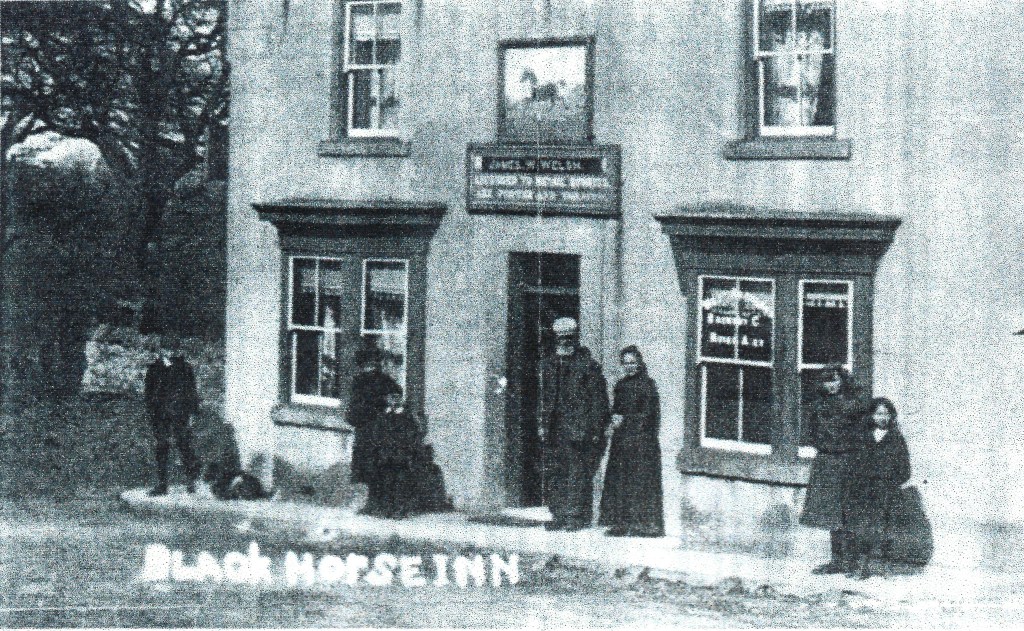
In 1909, the Brewsters Court decided that there were too many pubs in the area and set out to reduce the number. At a hearing at Barnard Castle, the West Auckland Brewery which owned both the Sun Inn and the Black Horse decided that the Black Horse should close thus it lost its license. The Welsh family continued to live in the property, working as farmers. Sarah died in 1936 and James in 1937.
Robert Welsh (1879-1943) had married Julia Griffiths (1883-1964) and their children were George, John James, Gibson, Thomas,[7] Norah, Robert, Sarah and Harry.[8] Many of their descendants still live in Evenwood and the surrounding area.
Below: The Black Horse in more recent times
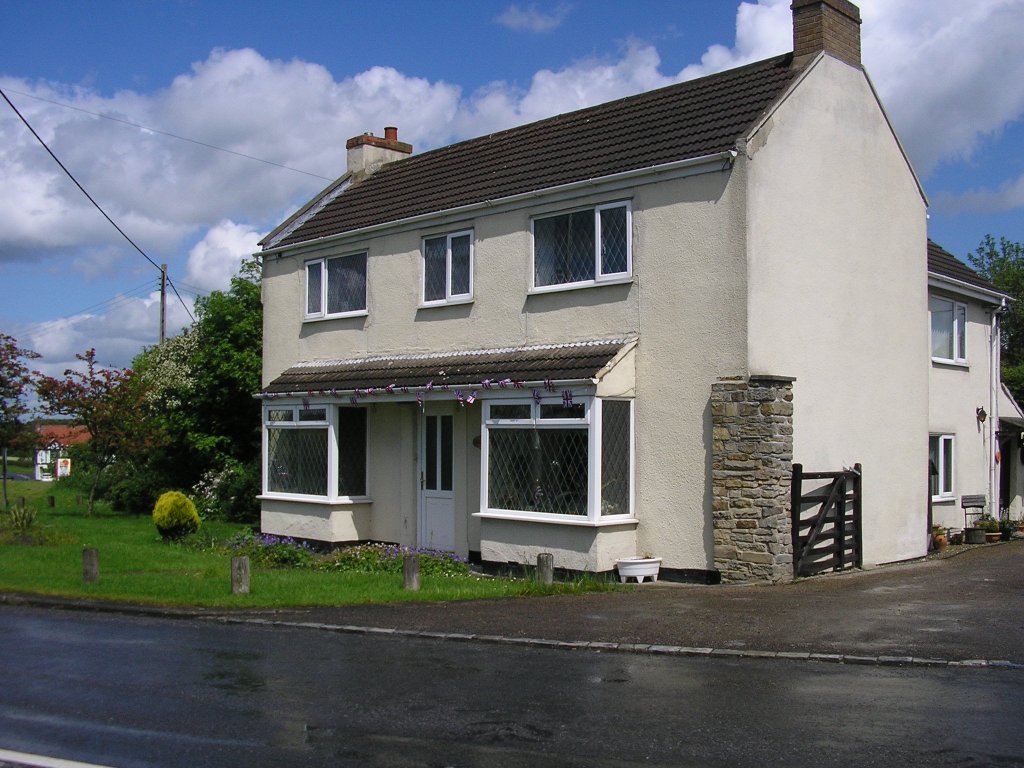
The Sun Inn
Believed to be built about 1735, it was never a coaching inn. The building was extensively modified in the 20th century as the photographs below show. In 1841, the innkeeper was Hannah Price. She had left by 1851 and was followed by John Watson and then by the end of the 1850s, by Robert William Hall (1835-1874) with his wife Isabella. He promoted “running races” for locals and offered the services of his boar pig for breeding for 3 shillings! Following Robert’s death in 1875, Isabella ran the pub with the help of her eldest son, John. He died in 1891 and was succeeded by his younger brother, Thomas with Isabella still the license holder. Thomas died in 1903. His wife and family moved into one of the cottages behind the pub.
Jasper Robson, born c.1878 at Cockfield was the next landlord. In 1909, the Sun Inn survived the Brewsters Court.
Below: Possibly taken in the late 20s, early 30s. The road is in its original position skirting to the west of the pub. The name Robert Tate Mairs is on the reverse of the photo.
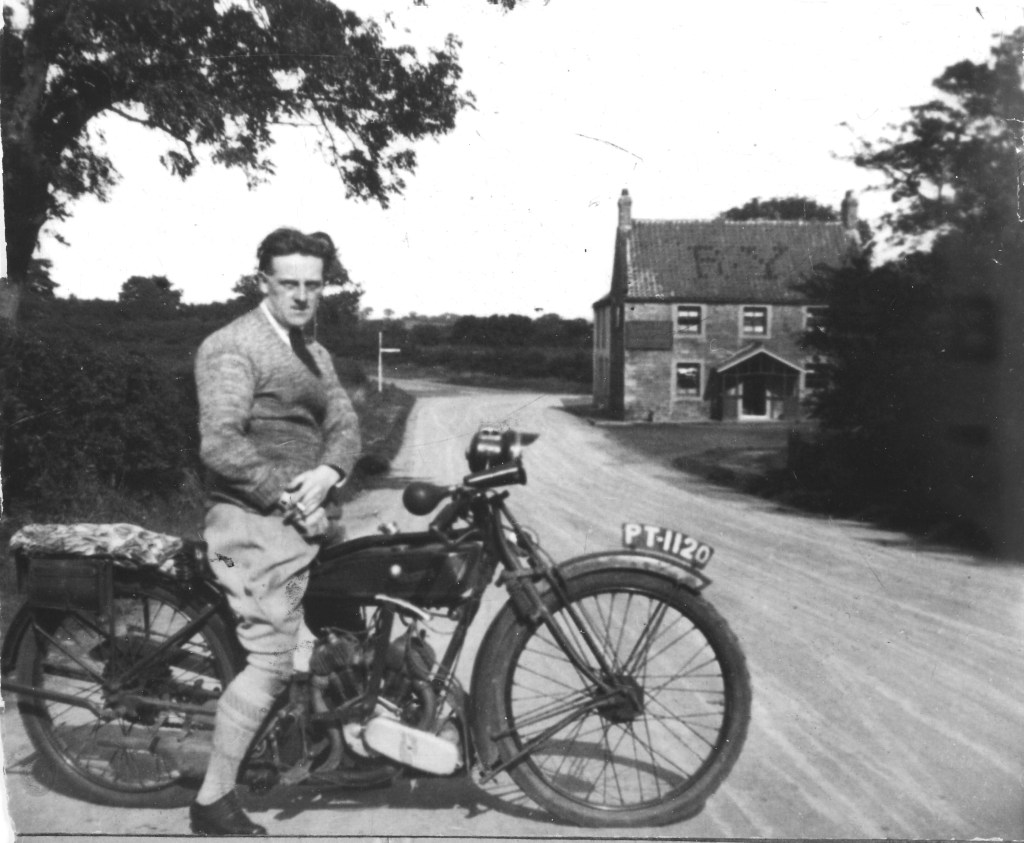
Robert T. Mairs (1897-1968) was a West Auckland resident, employed as a tax clerk, (inland revenue). He had served in the Great War with the 5/DLI and 2/York & Lancaster Regiments, being awarded the British War and Victory medals and the silver War Badge as a result of injuries received in action.
Below: Note the porch over the front entrance, it is the same design as on the previous photo. It is understood that George Atkinson was a member of this football team.
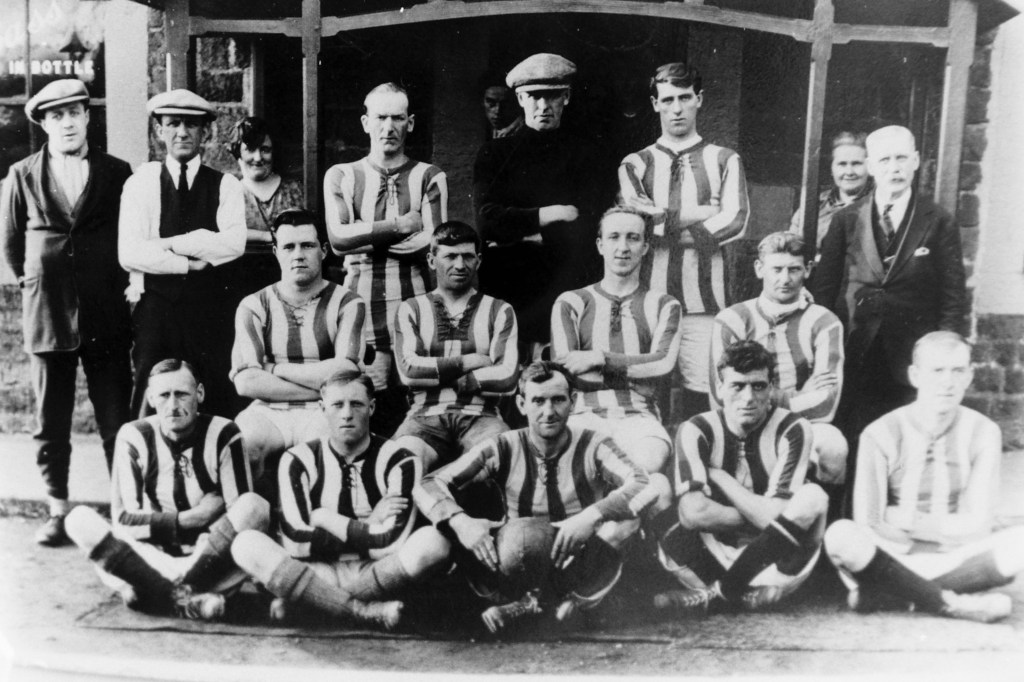
Between the wars, it is believed that Mr. George Atkinson was one of the landlords and it could have been under his occupancy that the alterations to the front elevation took place. Larger ground floor windows and mock Tudor timber work was applied to the walls. The public house was part of the extensive West Auckland Brewery Co. Ltd. property portfolio.
Below: George Atkinson was landlord of the Sun Inn, now altered from its original appearance.
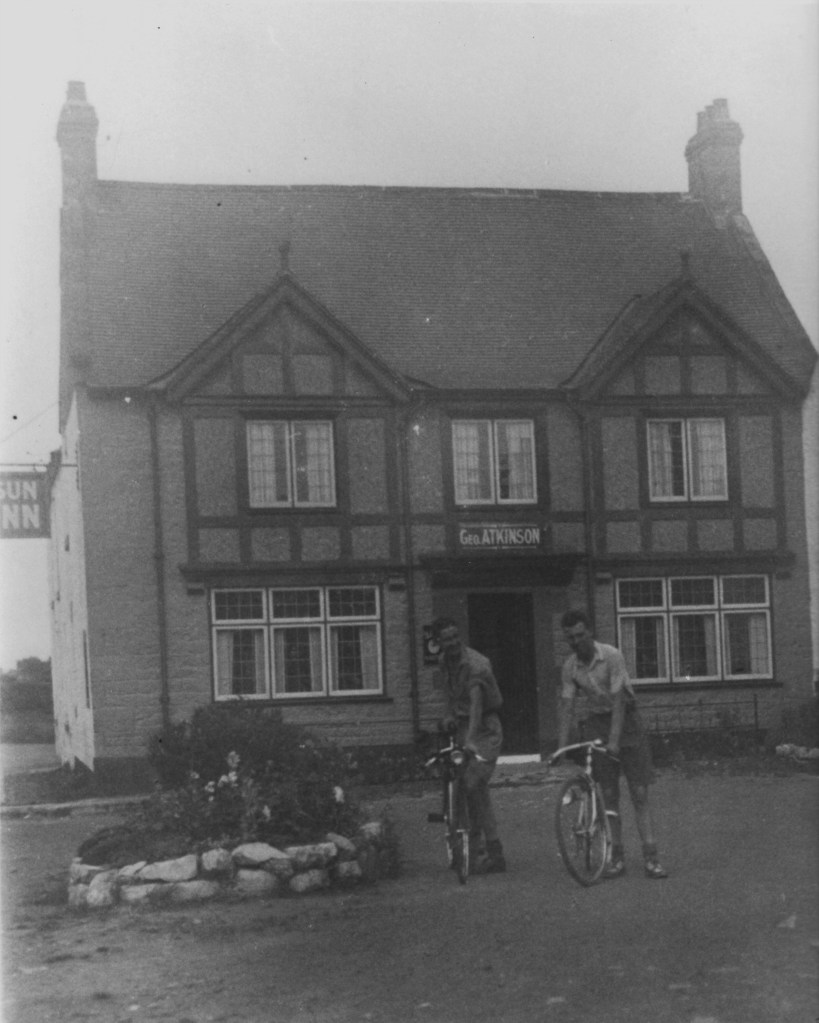
The Sun Inn did not escape a visit of an aircraft from the Luftwaffe in WW2. On the night of Monday/Tuesday 29/30th December 1941, an attack by 55 enemy aircraft was mounted on Tyneside. This was part of several weeks of raids along the North Sea coast engaged in anti-shipping activities. On this night, there was widespread fog, the force dispersed and some aircraft flew inland over County Durham and Northumberland. Most of the bombs fell on targets between Sunderland and Newbiggin-by-the-sea but there was scattered damage in County Durham. The police reported at least 8 major incidents around the Newcastle area, 10 along the Northumberland coast and 11 in County Durham which at that time included Sunderland and Wearside. It was reported that at 20.45 hours, 5 high explosive bombs caused damage to telephone wires and windows of a public house at Wackerfield.[9]
Remarkably, in 1996, a descendant of the Hall family, Mrs. Isa Walling from Seaham, recalled Isabella Hall, the licensee of the Sun Inn from the turn of the 19/20th century. Following her visit to the Sun Inn, she wrote a letter to Jacquie Hope, recalling family stories. Two examples are recited below
- John Wade Hall opened the upstairs window, shot gun in hand, to deter men demanding entry and drink, well after closing time. Allegedly, they were Irish labourers working on the railways or road schemes.
- Another son, Robert William Hall worked as a furniture maker at Bishop Auckland and had a side line from the pub cellar, making coffins.
These stories had been handed down for 6 generations. Isa mentioned that they visited Ingleton church and in the churchyard is the headstone of Annie and William Hall of the Sun Inn, a generation before Isabella. [10]
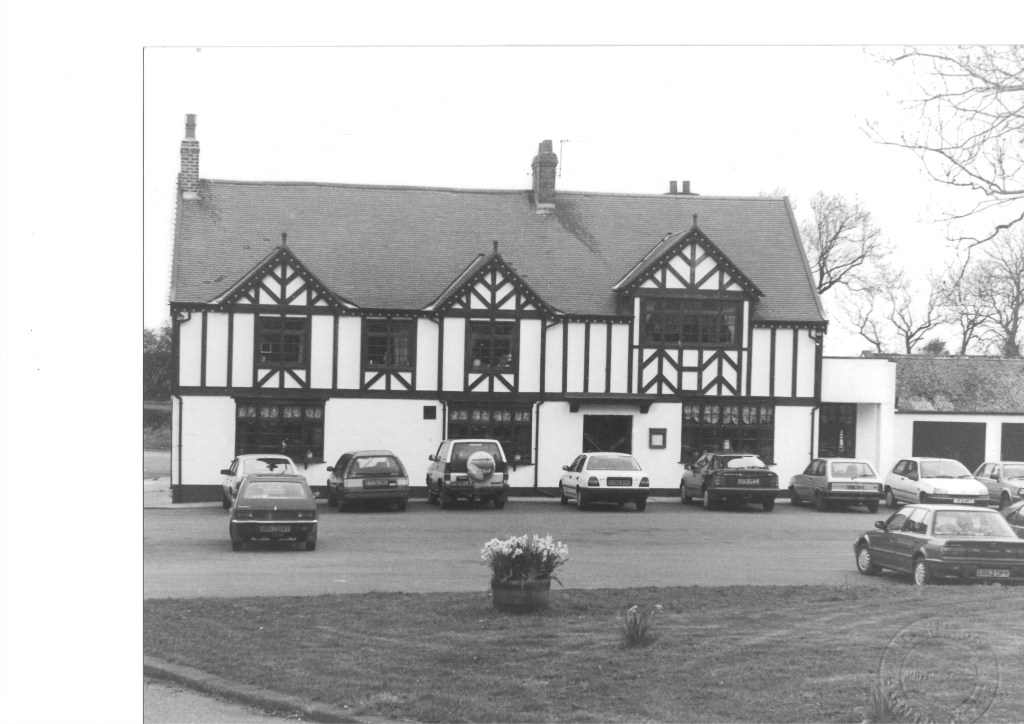
The Sun Inn was altered and a double storey side extension was built which significantly increased the floor area of the licensed premises. Ownership changed hands when Camerons Brewery bought out the West Auckland Brewery Co. Ltd. It was a popular destination into the 21st Century, particularly when dining became popular in public houses. Trevor Shaw is believed to have been publican in the late 1970s, early 80s. He was otherwise known as, “Seth Shildon,” a local entertainer/comedian. John Fife, a local folk musician of note, ran the pub in the mid 1980s.
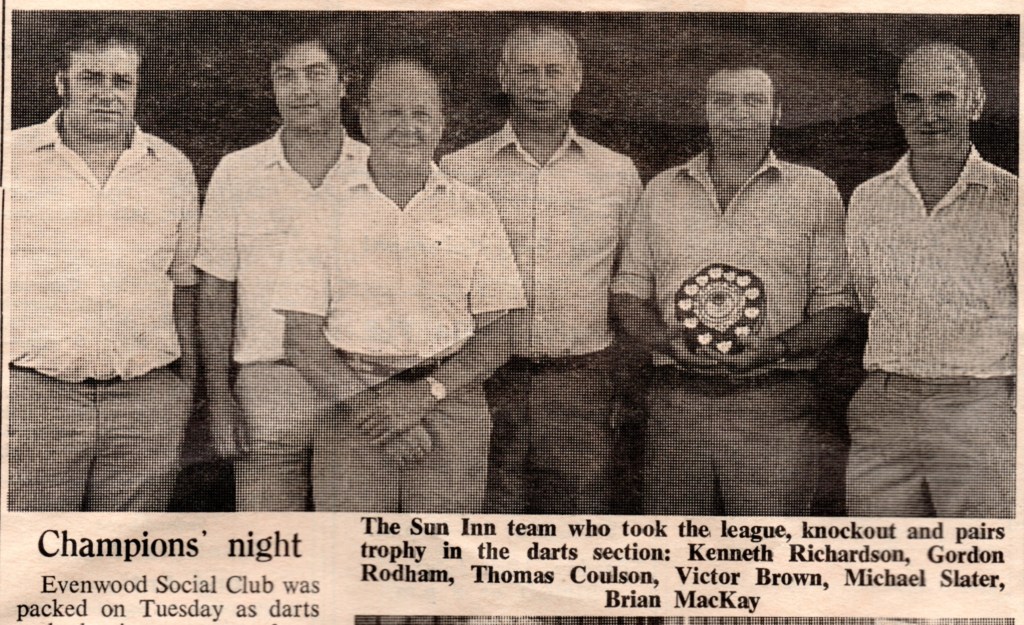
Below: 1984 Darts Team
Below: c.1993 The Sun Inn with the large side extension
The Sun Inn closed in 2020. Muriel Schofield and her son Jason were the final licensees.
The Sun Cottages
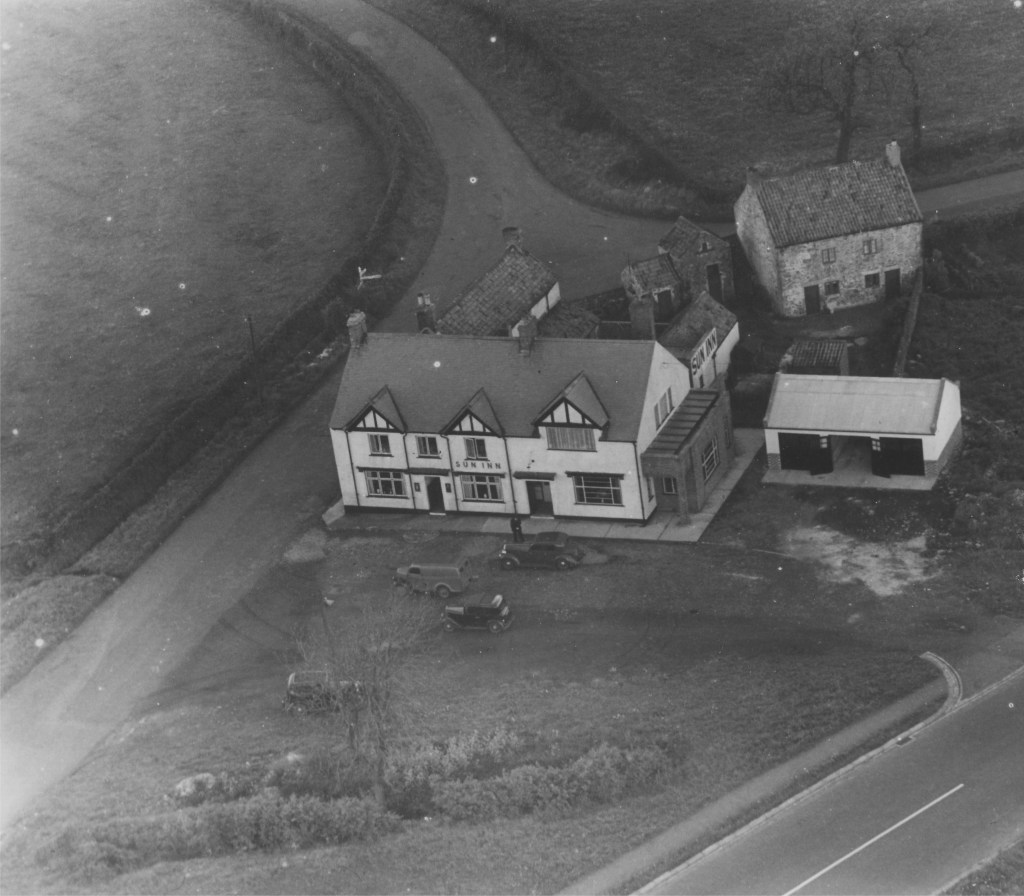
A pair of double storey cottages stood behind the Sun Inn, adjacent to the old Barnard Castle to West Auckland road which looped around the pub near the junction with the Cockfield road. Typical of the era, these dwellings had no bathroom and no indoor toilet. They provided very basic accommodation comprising 2 rooms, a living room and bedroom. Other than the above mentioned Hall family, occupants were usually coal mining families such as Robert and Alice Stephens, William and Margaret Storey in 1851, William and Mary Yates and Henry Wilkinson in 1871, and later William and Susannah Lamb, John and Mabel Moses, Richard and Louisa Lowson, Walter and Sarah Baldry and their families. In 1901, John and Margaret Robinson lived there. John had worked as a farm labourer and a road labourer. After 1903, the Hall family lived in one of the cottages. They were demolished sometime after 1951.
Below: 1951: The Sun Cottages shown behind the pub.
The Sun Colliery
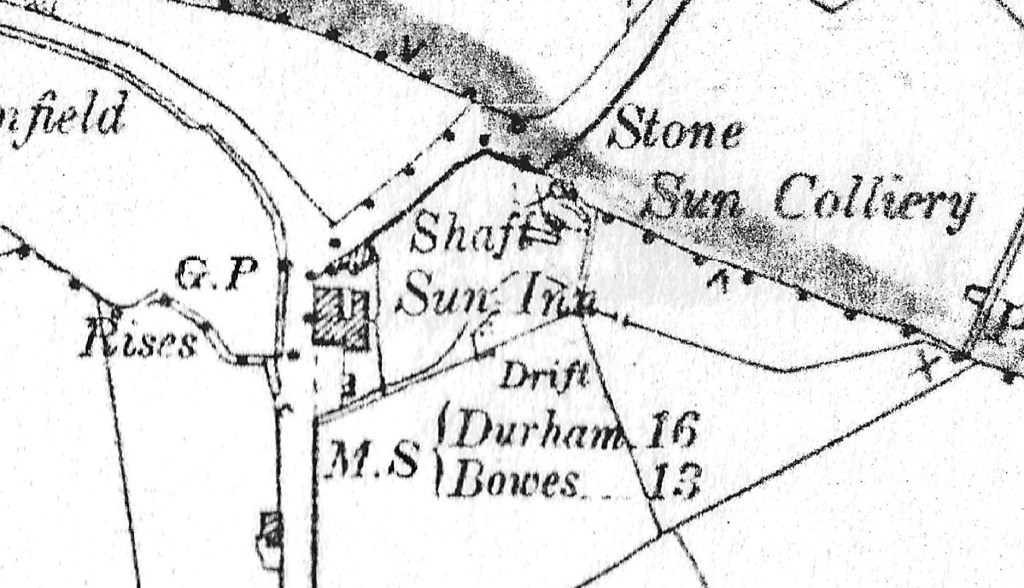
Located to the east of the Sun Inn, this small colliery was operated by a shaft and a drift. Prior to 1914, the Wackerfield Coal Company employed 23 men and boys, 20 below ground and 3 on the surface at this site.[11]
Below: A plan to show the Sun Colliery
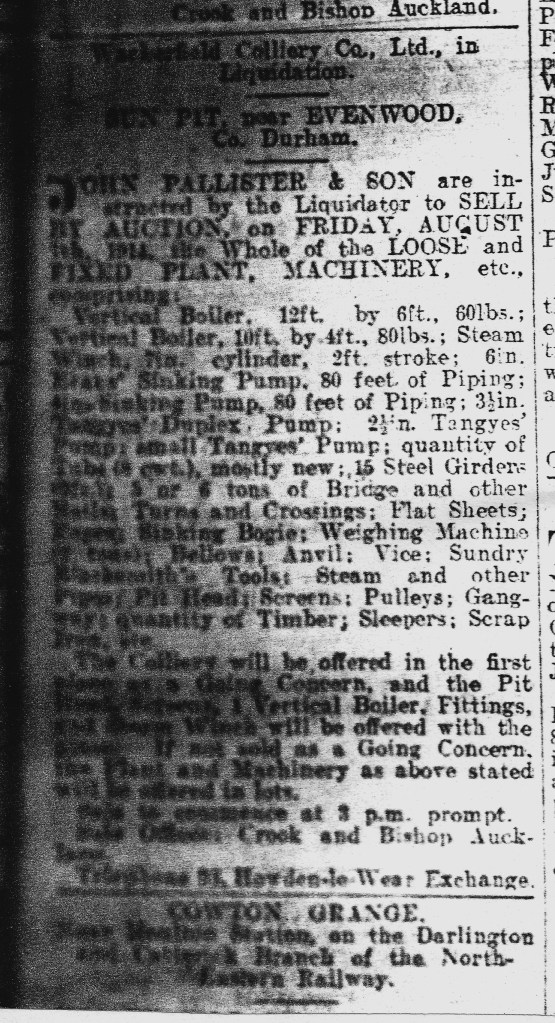
In 1914, the company went into liquidation. George Henry Raine was the manager at this time. The Sun Pit was offered for sale as a going concern in August 1914. The auctioneer was John Pallister & Son, who had offices at Crook and Bishop Auckland.[12]
Below: South Durham & Auckland Chronicle 30 July 1914: A photocopy of the Auction Advertisement
George Henry Raine (1873-1925) was born at Barnard Castle and lived at Cockfield and Esperley Lane. He worked as a coal miner. He served in the Great War, being a territorial soldier and was 42 years old when he entered France in April 1915. He served with the Royal Ambulance Medical Corps (RAMC), most likely 2nd Northumbrian Field Ambulance, until the end of the war. He was awarded the 1914-15 Star, the British War and Victory medals and the silver War Badge which was awarded the soldiers wounded or injured during their military service. By 1920, George Henry Raine managed the Raby Moor pit. He lived at 15 Mount Pleasant, Cockfield.[13] He died in 1925 aged 52.
The Black Horse Colliery
This small colliery was located about ½mile to the west of the Sun Inn. There was a shaft immediately to the north of the road and a drift to the north on higher ground. It was worked by 3 companies between 1902 (possibly earlier) and 1925:
- Jos. McLauchlan & Co. Ltd.: Probably between 1902 to 1910. In 1902, 24 men and boys were employed, 21 below ground and 3 above. The manager was J. Palmer.[14]
- Lowson Brothers, Morley: Probably worked by this company prior to 1914, when the agent was H. Lowson and the manager was R. Lowson.[15]
- Morley Colliery Co. Ltd.: The agent was T. Whittingham, the manager was T.G. Bell and the engineer was J.G. Steele.[16] J.G. Bell was the manager between 1914 and 1925. At its height, in 1915, 54 men and boys were employed, 49 below and 5 on the surface.[17] In 1923, 40 men and boys were employed, 30 underground and 10 above. In 1924, 36 were employed, 27 underground and 9 above.[18] Seams worked were the busty which was abandoned in 1916 and the brockwell and marshall green which were abandoned in 1925. The colliery was closed 7 February 1925. [19]
Below: A Plan to show the Black Horse Colliery

Part of the land where the shaft was located appears to have been consumed by the re-routed A688 road. The drift mine to the north was included in the area mined by opencast methods by British Coal in the 1990s. Today, no evidence of the colliery exists.
The above mentioned Henry Lowson was the son of George and Jane Lowson, born at Pit Close, near Morley. His father George was a farmer but also worked the small Pit Close Colliery from at least 1894 to about 1905. Henry’s older brother William worked as a colliery official in 1891, Henry worked as a coal miner, as did his older brother George. Over the next 10 years, they refined their mining and commercial skills because by 1901, Henry, his younger brother John Richard and nephew Ralph were all recorded as “colliery owners.” The family expanded their coal mining interests to include the Black Horse Colliery, which worked until 1925, New Morley Colliery, which worked from about 1921 to 1937 and another working called Teesside at Winston, from about 1923 to 1930, under the company names of Henry Lowson Ltd., Lowson Bros. and the Morley Colliery Co. Ltd. From at least 1921, Miss Elizabeth Jane Lowson, (Henry’s niece) was a company director/secretary. The registered office was Tower Lodge, Morley. John George Bell, a registered mining engineer, was the colliery manager. At its height, in 1927, there were 162 men and boys in employment at New Morley Colliery (120 below ground and 42 above). By 1933, G. H. Lowson joined the board of directors as Chief Engineer and Agent. At this time, Henry Lowson was Chairman and Managing Director, Miss E.J. Lowson was listed as a director and J.G. Bell was the General Manager. In 1935, George Daykin was the colliery manager at New Morley Colliery. From 1930, seams were abandoned and the New Morley Colliery finally closed 9 February 1937, when the Harvey seam was abandoned. The previous year, 2 December 1936, the Brockwell, Busty and Hutton seams had been abandoned.
In 1939, Henry Lowson lived at Tower Lodge together with Elizabeth J. Lowson, Eva Lowson and Frances Weston. Tower Lodge continued to be Henry’s home until his death on the 24th January 1947, aged 81. Henry Lowson’s effects were settled by probate. His niece and business partner Elizabeth Jane Lowson inherited £6177, worth about £300,000 today. Henry Lowson appears to have led the Lowson family in a successful coal mining business enterprise through the difficult inter-war period.
Keverstone Grange Colliery
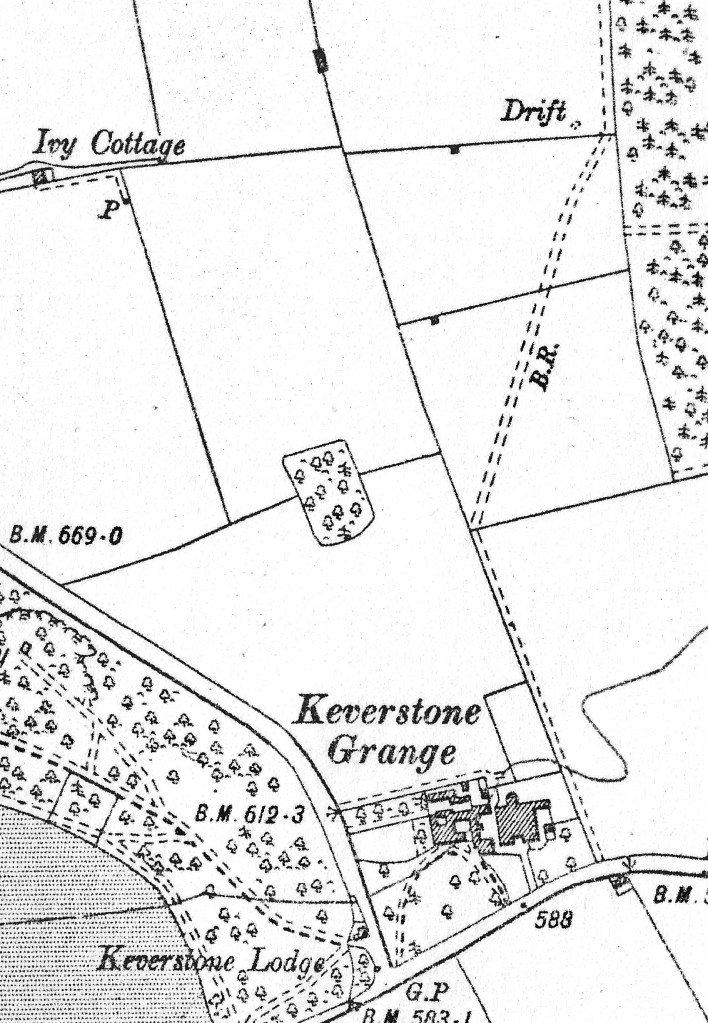
The exact location is not known but it may have been located to the north of Keverstone Grange Farm and east of Ivy Cottage – there is a drift marked on the OS Map. The agent and manager for the Keverstone Grange Colliery Co., W. Morrell.[20] It was closed about 1927.[21]
Watson Morrell (1879-1948) junior lived at Cockfield and worked as a coal miner, who in 1939 was recorded as a, “colliery owner.” He was then about 60 years old. He died in 1948.
Hilton Moor Pit
Burrell and Jackson operated this small pit located between Hilton Tarn and Hilton Grange working the brockwell seam of coal. In 1929, it employed 20 men and boys, 12 underground and 8 above. In 1930, there were 19, 12 underground and 7 above and in 1933, 13 were employed, 9 below ground and 4 above. The registered offices were at the Grange, Wackerfield. [22]
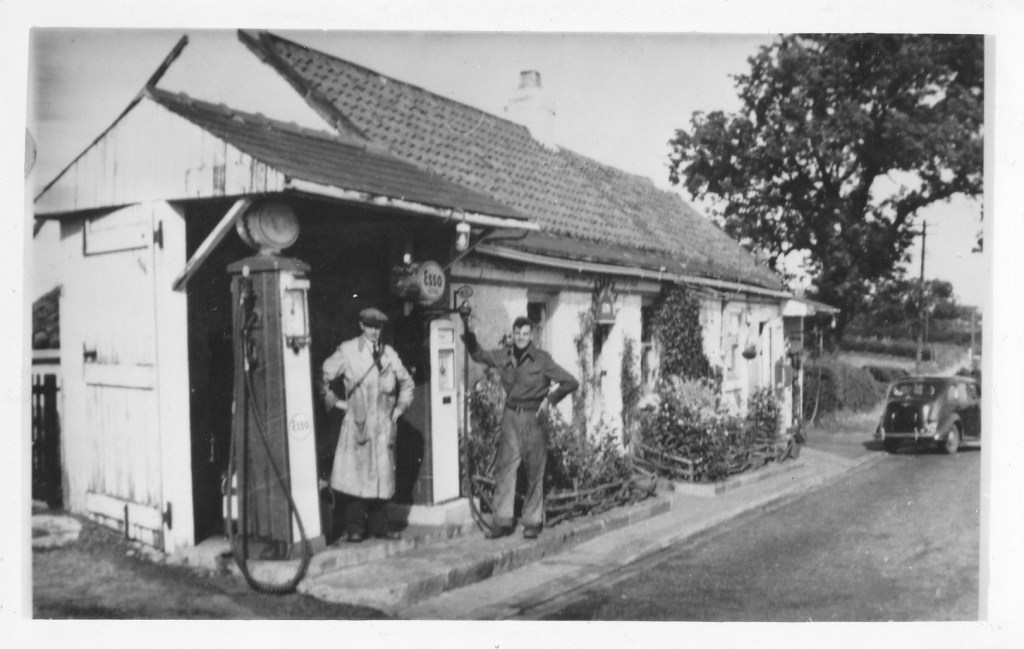
The Sun Inn Garage
Located next to the main road, its position was beneficial for the sale of fuel during the early days of motoring.
Below: The Sun Inn Filling Station

Below: A close up of the Filling Station which served ESSO petrol
Below: Another photo of the Sun Filling Station
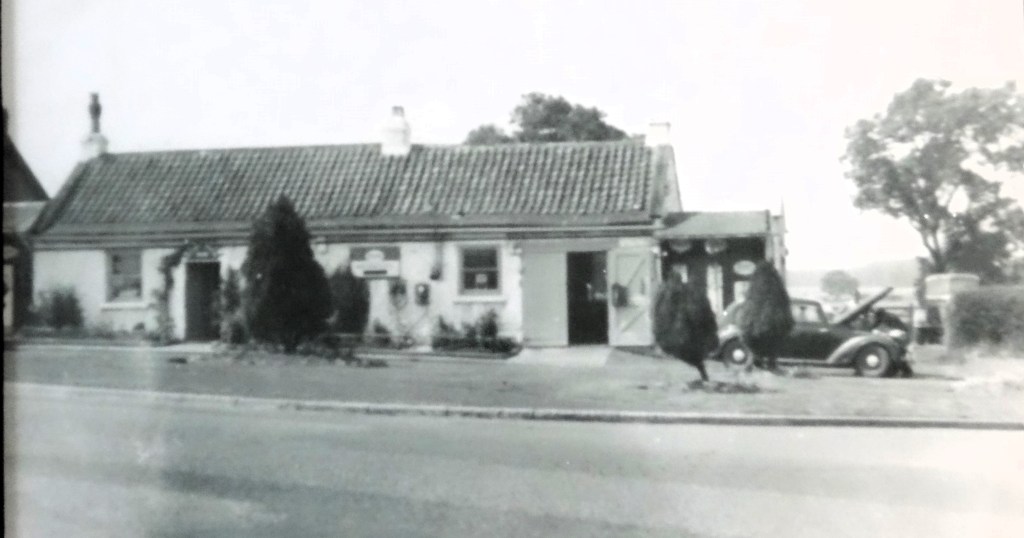
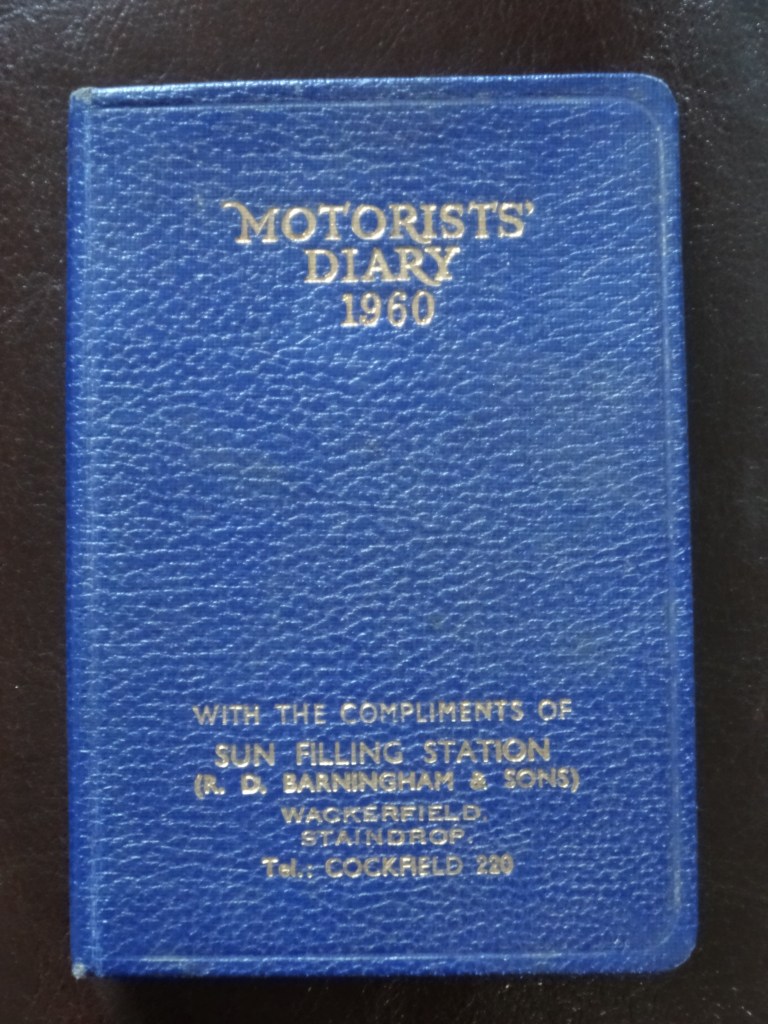
In 1960, it was called the Sun Filling Station run by R.D. Barningham & Sons.
Below: A motorists’ diary 1960
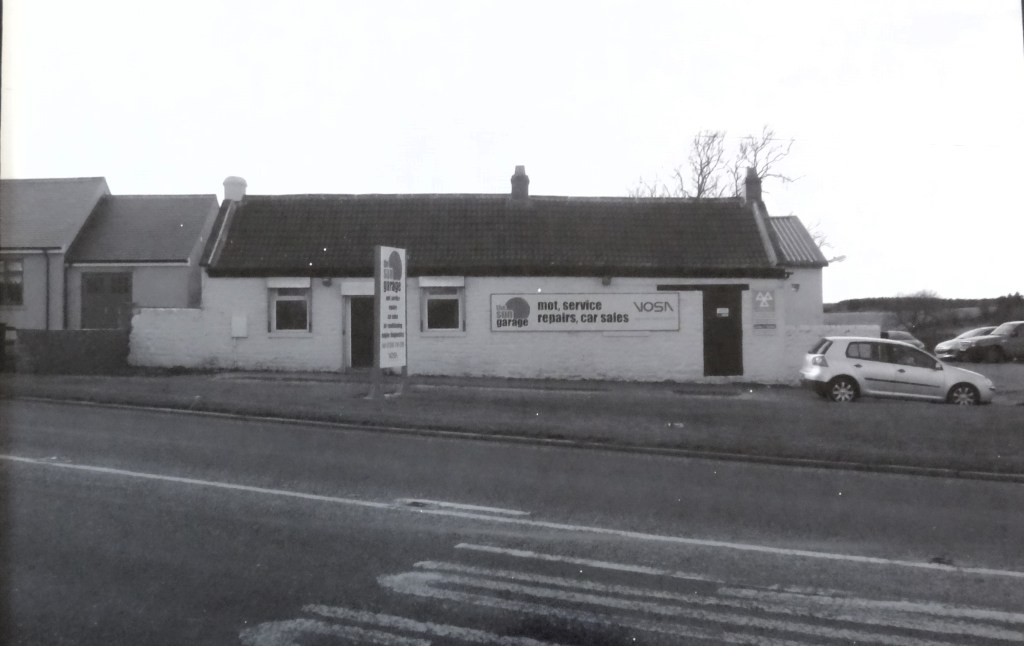
Below: And another view
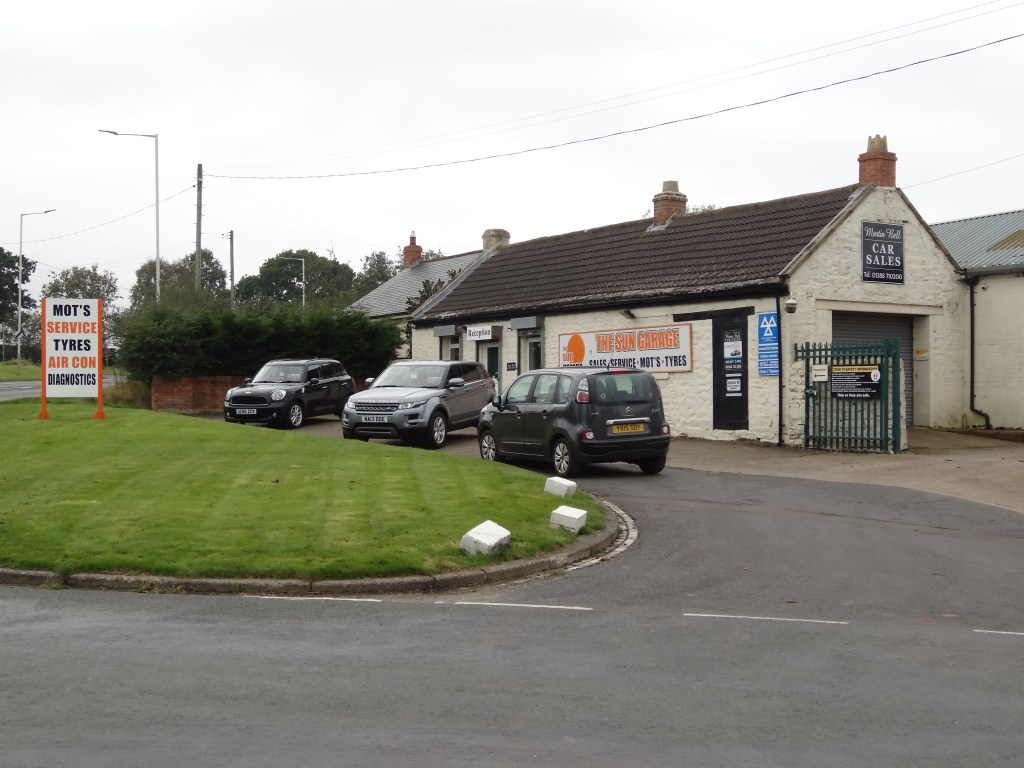
Below: 2024 The Sun Garage
Acknowledgements
Staindrop History Society
Jacquie Hope
The late Eric Welsh and family
A & L Marriott, the Sun Garage
[1] Pearson 2021 StaindropPast.co.uk No.50 “Wackerfield, Black Horse Inn & Sun Inn” stories from this excellent publication have been reproduced.
[2] “An Historical, Topographical and Descriptive View of the County Palatine of Durham” 1834 E. Mackenzie & M. Ross Vol.II
[3] “Directory of County Durham” 1894 Whellan
[4] Teesdale Mercury November 1863
[5] York Herald December 1877
[6] Teesdale Mercury October 1883
[7] Private T/213179 Thomas Featherstone Welsh (1912-1942) served in the Royal Armed Service Corps during WW2, contracted meningitis and died in hospital at Dewsbury, West Yorkshire 17 December 1942, aged 30. He is buried in Evenwood Cemetery. Further details can be found elsewhere on this website.
[8] Family details should not be taken as being 100% correct, more research is needed.
[9] http://www.swinhope.myby.co.uk/NE-Diary/Inc/ISeq_26.html
[10] Letter dated 25 December 1996 from Mrs. Isa Walling of Seaham to Jacquie Hope of the Sun Inn.
[11] Durham Mining Museum
[12] 1914 July 30 South Durham & Auckland Chronicle
[13] Durham Mining Museum http://www.dmm.org.uk/whoswho/r576.htm
[14] Durham Mining Museum
[15] 1906 Reid
[16] 1923 Reid
[17] http://www.dmm.org.uk/colliery/b057.htm
[18] Durham Mining Museum
[19] http://www.dmm.org.uk/abandon/b057.htm
[20] 1923 Reid
[21] NCB Catalogue of Abandoned mines records that the Cowley seam was abandoned in 1927
[22] 1933 Colliery Year Book and Coal Trades Directory (published by Louis Cassier) & the 1929 & 1930 List of Mines. Courtesy of the Durham Mining Museum website
 EVENWOOD RAMSHAW & DISTRICT HISTORY SOCIETY