Summary
946257 Lance Serjeant Thomas Henry Stokoe, 127 Field Regiment, Royal Artillery was killed in action 16 June 1944, aged 25. He is buried at Ranville War Cemetery, Normandy, France and commemorated on the Evenwood War Memorial.[1]
Family Details
Thomas Stokoe was born 26 April 1919 [2] the son of Thomas and Isabelle. There were at least 3 children:
- William born c.1907
- Edith born c. 1908.
- Thomas Henry born 1919
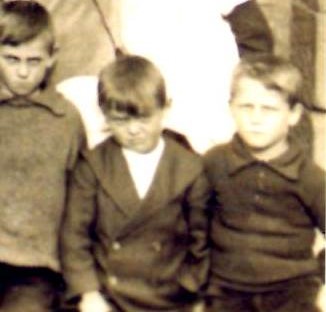
Above: A young Thomas Stokoe (cenrte)
Isabelle’s younger brother, serving as 36618 Private Thomas Henry Dunn, 11th Battalion, the Durham Light Infantry died of wounds 26 December 1916. It can be safely assumed that Isabelle named her son in honour of her younger brother. Thomas’ mother died in 1922 [3] and in 1936 his father married Kate A. Watson.[4] By 1939, the Stokoe family lived at 8 Brookside, Evenwood (otherwise known as Vart’s Yard). Thomas (senior) worked as a coal miner [hewer] and Thomas an apprentice motor mechanic which infers that he was not yet mobilised. [5]

Above: Extract from the 1939 England & Wales Register
Service Details
The service details of Lance Serjeant T.H. Stokoe have not been researched however Thomas’ friend was 826094 Sergeant Robert R. Wainwright.[6] Neil Wainwright has prepared a profile of Robert’s army service and these notes are used here.
23 April 1942, Robert Wainwright was posted to 127 Field Regiment and 19 May 1942, Bombardier T.H. Stokoe witnessed Robert’s will.[7] It is assumed that Robert and Thomas served together from this date onwards.[8] Robert Wainwright’s Military History Sheet and Statement of Services provide the following details:
- Home: 2 June 1940 to 15 June 1942.
- On 16 June 1942, 127 Field Regiment sailed from Liverpool on HMT “Australia” to North Africa, arriving at Port Tewfik, Egypt 13 August. The journey was around the Cape of Good Hope and involved a 3-day stop in Durban. The unit strength was 43 Officers and 715 Other Ranks.
- Middle East: 16 June 1942 to 6 July 1943, 1 year 21 days, disembarked 13 August 1942. He saw action during the El Alamein campaign 24 June to 8 November 1942 and the Tunisia campaign 8 November 1942 to 14 May 1943.
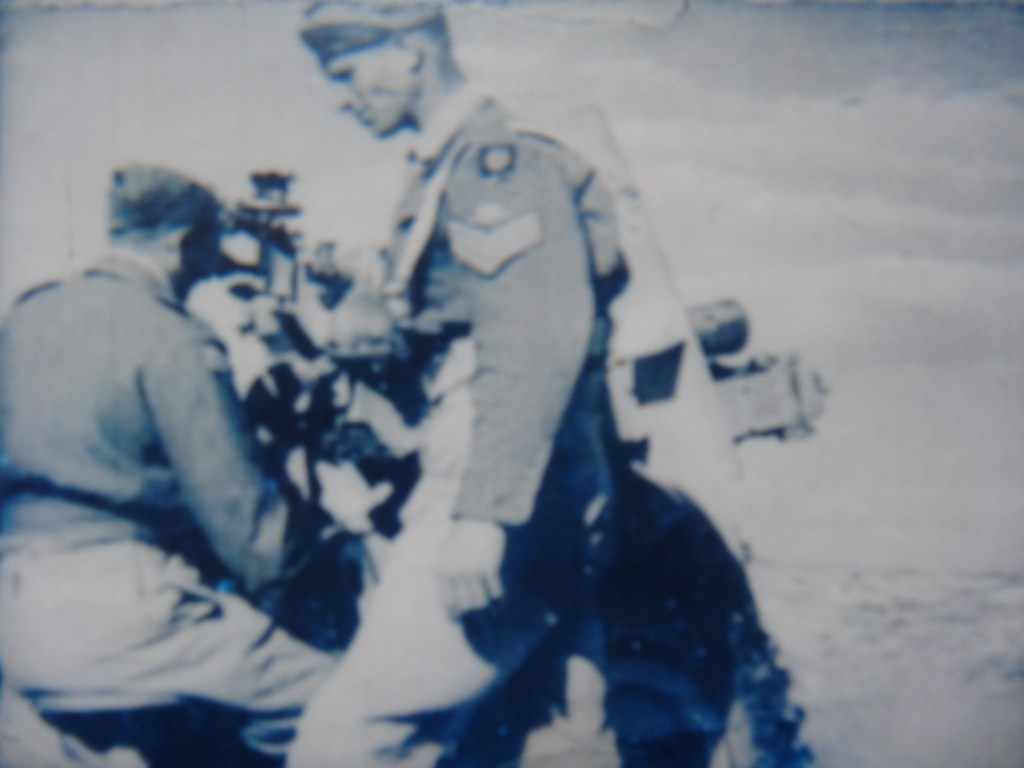
- On 28 February 1943, an Army Film Unit filmed 301 Battery when firing was in progress. Sgt. R.R. Wainwright was in the frame, see photo below.
Sicily: 7 July 1943 to 28 August 1943, 53 days. He saw action in the Sicily Campaign 10 July to 17 August 1943. They were aboard LST 381 and disembarked south of Pachino, 10 July. They were in action by 0630 hrs., 11 July.
- British North Africa Force: 29 August 1943 to 24 November 1943, 88 days. 9 November, he boarded SS “Argentina” and arrived back in the UK, at Liverpool, 27 November 1943.
- Home: 25 November 1943 to 2 June 1944, 190 days.
- 3 June 1944: Embarked UK
- 6 June 1944: D Day
- 7 June 1944: Disembarked N.W.E. (Normandy, France)
- 16 June 1944: Sergeant Robert R. Wainwright was wounded
- 18 June 1944: Sergeant Robert R. Wainwright was evacuated UK Y List (wounded). [9]
The 127 Field Regiment, Royal Artillery (RA) was one of the support units for the 51st (Highland) Infantry Division. 127 Fd. Regt. comprised 3 batteries (Bty.) which were 301, 304 and 491 Bty. 301 comprised No.1 Troop and No.2 Troop. No.1 Troop comprised A, B, C & D, each having a 25 pounder (pdr.) field gun, attached to a Morris Quad i.e. a total of 24 no. 25 pounder field guns for 127 Field Regiment. A gun detachment was 6 men. The service of the gun is divided among them as follows;
- in command (Sgt. R.R. Wainwright)
- The Breech
- The Sights
- Loading
- & 6 The Ammunition
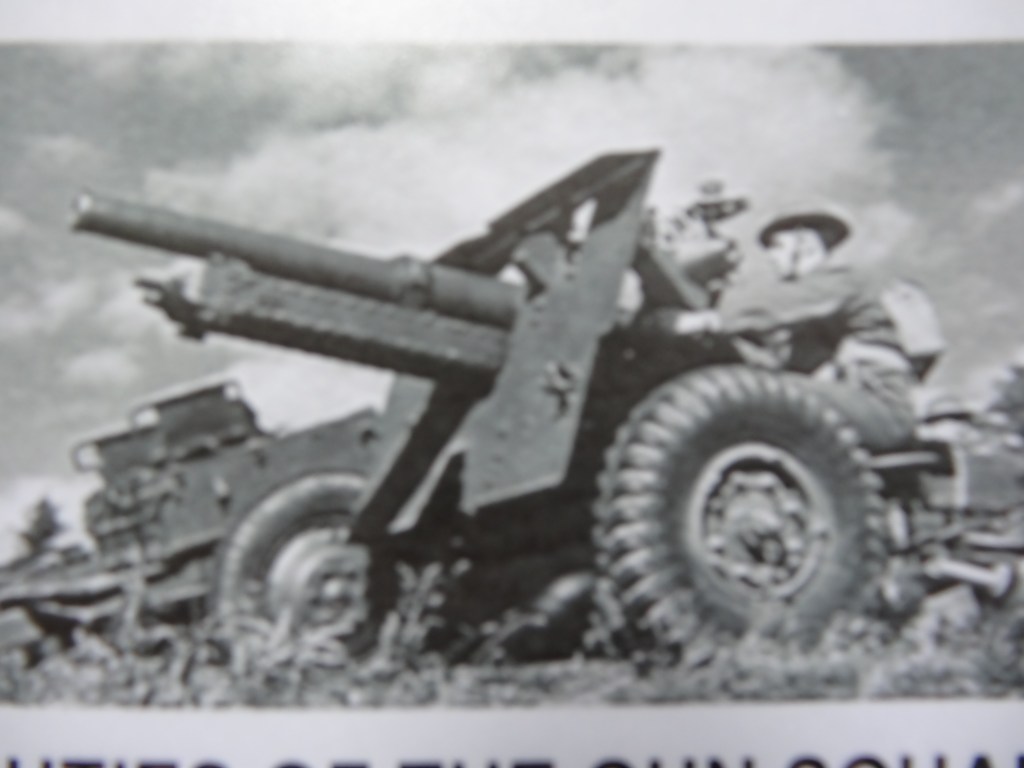
Above: A 25 pounder field gun
6 June 1944: The Invasion of Normandy [10]
D Day was 6 June. Those landing on Sword Beach were:
- 1st Special Service Brigade comprising No. 3, No. 4, No. 6 and No. 45 (Royal Marine) Commandos landed at Ouistreham in Queen Red sector (leftmost). No.4 Commando was augmented by 1 and 8 Troop (both French) of No. 10 (Inter Allied) Commando.
- I Corps, 3rd Infantry Division and the 27th Armoured Brigade from Ouistreham to Lion-sur-Mer.
- No. 41 (RM) Commando (part of 4th Special Service Brigade) landed on the far West of Sword Beach.
51st (Highland Division) was part of the 3rd Infantry Division and its role in the landing was as a second echelon division to support and fill in behind the first wave. 153 Brigade was the lead brigade and it landed on the afternoon of D Day. 152 Brigade followed on D+1 and 154 Brigade on D+4. The latter remained as Corps Reserve until placed temporarily under command of 6th Airborne Division.
The 127 Field Regiment War Diary contains very little detail. The first report is dated 8 June 1944 therefore, it is assumed the unit landed 8 June (D+2).[11] Its strength was 608 men, which increased to 638 on the 9th. 127 Field Regiment moved location on the 10th. There were 7 casualties over the next 5 days, on the 11th (1), 12th (4), 14th (1) and 15th (1). On the 16th June, the strength was 630 men. On this day, 16 casualties were sustained. The War Diary contains no detail of the action.[12] The following notes describe the situation when Sergeant R.R. Wainwright was wounded. The report indicated that at least 3 men were killed on the day, one of whom was L/Sjt. T.H. Stokoe. Later, 2 other men died of wounds.[13]
“16 June
1045: At dawn today the enemy put in a heavy counter attack, assisted by fairly general shelling of the gun line and wagon lines. We fired 27 DF tasks ad nearly 700 rounds (from the Bty.) and are still firing (a counter-battery task) at the moment. More casualties today. We’ve had 2 killed, 2 wounded and 301 had a direct hit on one of their guns with at least 2 killed and quite a few wounded. (Actually I find now, its 3 killed). We fired solidly from 0445-0900 and the air was loud with the crash of the guns, whining of shells and thump of enemy shells around the place. It is now 1130 and quiet again. During the chaos this morning it started raining again, quite hard and the general scene was pretty desolate with heaps of rubble outside here, various things like motorcycles torn by shrapnel and grey, shell-noisy dawn with no sun to warm and cheer. Haven’t shaved or washed yet today and feel pretty lousy and scruffy.”
A press reporter described Sergeant R.R. Wainwright’s account: [14]
“Srgt. Wainwright told of the infantry attack which drove the Germans from the beaches, with the gunners ready to move up behind every advance of the infantry. Sergt. Wainwright was wounded during a counter attack. His battery had worked forward to a canal north of Caen and when the enemy attack took place, the British held on firmly.”
Sgt. Wainwright had multiple shrapnel wounds but none serious. He was treated in the UK at Sunderland Royal Infirmary and Cherry Knowle Emergency Hospital, Ryhope. Other notes of the incident are:[15]
“He was wounded on Friday 16th June 1944 in the Battle of Caen, when the Germans launched a heavy counter attack.
Dad believed that all his gun detachment were killed when an enemy shell made a direct hit on his gun emplacement. When help arrived everything and everyone was covered in grey white dust and Dad was shouting for them to put out the fire. He had suffered multiple shrapnel wounds mainly to the left side of his body and in particular his left eye. This was bleeding heavily and gave him the impression that fire was everywhere. He was evacuated to ADS 174 Fd. Amb (Advanced Dressing Station, 174 Feld Ambulance) and eventually to Sunderland Infirmary, Durham…Many of his colleagues were not so lucky among those were his gun detachment, there were 5 other men on the gun but I am only able to identify with some certainty, the 2 immediately below as members of his detachment.
L/Sergeant Thomas Henry Stokoe, No.2 on the 25 pounder gun, he sat on the left hand side near to Dad. He was also one of 2 friends, who signed Dad’s Soldier’s Will on 19 May 1942.
Gunner Thomas, “Tiny” W.G. Littlefield mentioned in a letter to Dad from Sgt. Bill Gibson on 25 August 1944…Tiny was one of the 2 gunners.
There should be a Lance Bombardier and a Bombardier but although there may be one of those in my list, the CWGC do not always have all the details so I am unable to positively identify the others.”
The 2 fatalities were:[16]
- 946257 Lance Serjeant Thomas Henry Stokoe, killed in action 16 June 1944, aged 25, from Evenwood, County Durham. He is buried at Ranville War Cemetery.
- 1079327 Gunner Thomas W.G. Littlefield died of wounds 23 June 1944, aged 32. He is buried at Hermanville War Cemetery. His widow was Violet May Littlefield of Vauxhall, London.
In addition to the above, 1 Officer and 5 Other ranks serving with 127 Field Regiment, were also killed on 16 June. They were:[17]
- 148698 Major David M. Kirk, aged 36, buried at Ranville War Cemetery. His widow was Dorothy Gladys Kirk of Colchester, Essex.
- 924053 Gunner Frank M. McClure, aged 24, buried at Ranville War Cemetery. His parents were George and Isabell McClure of Arbroath, Scotland.
- 14662170 Gunner Peter Jack, aged 31 buried at Hermanville War Cemetery. His widow was Mary Jack.
- 1087597 Gunner Frederick A. Hall, aged 33, buried at Hermanville War Cemetery. His widow was Doris Hall of Ilford, Essex.
- 1088365 Gunner Luke Crawford, aged 32 buried at Ranville War Cemetery
- 1135022 Gunner Bernard Murphy, aged 26, buried at Ranville War Cemetery. His parents were Bernard and Teresa Murphy of Possilpark, Glasgow.
The War Diary reported 16 casualties, 8 have been identified. A total of 40 soldiers of the 153rd Infantry Brigade and 127 Field Regiment RA who were either killed in action 16 June or died of wounds shortly afterwards: [18]
- 26 were Gordon Highlanders (1st Bn. & 5/7th Bn.)
- 6 were Black Watch (5th Bn.)
- 8 were RA (127 Field Regiment)
30 are buried in Ranville War Cemetery and 10 in Hermanville War Cemetery.
Photographs
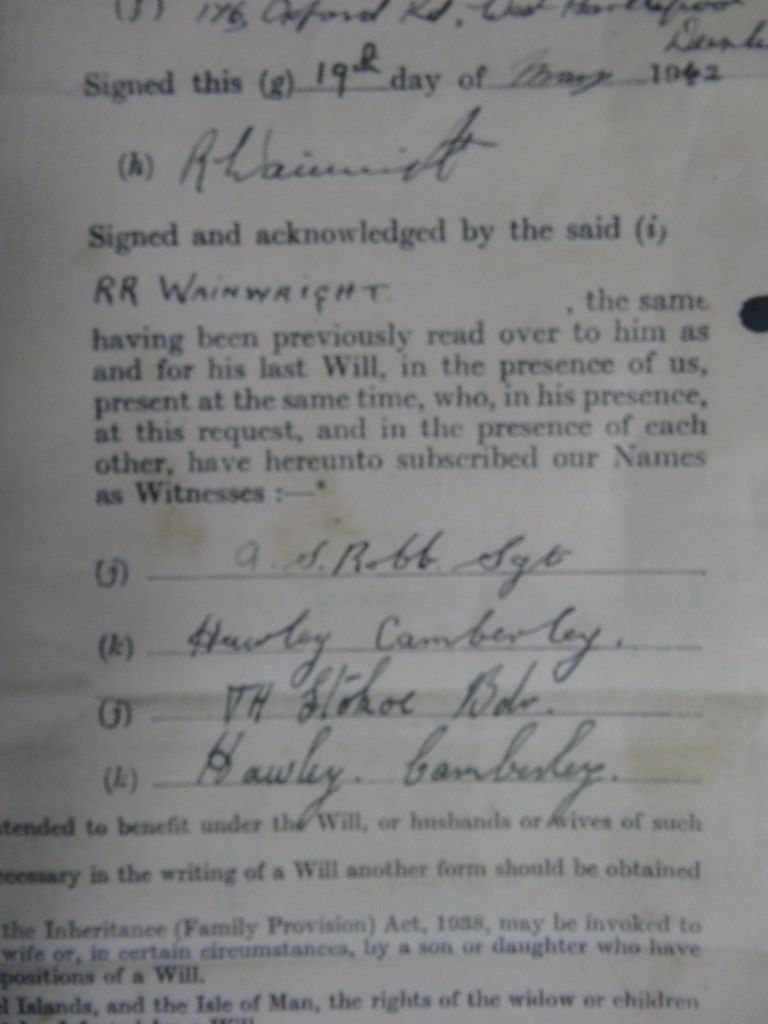
Above: 19 May 1942: Sergt. R.R. Wainwright’s will and Bombardier T.H. Stokoe’s signature.
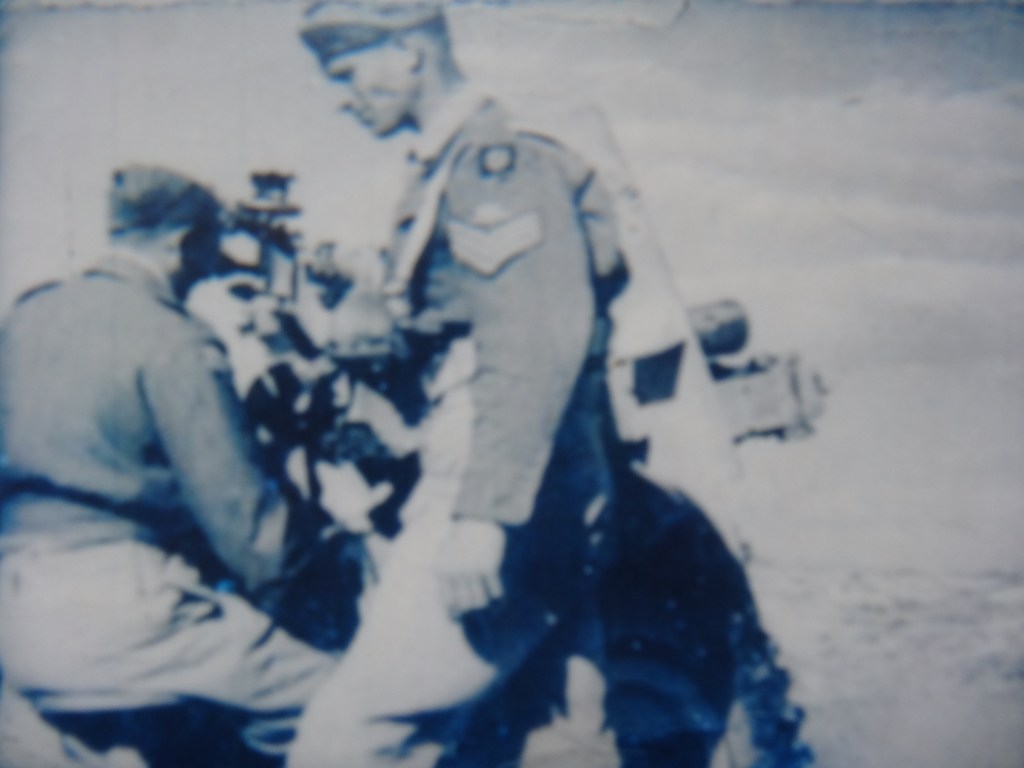
Above: 28 February 1943, a detachment of the Army Film Unit filmed 301 Battery. Sgt. R.R. Wainwright is in this photo (centre of the frame); the gunner on the left may be the No.3. L/Sgt. T.H. Stokoe was No.2. Perhaps he was also in the film.
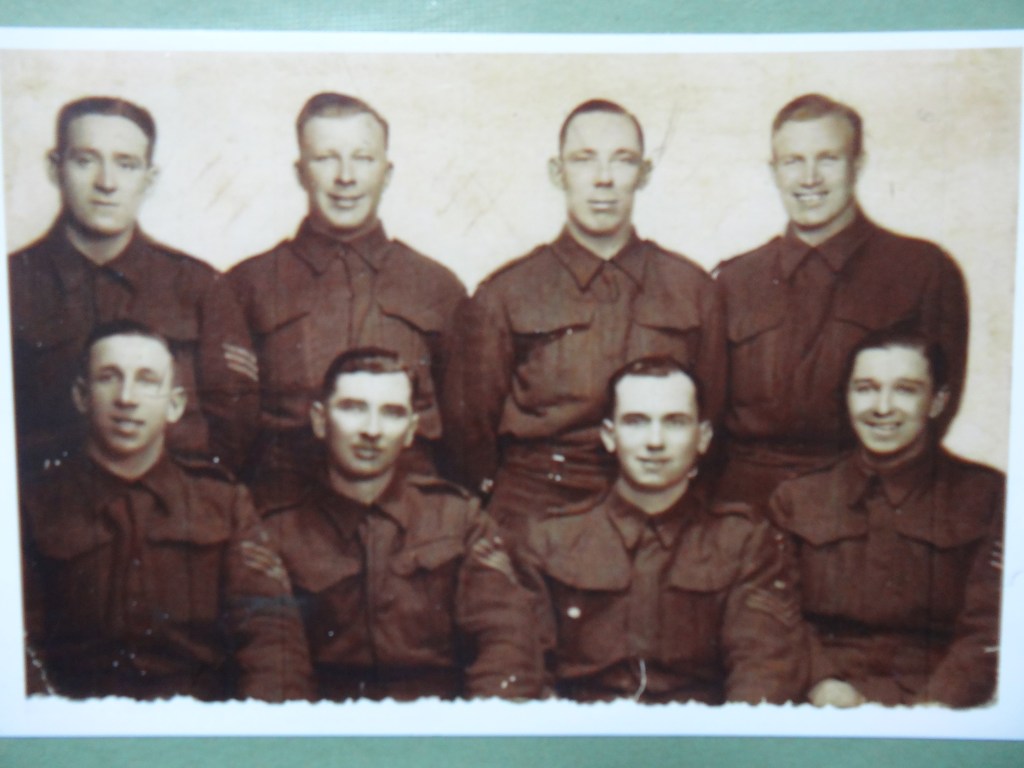
Above: November 1939: named are L/Sergt Bill Stokoe back left and Robert Wainwright back right. Could this actually be Thomas Henry Stokoe? His service details prior to May 1942 are unknown due to lack of research therefore we do not know if this could be him.
BURIAL
Ranville War Cemetery
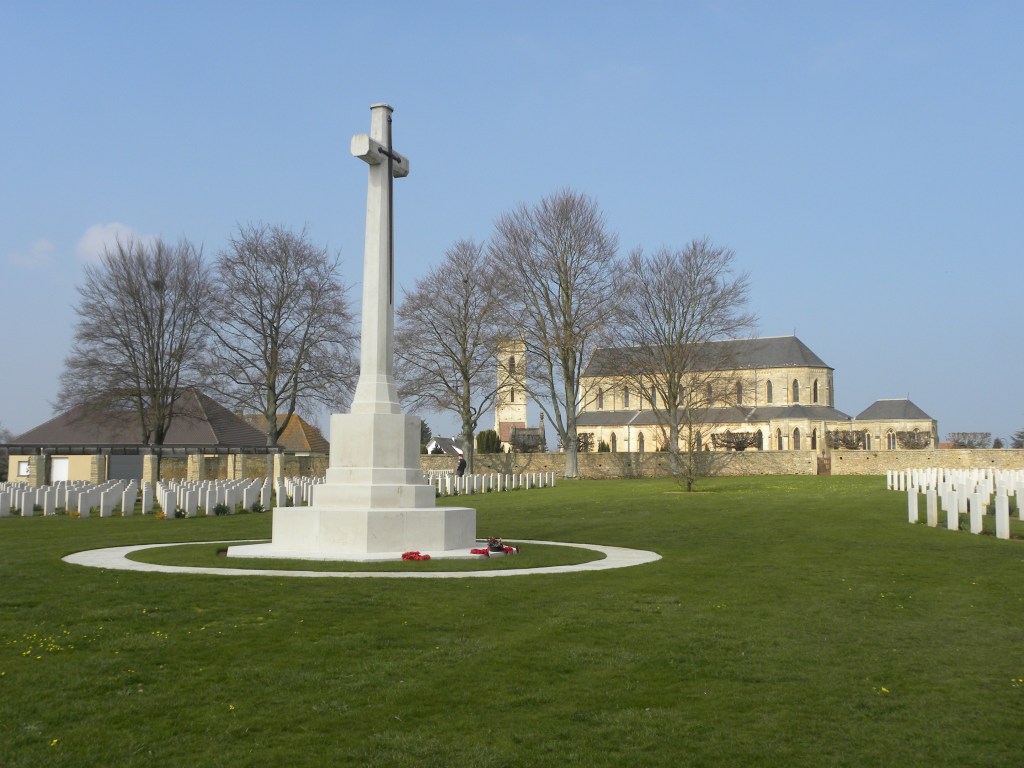
Lance Serjeant Thomas Henry Stokoe is buried at grave reference II.D.8, Ranville War Cemetery. Ranville is a village in the region of calvados, Normandy, France to the east of Caen. The Allied offensive in north-western Europe began with the Normandy Landings of 6 June 1944. Ranville was the first village to be liberated in France when the bridge over the Caen Canal was captured intact in the early hours of 6 June by troops of the 6th Airborne Division. Many of the Divisions casualties are buried here. The cemetery contains 2,235 Commonwealth burials of the Second World War.
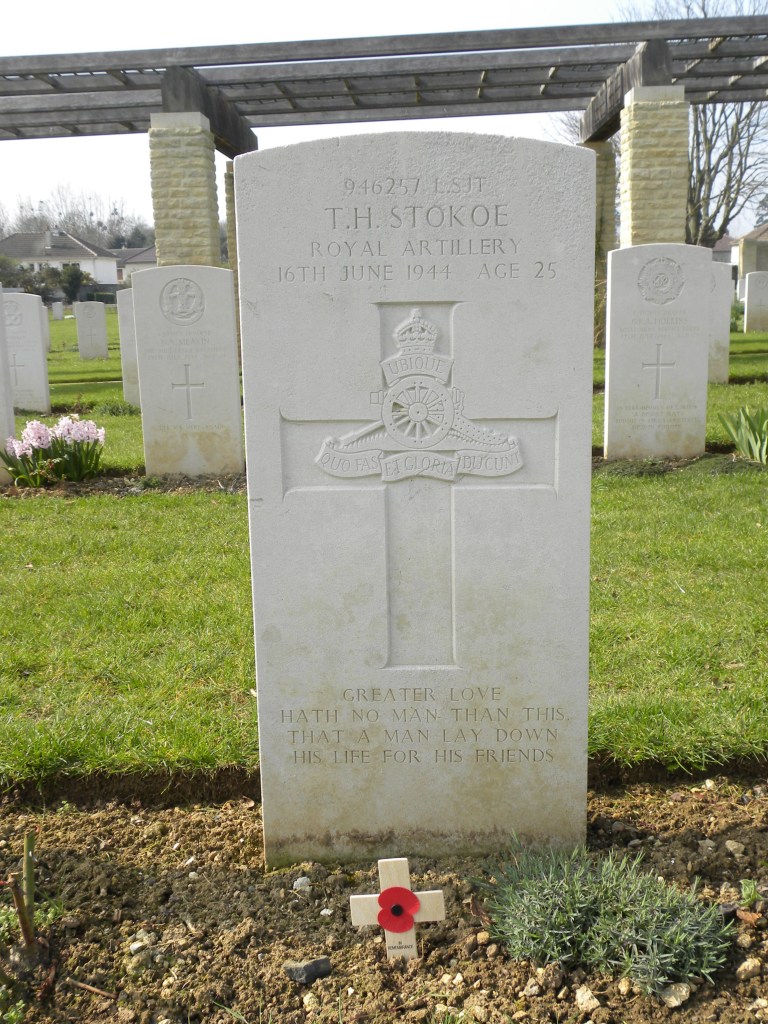
Headstone, 946257 Lance Serjeant Thomas Henry Stokoe
ACKNOWLEDGEMENTS
Thanks to Neil Wainwright and Debbie Hugill.
REFERENCES
[1] Commonwealth War Graves Commission (CWGC)
[2] 1939 Register & England & Wales Birth Index 1916-2007 Vol.10a P.406 Auckland 1919 Q2
[3] England & Wales Death Index 1916-2007 Vol.10a p.282 Auckland 1922 Q2
[4] England & Wales Marriage Index 1916-2005 Vol.10a p.384 Teesdale 1936 Q1
[5] 1939 Register
[6] Robert Wainwright of 176 Oxford Road, West Hartlepool. 826094 Sergeant Robert R. Wainwright served in the same unit as Thomas Stokoe. His great nephew, Neil Wainwright prepared a profile of Robert’s army service which are relevant to the service of L/Sjt. T.H. Stokoe. Thanks to Neil and Debbie Hugill for letting me see these notes and allowing me to post them here.
[7] Army Form B.2089
[8] Army Form B.200 Note: No assumptions can be made about L/Sjt. T.H. Stokoe’s service prior to this date. Sgt. R.R. Robinson was a pre-war Regular Soldier who saw action with the BEF in Europe from 24 September 1939 to 2 June 1940.
[9] Sgt. R.R. Robinson was posted back to NEW and his unit, 127 Fd. Regt. 29 November 1944
[10] http://www.dday-overlord.com/eng/12_june_1944.htm & http://en.wikipedia.org/wiki/51st_(Highland)_Infantry_Division
[11] This contradicts the date given on Sgt. R.R. Wainwright’s service records which gives 7 June 1944
[12] Army Form C2118A Sheet No.1 Situation at 1800 Hrs. Daily Unit: 127 (H) Field Regiment RA; Commanding Officer Lt. Col. M.J.B. Burnett RA (?) Month and Year: June 1944
[13] “Field of Fire”, the diary of Jack Swaab, an officer with 127 Field Regiment, 301 Battery
[14] “Wounded in Normandy Local Man in Wear Hospital” Northern Daily Mail 26 June 1944
[15] Neil Wainwright research
[16] CWGC
[17] CWGC identified by Neil Wainwright
[18] CWGC
 EVENWOOD RAMSHAW & DISTRICT HISTORY SOCIETY