The Scandinavian Vikings from Denmark first invaded the north east shores in the late 8th century and raided important sites such as Lindisfarne (785AD) and Tynemouth (800AD). In 867AD, the Vikings took York. The Danish Vikings raided the eastern part of the country. Those from Norway attacked Scotland and Ireland before raiding the north west of England.
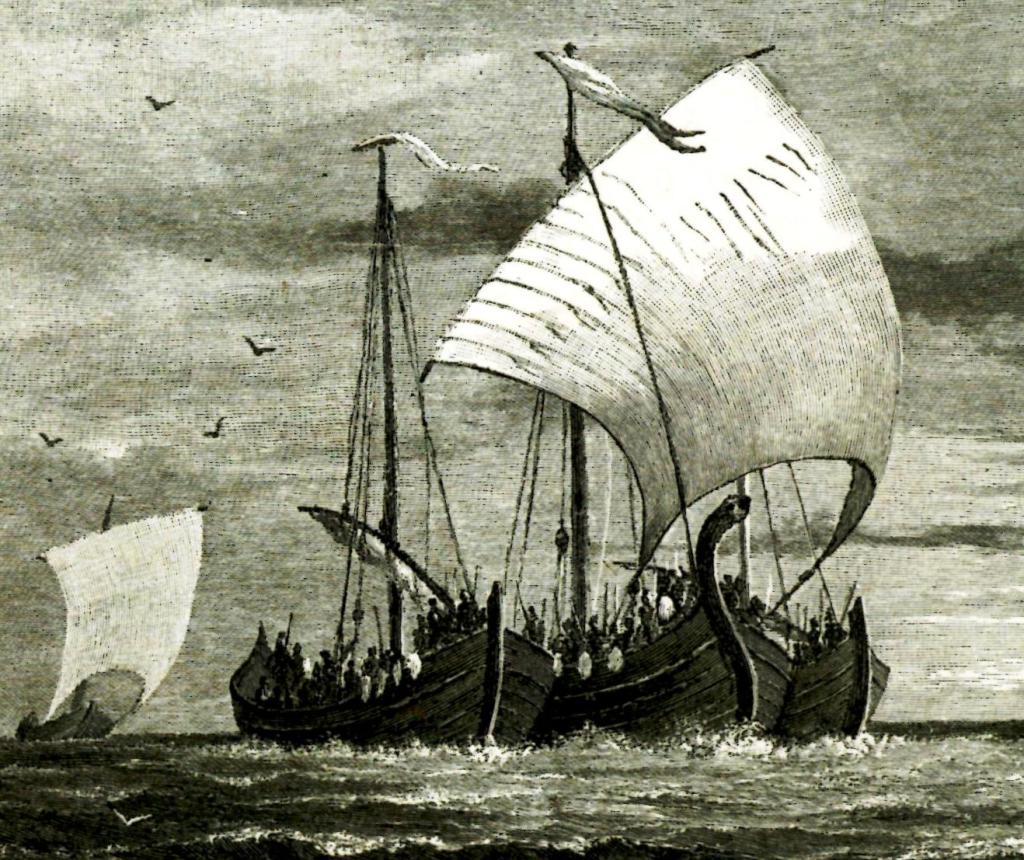
Above: An illustration of the Viking Long Ships
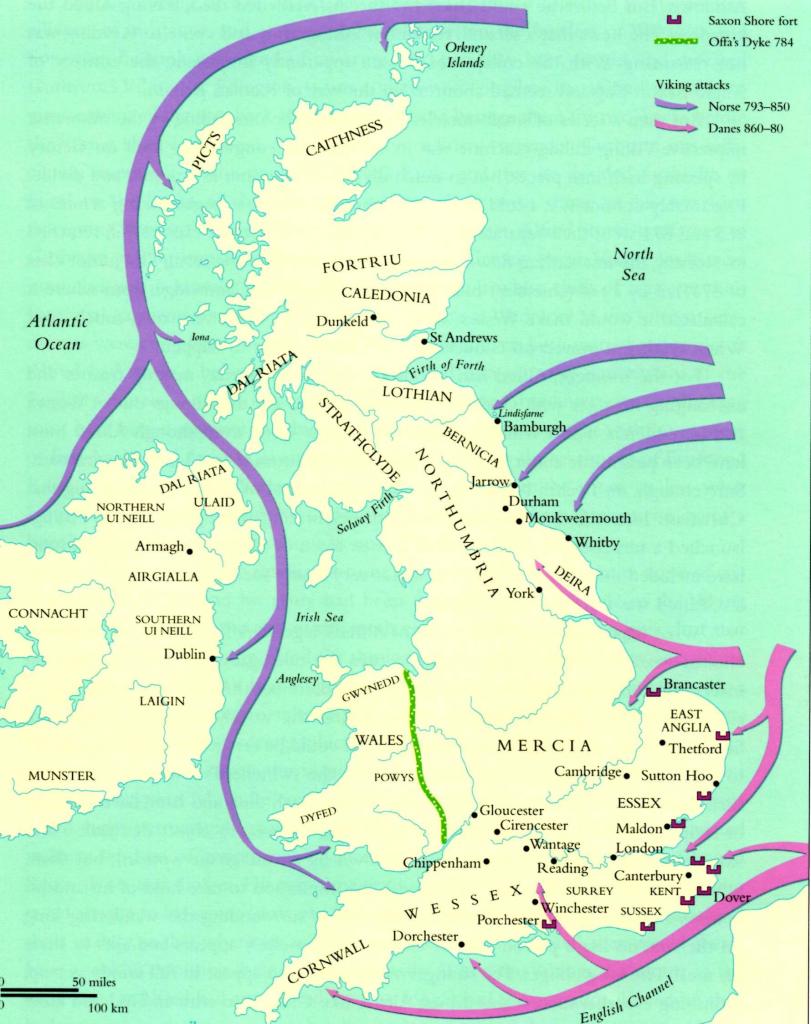
Above: Anglo-Saxon kingdoms and the coming of the Vikings [1]
821: The Bishopric of Hexham was absorbed by Lindisfarne meaning that the new bishopric extended from the Tweed to the Tees.[2]
The Viking raids and the flight of the Lindisfarne monks with the body of Cuthbert is well known. In 875, the monks fled westwards seeking safety. In 883, the monks came to terms with the invaders and settled at Chester-le-Street.
883: The new Danish King of York, Guthred granted an area of land between the Tees and the Tyne to the Community of St. Cuthbert which signified the beginnings of a County Durham, as we know it today.[3]
In 995, following more raids, they moved to Durham (Dunholme). Known as the community of St. Cuthbert, they finally settled in Durham a d built a timber minster to house St. Cuthbert’s remains. [4]
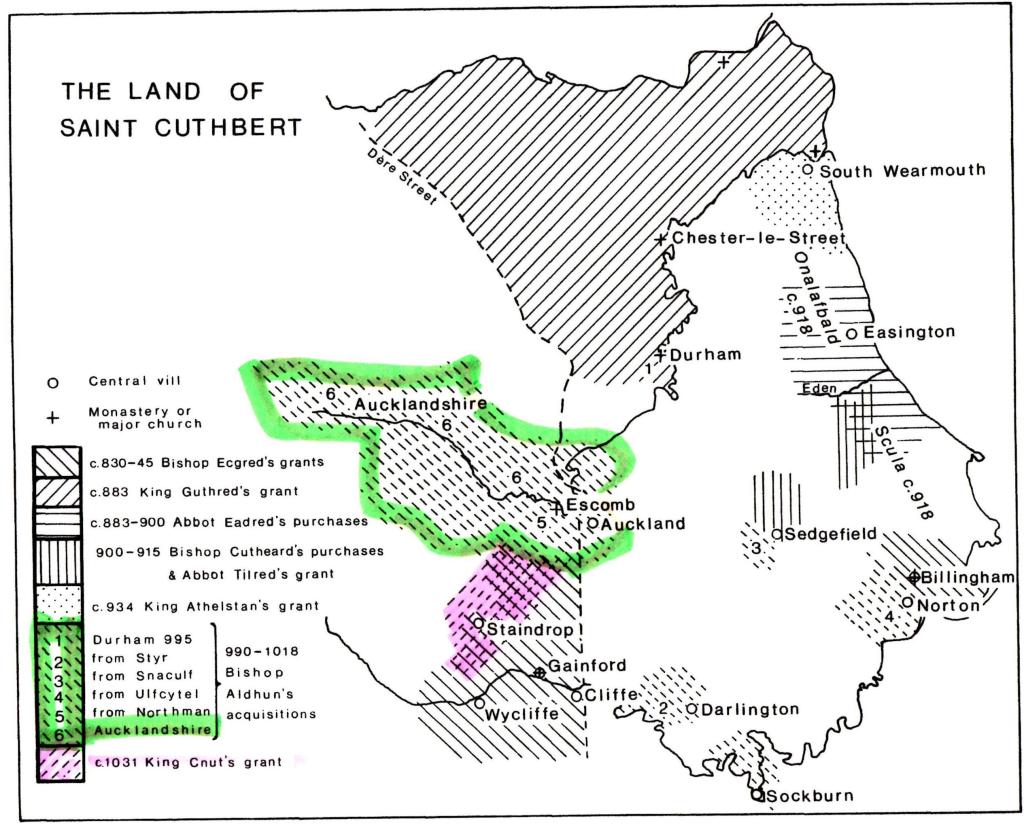
Above: The Land of St. Cuthbert.[5]
Did the Vikings enter the Gaunless Valley?
The Vikings certainly did not visit the area by long boat since the River Gaunless is too shallow. However, they may have visited and quickly left! The word, “Gaunless” is believed to be derived from an Old Norse word “gaghenles” which today we would say as “gormless.” It is difficult for a river to be gormless but it can be useless. The Gaunless could mean a trickle in that it does not sustain fish and does not have much of a flood plain which would double as a rich, fertile meadow.[6] This being the case, the Vikings would see little reason to occupy the area.
It is generally understood that Viking place names end with “by.” There are only 3 such names within a 5-mile radius of Evenwood – Raby, Selaby and Killerby. Further afield, to the south and along the River Tees, which was certainly navigable as far upstream as Yarm, are the following names – Thornaby, Maltby, Girsby, Hornby, Cleasby and Rokeby with Eppleby and Melsonby a short distance to the south.
The map below shows Scandinavian place names. It is clear to see that in eastern England, north of the River Tees, there are few settlements of Scandinavian roots.
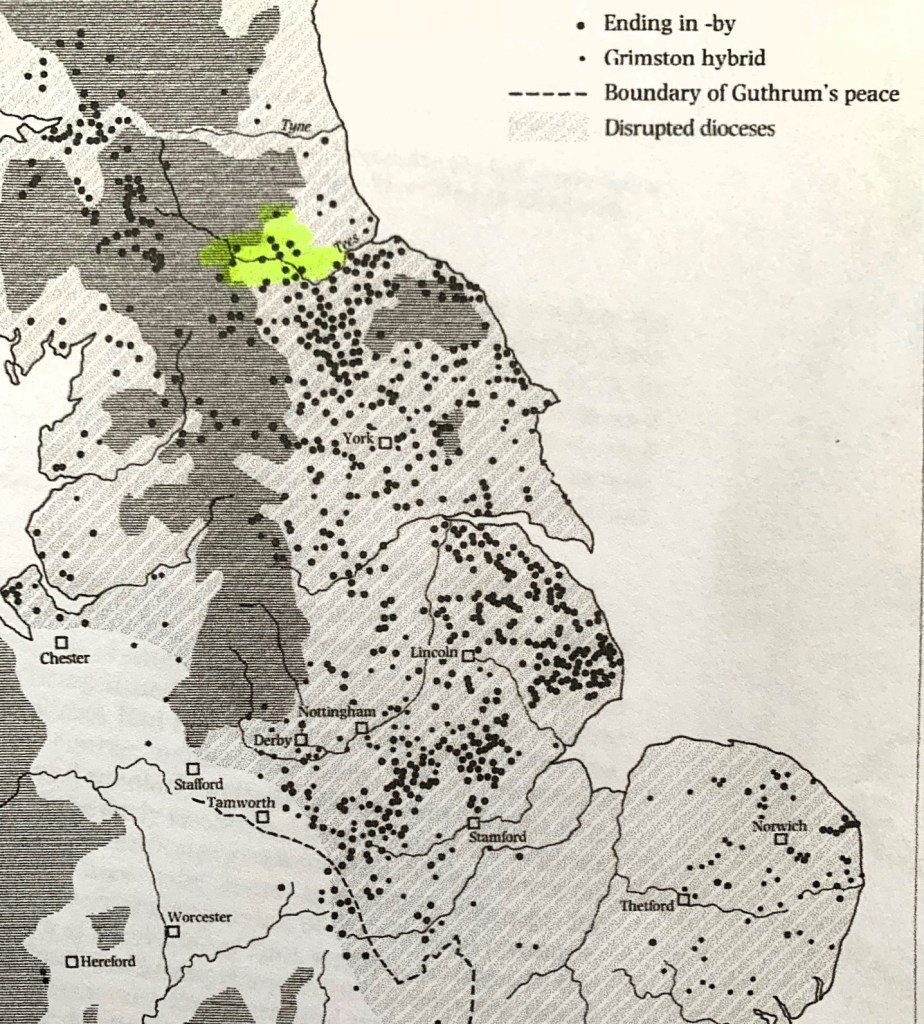
Above: Scandinavian Place Names
[1] “A History of Britain: at the Edge of the World 3000BC-AD1603” 2000 S. Schama p.59
[2] “The Millennium History of North East England” 1999 D. Simpson p.58
[3] Simson p.62
[4] Simpson p.77
[5] “An Historical Atlas of County Durham”1992 Durham County Local History Society p.21
[6] https://www.thenorthernecho.co.uk/news/8233368.cockfield-fell-12-000-years-history/
 EVENWOOD RAMSHAW & DISTRICT HISTORY SOCIETY