OLIVE NELSON COOPER 1890-1895
Olive Nelson Cooper was born 6 September 1890 at Wigglesworth Farm, Cockfield, the daughter of Christopher Tate Cooper (1841-1915) and Jane Nelson Cooper (1849-1937). Olive was their only child. She died 6 April 1895, suffering from croup.[1] The family then lived at West View, Evenwood.

Above: Olive’s headstone, Evenwood Cemetery [2]
Reid Cooper, our correspondent from the USA, confirmed that Olive was his great aunt and he kindly offered family details which we post here. It is a story of emigration to the USA and of hope for a better life, not untypical of pitmen and their families.
——————————————————————————————————————–
FAMILY BACKGROUND
Olive’s father was Christopher Tate Cooper. He was born at Cramlington, Northumberland in 1841. He descended from at least 5 generations of coal miners, some of whom were employed in “management” as viewers, (colliery managers) or under-viewers. Christopher’s place was with the pitmen and he was elected as a union official. Inevitably, this role meant heavy involvement with industrial disputes particularly during the period 1860-1880. Observation of the census records show that Christopher travelled widely in search of work – Northumberland, Sunderland, Hebburn, Staffordshire, Cumberland, South West Durham (Cockfield and Evenwood) and finally, Dunston. Consequently, his first wife, Sarah and second wife, Jane, made many homes.
In 1861, 20 years old, Christopher and his father worked at Monkwearmouth, Sunderland. In 1863, Christopher married Sarah Duery at Sunderland and by 1871, they had 5 children all under the age of 6. They lived at Hebburn on Tyneside. By 1881, the family were at Audley in South Staffordshire. The family had grown to 8 children, 4 boys and 4 girls. In October 1882, Sarah Cooper died. She is buried at Audley.[3] In 1889, Christopher married Jane Nelson at Whitehaven, Cumberland.[4] Presumably, he’d gone from Staffordshire to Cumberland in search of work. By September 1890, Christopher and Jane lived at Wigglesworth Farm, Cockfield and their daughter Olive Nelson Cooper was born 6 September 1890.

Above: 6 September 1890: Olive Nelson Cooper, Register of Birth
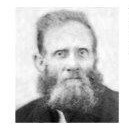
Above: Christopher Tate Cooper 1841-1915

Above: 1891 Census entry: Cockfield; Wigglesworth Farm: The Cooper family
The 1891 census records that 4 of Christopher’s children from his first marriage namely 23 years old Mary, William (20), Sarah (aged 16) and Jane (15) lived with him and Jane. Christopher and William worked as coal miners, Christopher being an overman.
In 1893, Christopher’s youngest son William (1870-1950) married Mary Ann Wilkinson at Bishop Auckland. There was another marriage between the Cooper and Wilkinson families. Christopher’s daughter Sarah married William Johnson Wilkinson (1870-1898) at Evenwood Parish Church, 20 December 1894. The wedding was witnessed by Christopher and his daughter Mary, known as “Polly.”[5] Sarah’s husband, William Johnson Wilkinson was the older brother of Mary Ann Wilkinson who married William Cooper, the previous year. Sarah and William Wilkinson had a son Joseph, born 10 January 1894.
Tragically, Olive Nelson Cooper died 6 April 1895 when only 4 years old, having suffered from croup.
In 1898, Christopher’s daughter “Polly” Cooper (1867-1939) married Thomas Thirlaway (1861-1930). Their marriage was registered at the Primitive Methodist Church, Gateshead.[6] By 1901, Thomas and Polly lived at Pine Street, Stanley with their 2 children, William Cooper aged 2 and Martha Jane aged 2 months.[7]
In 1898, Sarah’s husband, William died, aged 28. The death was registered at Lanchester.[8] By 1901, widowed Sarah Wilkinson lived with her father Christopher and step-mother Jane Cooper, at Gibson Terrace, Dunston. Later that year, Sarah Wilkinson married Thomas Tindale. A daughter was born 6 August 1904 who they called Olive Eleanor, presumably in memory of Sarah’s half-sister Olive, who she’d probably helped bring up when living at Cockfield.
Christopher’s youngest son William and Mary Ann (nee Wilkinson) moved to South Moor, near Stanley, County Durham and by 1901, they had 4 children all under 6 years, 3 sons and 1 daughter. Their daughter, born in 1895, was named Olive. It is fair to assume that she was named after little Olive buried in Evenwood Cemetery. By 1911, William and Mary Ann were still living at South Moor and 40 years old William was still hewing coal. The family had grown to 7 children, 3 sons and 4 daughters. Olive was now 15 years old.
Christopher and Jane Cooper continued living at Dunston where Christopher died in August 1915.[9]
OFF TO AMERICA
A decision was made by 3 members of the extended family to emigrate to the USA. There were:
- Thomas and Polly Thirlaway. They were the first to emigrate in 1904. Thomas went to Philadelphia to work in the coalfields but the family finally settled in Terra Haute, Indiana.
- Jack Wilkinson, (William Cooper’s brother-in-law): In October 1912, they headed for New York. Their final destination was Des Moines, Polk County, Iowa.
- William and Mary Ann Cooper: In August 1913, they boarded SS Franconia at Liverpool bound for Boston, Massachusetts together with their 8 children. They too settled at Des Moines, Polk County, Iowa.
A new life beckoned.
SOME BRIEF NOTES ABOUT COAL MINING IN INDIANA & IOWA [10]
We have learnt that 3 members of the extended Cooper family emigrated to the USA. In 1904, Thomas and Polly Thirlaway and their 2 children settled in Pennsylvania which at the time was the largest coal producing state in the USA. In 1908, the State extracted some 117 million tons of coal. Illinois was the second largest producer with 47 million tons, Indiana fifth with 12.3 million tons and Iowa ninth with 7.1 million tons. The family moved onto Terra Haute, Vigo County, Indiana. Sadly, on 20 February 1930, Thomas was killed when working at the Submarine Coal Mine, near Tecumseh. He was caught under a mass of falling slate and death resulted from a crushed chest. He was 68 years old.[11] He is buried in Highland Lawn Cemetery, Terra Haute.

Above: February 1930: Newspaper article relating to the death of Thomas Thirlaway
Polly moved to Des Moines, Polk County, Iowa, presumably to be near to her family where she died 14 March 1939, aged 71. She too was buried at Highland Lawn Cemetery, Terra Haute, next to her husband.[12]
In 1912, the second family to emigrate was Jack Wilkinson, William Cooper’s brother-in-law, and the third, in 1913 was William himself, his wife Mary Ann and family.
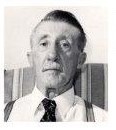
Above: William Cooper Snr. 1870-1950
The men of the Wilkinson and Cooper families worked in the mines at Polk County, Iowa to the north of the state capital, Des Moines. Coal mining was a major industry in Polk County between the 1870s and 1940s. By 1893, there were 23 coal mines. The mines were not particularly well mechanised due to the height of the coal seams and all but 2 used mule haulage underground. With the exception of 2, all were worked by room and pillar rather than the long wall method of extraction. By 1906, there were about 3,000 employed in the industry. Production peaked in 1918 with a total of nearly 51 million tons produced. From 1927, pits closed as competition from oil and gas in the energy market increased. The last mine closed in 1994. Jack Wilkinson, William Cooper senior and his sons Joseph and Ernest worked for the Bloomfield Coal Company which commenced operations about 1890. The Wilkinson and Cooper men worked and lived at Saylorville then at Marquisville.[13] Some 275 miners worked at Marquisville but the mine was abandoned after a serious fire.
REMEMBERING OLIVE
As for little Olive Nelson Cooper, buried alone in Evenwood Cemetery, she was certainly not forgotten by her family. Two nieces were named after her.
- Christopher’s son William and his wife Mary Ann named their daughter Olive. She was born 10 July 1895 at South Moor and went to America with them. She died in August 1988 aged 93 at Des Moines, Polk County, Iowa. Her headstone bears the name Olive Harris.[14]
- Christopher’s daughter Sarah, named her daughter, to her second husband Thomas Tindale, Olive Eleanor. She was born 6 August 1904. Olive married James Smith in 1937 at South Shields and died in 1975 aged 71 at Derby.
Living at Cockfield, in 1891, William and Sarah were about 20 and 16 years old respectively when their half-sister Olive was born. In those days, William and his father Christopher were regarded as the “bread-winners.” Christopher’s second wife Jane and his daughters to his first marriage, namely Polly (then aged about 23), Sarah (16) and Jennie (15) looked after the home. It is not difficult to imagine Sarah looking after and taking care of little Olive during her infancy, as was usual during those times.
LIFE IN USA
To emigrate to the USA in 1913 was a big decision. Did it work out? Was life better? Were their hopes realised? I quote below the words of our friend Reid Cooper who has contributed enormously to this story:
“From what I have learned in my nearly 60 years of family research the move to the United States was beneficial to both families and the descendants that followed. I know that it was important to the women in the line especially that the cycle of mining be shifted, or even broken so that their husbands and sons had more varied educational and job opportunities than their ancestors had been given before them.
I must say that I have always been in awe of the courage and grit that it took for so many generations of my mining ancestors to go deep underground and risk life and limb to dig out coal in order to support their wives and children. And then to think of the young children who began working in the mines at ages 8 to 12, a few even younger, it absolutely blows my mind. I’ve never ever doubted I come from sturdy stock and it makes me proud of my ancestors’ bravery and hard work ethic. I actually consider it an honor to document their struggles and life journey through my research. That way their sacrifices and accomplishments won’t be forgotten.”
Reid Cooper is the great grandson of Christopher Tate Cooper (1841-1915), grandson of William senior (1870-1950) and son of William Cooper junior (1908-1977).
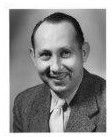
Above: William Cooper Jnr. 1908-1977

Above: Reid Cooper born 1944
A COMMENT
The situation in Polk County, Iowa appears to have been similar to that in South West Durham – thin coal seams i.e. not much above 6’; pit ponies in common use (mules in the USA); not much mechanisation; dangerous working conditions which led to accidents and deaths in the pits; later competition from more economic coalfields and new energy sources such as oil & gas leading to pit closures from the 1920s and final closure of collieries by the 1990s. In SW Durham, the coal industry reached its peak shortly after World War 1, many pits closed in 1920s & 30s and most were closed in the 1960s. At nationalisation in 1947, there were about 125 pits in County Durham employing about 120,000 miners. In 1993, the closure of Wearmouth Colliery at Sunderland, ended deep mining in the former administrative area of County Durham. In 2005, Ellington Colliery, Northumberland was closed which completed the colliery closure programme in North East of England. The last deep mine to be closed in the UK was Kellingley Colliery, South Yorkshire. Since 2016 there has been no deep coal mining industry in the UK. Opencast coal mining in the UK, known as strip mining in the USA, has ceased.
Back to the USA, with regard to employment, it seems that Reid Cooper’s grandfather and uncles were the last of his family to find work in coal mining. Subsequent generations were encouraged to look for work elsewhere. Reid’s father did so, working in food distribution and so did Reid. In NE England measures to encourage employment were taken in the late 1930s, just prior to WW2. Regional policy to aid industrial development of the Depressed Areas was introduced in the years following the war. Some new factories were established and new employment opportunities were offered. This ended in the 1980s with the Thatcher government. The dismantling of steel, rail and coal industries took place which severely curtailed employment opportunities. Arguably, other sources of employment have been established mainly in the service sector – or not, as the case may be.
In my family, some of our relatives emigrated to the USA in the 1880s and found work in the coal mines of Illinois and Wyoming. In the 1930s, some went down south to find work in the South Yorkshire coalfield, at Maltby Colliery. My grandfather was the 4th generation[15] and last to work as a coal miner, locally. After being wounded and honourably discharged from the army during WW1, he was unemployed for much of his remaining working life. Prior to WW2, my father worked in the clothing industry in one of the new factories established on a purpose built industrial estate at St. Helens Auckland. He saw service in WW2, returned to his former employment after the war before going to work at Bakelite at Newton Aycliffe.
My brother and myself have been in employment for our entire working lives. This seems pretty similar to the situation experienced by the Cooper family in Iowa, USA.
Kevin Richardson 29/11/2024
ACKNOWLEDGEMENTS
Reid Cooper & Aline Waites
REFERENCES
[1] Croup refers to an infection of the upper airway, which becomes narrow, making it harder to breathe. Croup also causes a cough that sounds like barking.
[2] Given that many plots in Evenwood Cemetery are unmarked with no headstone, this is a fine sandstone headstone with room for other inscriptions. Perhaps, the family did not intend to move away?
[3] Reid Cooper email 12 Nov.2024.
[4] England & Wales Marriage Index 1837-1915 Vol. 10b Page 988 Whitehaven 1889 Q2
[5] Find a Grave website
[6] England & Wales Marriage Index 1837-1915, Vol, 10a p.1238 Gateshead 1898 Q1 & email from Reid Cooper dated 21/11/2024.
[7] 1901 census
[8] England & Wales Death Index 1837-1915 Vol.10a p.159 Lanchester 1898 Q2.
[9] Reid Cooper email.
[10] “History of Coal Mining in Iowa” 1909 James H. Less & Coal Statistics by S.W. Beyer & https://www.google.com/search?q=coal+mining+in+polk+county+iowa
[11] Reid Cooper and a local newspaper report
[12] Find a Grave website
[13] Reid Cooper, family details
[14] https://www.ancestry.co.uk/search/collections/60525/records/41244643 Note: She may have married twice.
[15] There may have been more but Robert Richardson (1779-1833) was recorded as “pitman of Cockfield” in the 1810 Cockfield Baptism Register for his daughter Mary. This is the first written, recorded evidence.
 EVENWOOD RAMSHAW & DISTRICT HISTORY SOCIETY