We have 1 photo of Norwood Colliery, some maps, plans and documents relating to both collieries but we believe that they are covered by copyright so we cannot show them here. They are in our records in the Randolph Community Centre and can be viewed there. This account will be descriptive and include a number of other maps and illustrations.
Norwood Colliery was the name given to a number of pits and drifts worked to north of the River Gaunless, west of Ramshaw and east of High Lands. Ramshaw and High Lands grew as a result of coal mining and were small pit villages, typical of County Durham. During the early days, the royalty to work minerals belonged to the Bishop of Durham, the land was owned by Lord Strathmore (the Bowes family) and the coal was worked by the Dixon family and their partners. The worth of the coal was such that Lord Strathmore insisted that the Stockton and Darlington Railway Company provide a railway from the Shildon to Witton Park Colliery line to Haggerleases Lane to serve his interests in Norwood Colliery (see below).
During the 19th century, a variety of coal companies developed the royalty. Norwood Colliery was worked with Evenwood Colliery which mined coal to the south of the river. Evenwood Colliery was located on the eastern edge of Cragg Wood.
Some details are given below.
1796: Norwood Colliery belonged to the Right Honourable Earl Strathmore & the Honourable George Bowes. There were a number of pits, the main pit was situated to the east of the village now known as High Lands. It was operated by Messrs. George and John Dixon and John Flintoff – the Dixons of “Cockfield fame”.
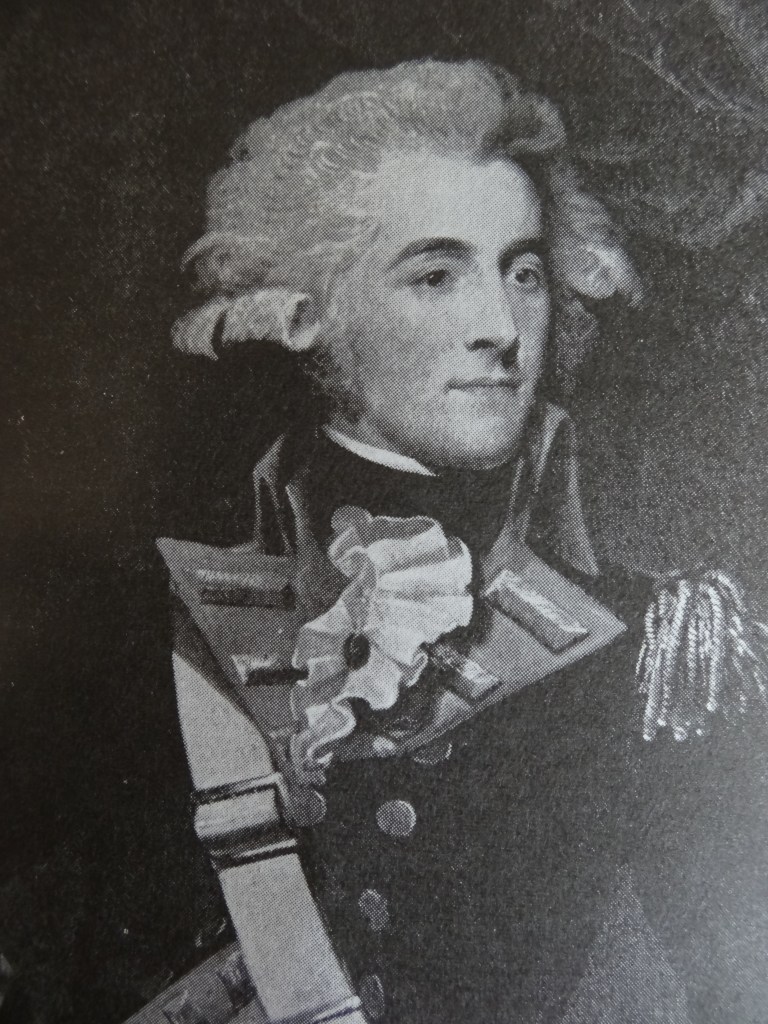
Below: John Bowes, 10th Earl of Strathmore (1769 – 1820)
Below: This illustration is taken from Armstrong’s map of 1868 and shows 2 men at a coal pit using a timber windlass, either lowering an empty bucket or hauling up a full one. Similar equipment would have been used on the Norwood royalty.

1807: A report dated 13 July 1807 prepared by William Stobart related to the Norwood and Ramshaw Collieries, under lease from the Lord Bishop of Durham to the Earl of Strathmore.
Norwood Colliery had been won for many years and, “the workings are much affected by dykes and swellys and the obtaining of coal is very difficult and troublesome”.
Ramshaw Colliery, part of the same lease as Norwood, “is carried forward by means of a fire engine that frees the mine of water, lifting the same from the seam into a delivery drift to the Engine Pit from the River Gaunless…these collieries are both sett to a working tenant.”
BETWEEN 1821 & 1830
An undated map in the Strathmore Collection, “Plan of part of the ancient enclosed lands in the Barony & Township of Evenwood in the Parish of St. Andrews Auckland, Durham” shows various estates in the Evenwood area including:
- The Gordon Estate belonging to John Trotter Esq., showing 6 pits.
- The Ramshaw Estate belonging to Thomas Humphries, showing 14 pits.
- Evenwood Park belonging to the Trustees of the late Earl of Strathmore, showing 24 pits.
Evenwood Park was to the north of the River Gaunless, bordered to the east by Evenwood Lane (the footpath which now passes Norwood Cottage) and to the west of the High Lands road. There were 24 pits working on this land including the Norwood Engine Pit.
1820: GREENWOOD’S MAP
Below, this map shows areas of “coal” – 2 locations are relevant to the above – north west of Evenwood which would be the Norwood Colliery on Evenwood Park Estate and north of Evenwood, north east of Ramshaw Hall on the Ramshaw Estate.

1823: ROBERT STEPHENSON & J. DIXON’S MAP
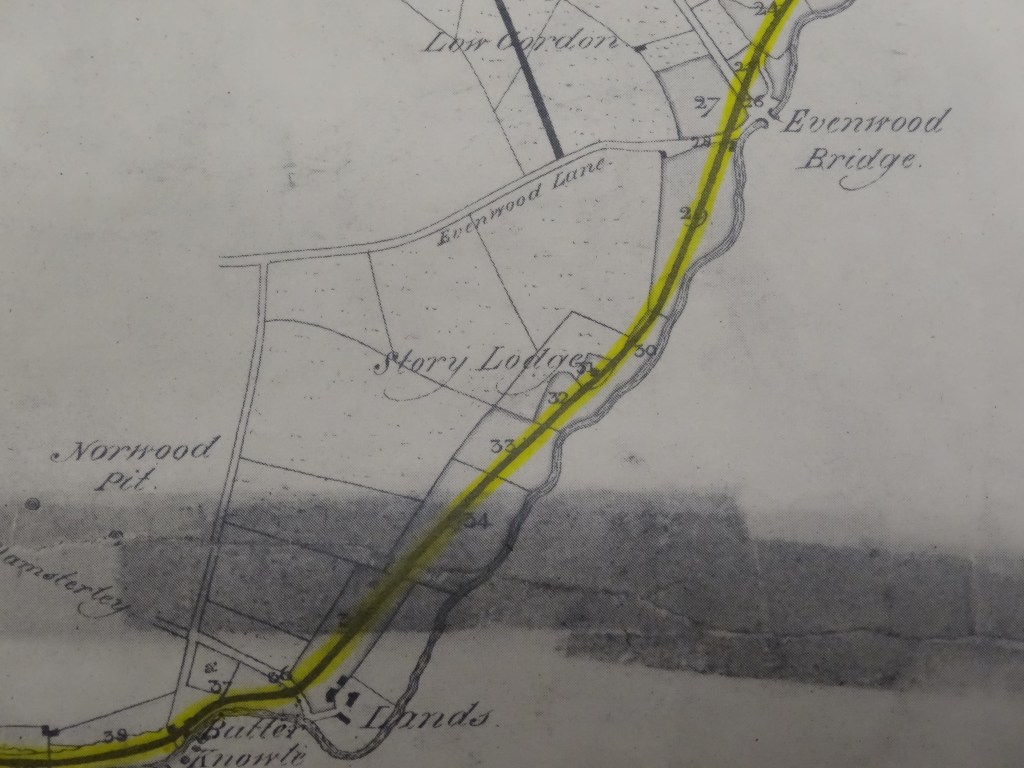
This map is a “deposited plan” required for the Quarter Sessions, the local government of the day, and laid before Parliament for approval. There were a number of variations of the plan. The Stockton and Darlington Railway Company’s railway ran from Witton Park Colliery to the River Tees at Stockton via Shildon and Darlington. The route shown on this revised plan went from St. Helens to Haggerleases Lane and was to be known as the Haggerleases Branch Line. Lord Strathmore petitioned for this line to be implemented to serve his Norwood Pit. Reverend Luke Prattman also petitioned for it to serve his pits west of Haggerleases Lane.
Below, the map below is a detail which shows the route as it travels along the River Gaunless, west of Evenwood Bridge and shows Norwood Pit, situated east of modern day High Lands.
In 1827, the Norwood royalty was advertised to let. The Five Quarter and Hutton coal seams were reportedly exhausted but the Beaumont and Brockwell seams were workable.
In 1828 Messrs. Botcherby & Sharp held the lease for Norwood mines.
In May 1830, the railway was opened as far as Cockfield and the Haggerleases Branch was completed by October 1830. The line gave an outlet to the Norwood Pit which was connected to the railway by the Isabella tramway (see the Ordnance Survey map, 1st edition, surveyed in 1857, published in 1859.) It was horse drawn until September 1856.
Below: An illustration of a horse drawn coal waggon

By May 1835, a Mr. Barratt took the Evenwood & Ramshaw Royalties and subsequently possessed himself of the Norwood lease. With his partners, Botcherby & Brown, they sunk a new “winning” called Craggwood Colliery on the Norwood Royalty.
The lease and collieries were sold to Durham County Coal Company (DCCC). New leases were granted for the Norwood, Ramshaw and Evenwood Royalties to the DCCC and the Cragwood Royalty to the Northern Mining Coal Company (NMCC). DCCC was launched in May 1836. The company’s Honorary Directors included John Bowes MP and his step father, William Hutt MP.
In October 1836, Evenwood Colliery won coal at 70 fathoms and estimated to bring to bank 200,000 tons annually.
Below, the press article The York Herald 22 October 1836

Cragwood Colliery was sold to the NMCC and in 1837, it was formed with a capital of £500,000.
John Bowes MP for South Durham, was one of the trustees for the late Earl of Strathmore, being his illegitimate son. From 1844 onwards, John Bowes enjoyed commercial success with Marley Hill Colliery and coke production (John Bowes & Partners) and his association with Charles Palmer (Palmers Shipbuilding & Iron Co. Ltd.). William Hutt (1791-1882) MP for Hull was John Bowes step-father, being married to his mother, Mary (1790-1860) Countess of Strathmore. They were close friends and business partners.
1841 and 1843: DCCC was involved in a dispute with John Bowes. He stated that, “our friends of the coal company are both knaves and fools…I will not stand any more nonsense on the part of these fellows.”
Below, John Bowes (1811–1885)

Below, 1844: A typical view of a colliery.

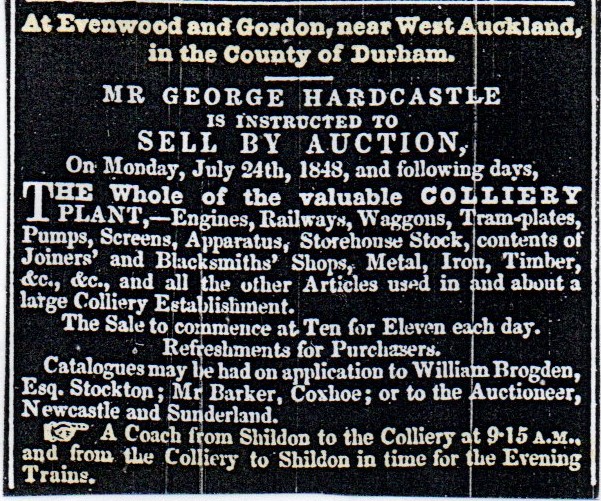
1848, Evenwood & Gordon Collieries to be sold by auction.
Below, press advertisement
1851: OLIVER’S MAP
This map shows details of pits on the Norwood royalty.

September 1851, Storey Lodge Colliery, (formerly known as Cragwood Colliery) was sold at auction to the North Bitchburn Coal Co. Ltd.
1852: BELL’S MAP
Collieries shown are:
- Evenwood Colliery, also known as Thrushwood Colliery
- the unnamed colliery to the south of Evenwood Colliery (later called Tees Hetton Colliery)
- Evenwood New Winning, later known as Evenwood Colliery (see Ordnance Survey map 1st edition 1859)
- Norwood Colliery with coke ovens
- Gordon Colliery

1852, DCCC was wound up and most of the £500,000 with which it began, had been lost.
1859: Map to show the collieries along the River Gaunless between Evenwood and Cockfield (Ordnance Survey, 1st edition, surveyed 1856/57 published 1859)
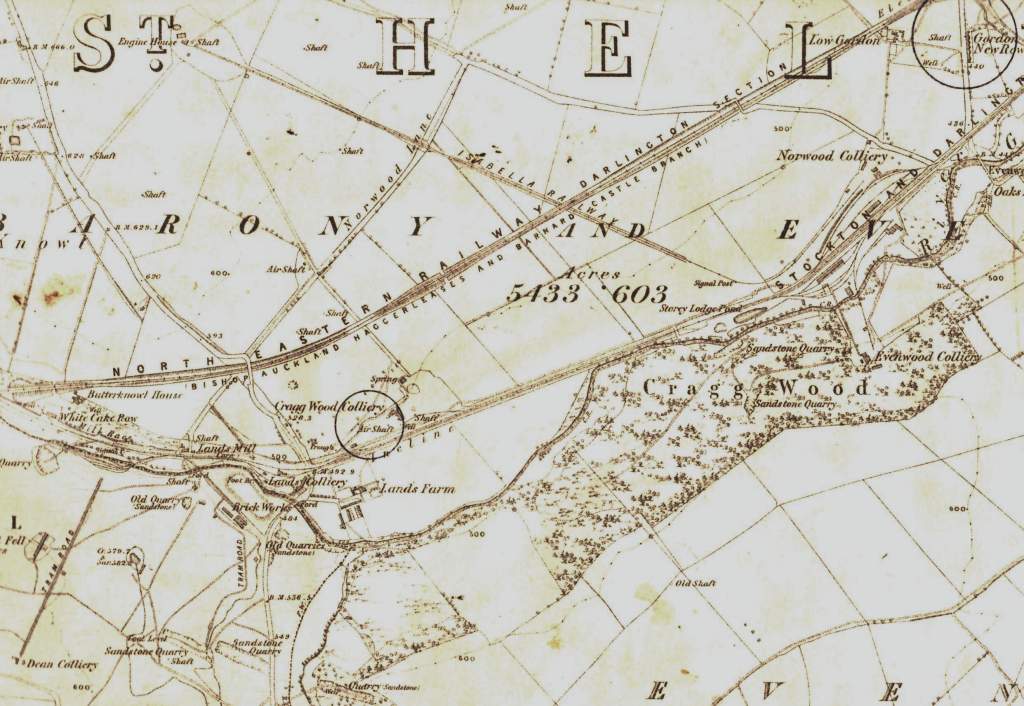
1859: A detail of the above map to show the Evenwood and Norwood Collieries
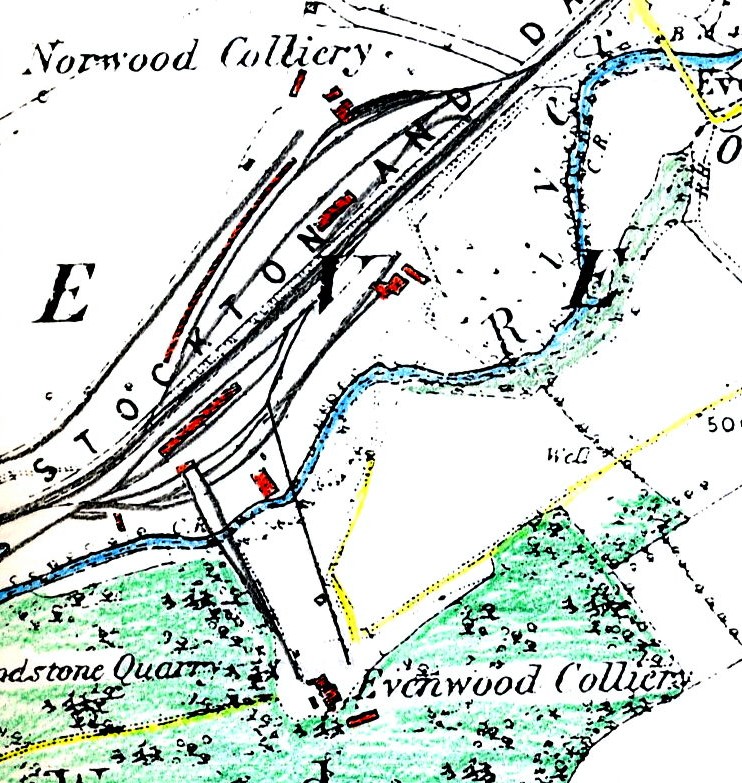
In 1860, Gordon and Evenwood Collieries was worked by Messrs. Armstrong and Partners. The Norwood Collieries royalty, the superior lease of which is held by John Bowes Esq. from whom it is sub-leased to Messrs. Hedley & Co., the owners of these collieries.
For a time, the collieries were worked as one concern but by 1860, Gordon and Evenwood were carried on by the representatives of the late Mr. Armstrong and Norwood by the representatives of the late Mr. Booth. L.P. Booth, until his death was the manager and owner of these collieries and had business and family associations with the Hedley family. Messrs. Hedley & Co. were the owners of the Norwood Colliery.
By about 1870, Thomas Charlton & Co. bought out Messrs. Charles Armstrong & Son . Thomas Charlton, a mining engineer for Bolckow, Vaughan and Co., had interests in the Norwood Colliery dating from 1860. Together with his son Robert Hedley Charlton and Thomas Ingledew, he began trading as Thomas Charlton & Co. The company also acquired the Bitchburn, Tees-Hetton and Storey Lodge Collieries.
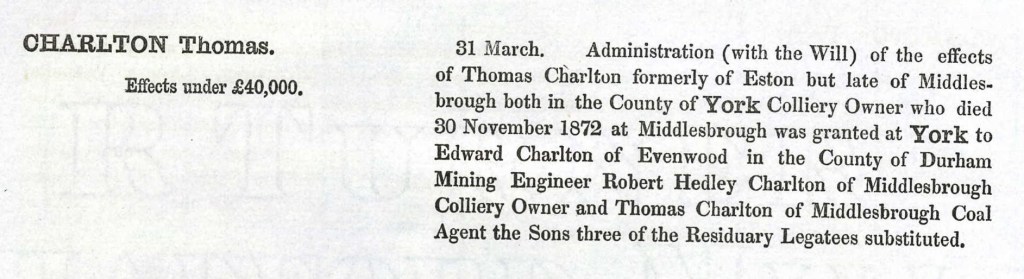
1872, after Thomas Charlton’s death, his interests passed to his trustees – his sons Edward, Robert Hedley and Thomas.
The Charlton period of ownership of the Evenwood and Norwood Collieries was turbulent with many legal disputes. It seems that Thomas Charlton senior left his financial affairs in turmoil.
1874: Headstone in Evenwood Cemetery – Robert Richardson, aged 35 killed at Evenwood Colliery by a fall of stone.

March 1883, Evenwood Colliery including the Charlotte Winning Pit (which pit was this?) and Tees Hetton Colliery was up for sale
1884: Evenwood Colliery closed, 250 men and boys given their notices and the “whole of the gear was brought to bank.”
1885: Evenwood Colliery and Thrushwood Colliery leased out to Dodds, an ambitious lawyer of Stockton-on-Tees with many commercial interests – probably now called the Tees Hetton Coal Company. He was made criminally bankrupt in 1891.
1891: Evenwood and Thrushwood Collieries, as carried on by the Tees Hetton Coal Company, were bought by the North Bitchburn Coal Co. Ltd (NBCCL) for £55,000 together with land and properties including 2 cottages at Stones End, 24 cottages at Copeland Row, 10 cottages known as Charlotte Row, house bounded by Church Lane, 21 cottages in Chapel Street, Evenwood.
1894: Evenwood Colliery worked by the NBCCL had 2 pits working the Brockwell seam of 5ft.9” at a depth of 72 fathoms [432ft, 132m] and the Five Quarter seam from 1ft.9” to 3ft. at 58 fathoms [348ft, 107m]. These seams are worked by a drift from Evenwood Colliery. The average output is 160,000 tons per annum and the number employed is over 300. There are 50 coke ovens but not used at present. The manager was T. Heslop.
1894: The Norwood Colliery manager was Edward Charlton and it had 2 seams – the Brockwell of 5ft.6” at a depth of 14 fathoms [84ft, 26m] and the Busty, 4ft. thick. They were worked by 2 drifts north and south. The annual output was 120,000 tons and the number employed was over 200.
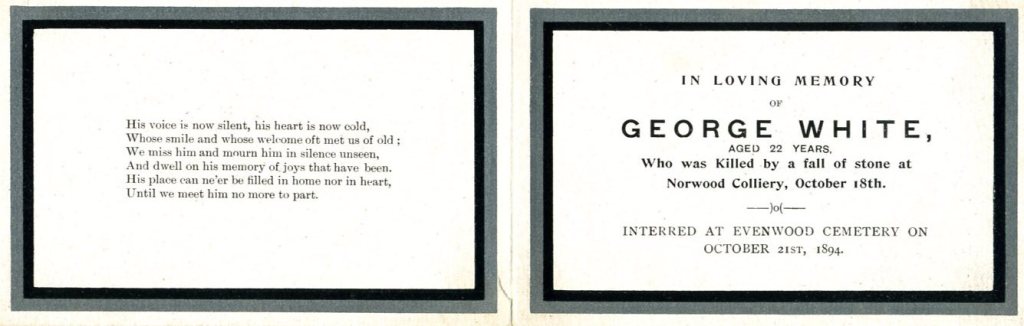
1894: George White, killed by a fall of stones, at Norwood Colliery.

1894: Tees Hetton pit closed. The Main and Five Quarter seams were abandoned.
1895: Tees Hetton pit was closed some months ago and the Evenwood Colliery stopped throwing 150 men on the labour market. The Yard, Harvey, Five Quarter and Brockwell seams abandoned.
1896: Norwood Colliery manager was C.H. Dodd. There were 227 men employed, 187 underground, 40 surface.
1896: Storey Lodge Colliery was owned by NBCCL, the manager was Thomas Heslop and the under manager was Thomas Parkin. It employed 160 men, 129 underground & 31 surface.
1896: Evenwood Colliery was being dismantled.
1898: Map to show Norwood Colliery and the disused Evenwood Colliery.

1902: Norwood Colliery, Railey Fell and Lands Colliery was now in the hands of Henry Stobart & Company Ltd., Robert Brown, manager.
1904: Norwood Colliery was abandoned by Henry Stobart & Co. Ltd.
1904: Storey Lodge Colliery was abandoned by the North Bitchburn Coal Company Ltd.
POST WAR
During the late 1960’s and early 1970’s, Storey Lodge Colliery was worked by Teasdale & Sons as a Licenced Mine under the supervision of the nationalised National Coal Board (NCB).
During the late 1970’s to the early 1980’s, Norwood drift mine at Ramshaw was worked as a Licenced Mine under the supervision of the NCB (which became the British Coal Corporation in 1987).
During the 1990’s, much of the area between Ramshaw and High Lands was worked by opencast methods by Coal Contractors Ltd.
EVENWOOD COLLIERY REMAINS
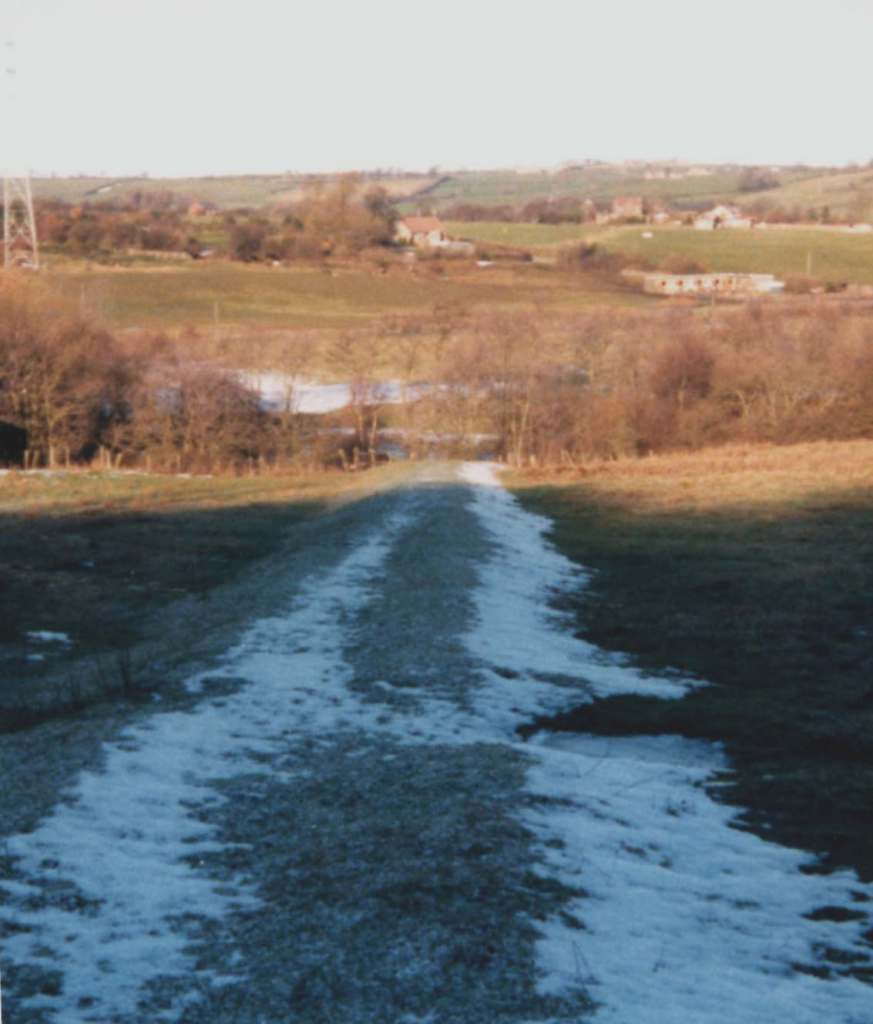
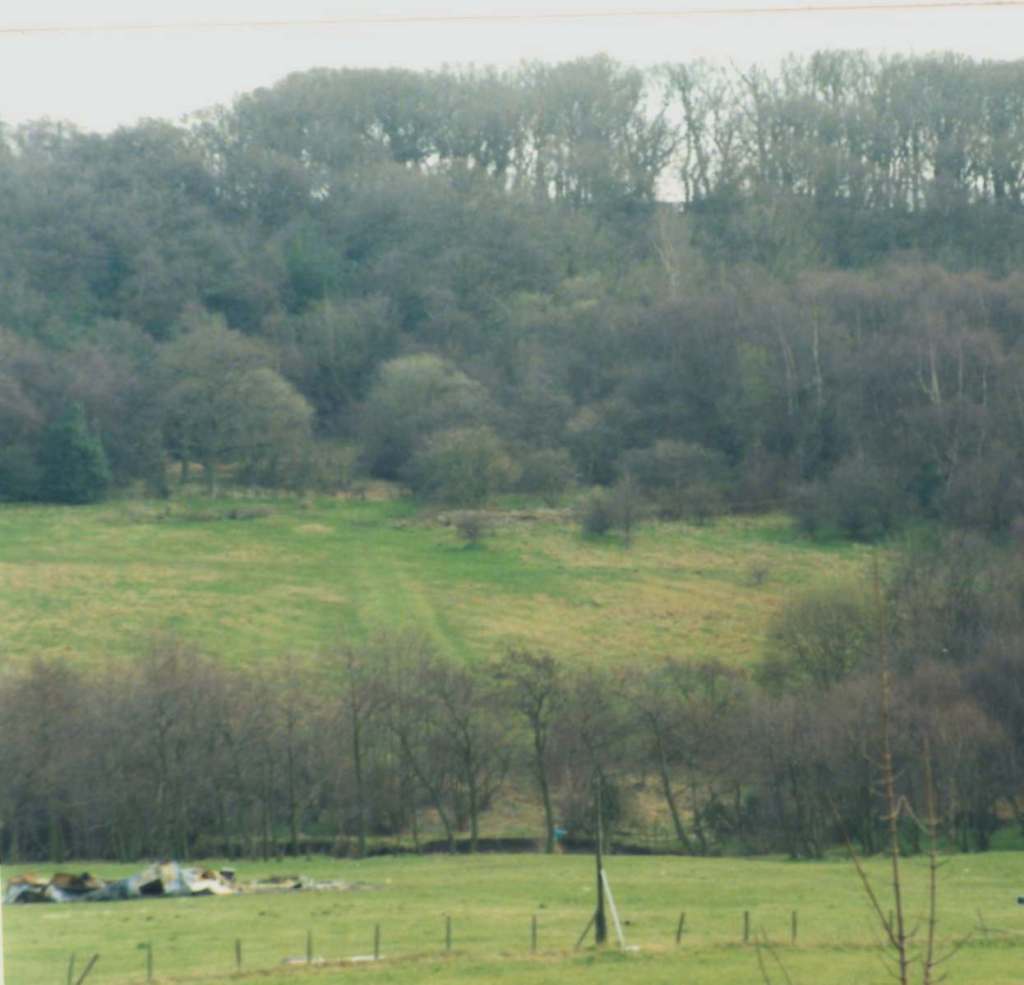
The site of the colliery has been reclaimed by nature and now is set within Craggwood. Pit heaps, the collapsed drift mine and one shaft are clearly visible amongst the undergrowth. The route of one of the 2 tramways from the old colliery is visible, particularly in wintery conditions, as shown below.
Below:
1984, The eastern tramway, one view is looking northwards and the other from the south looking up the hillside.
Below
2021, The bridge abutment over the River Gaunless which served the western tramway

ANY CORRECTIONS, COMMENTS OR CONTRIBUTIONS WILL BE GLADLY RECEIVED.
KNR 6 November 2022
 EVENWOOD RAMSHAW & DISTRICT HISTORY SOCIETY