Carterthorne Colliery, originally known as Carter’s Thorne, was located on Railey Fell. There are records dating back to 1607. The exact location of the first Carter’s Thorne colliery is unknown unless an indication lies within the archives held at Durham University.[1]
Old Carterthorne Colliery (pre 1898)
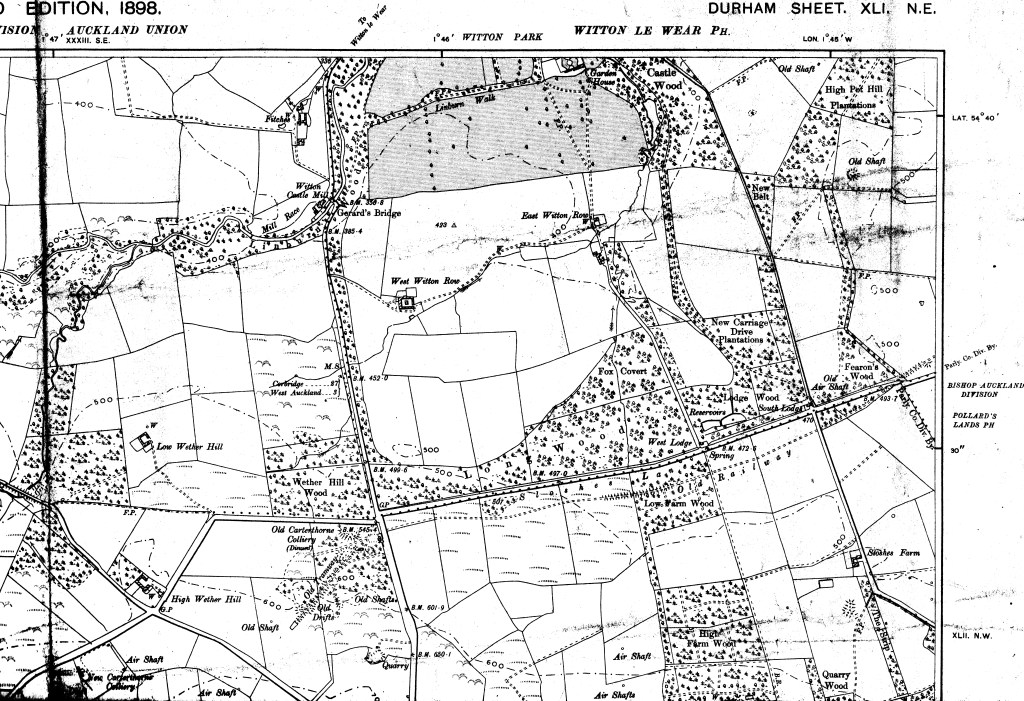
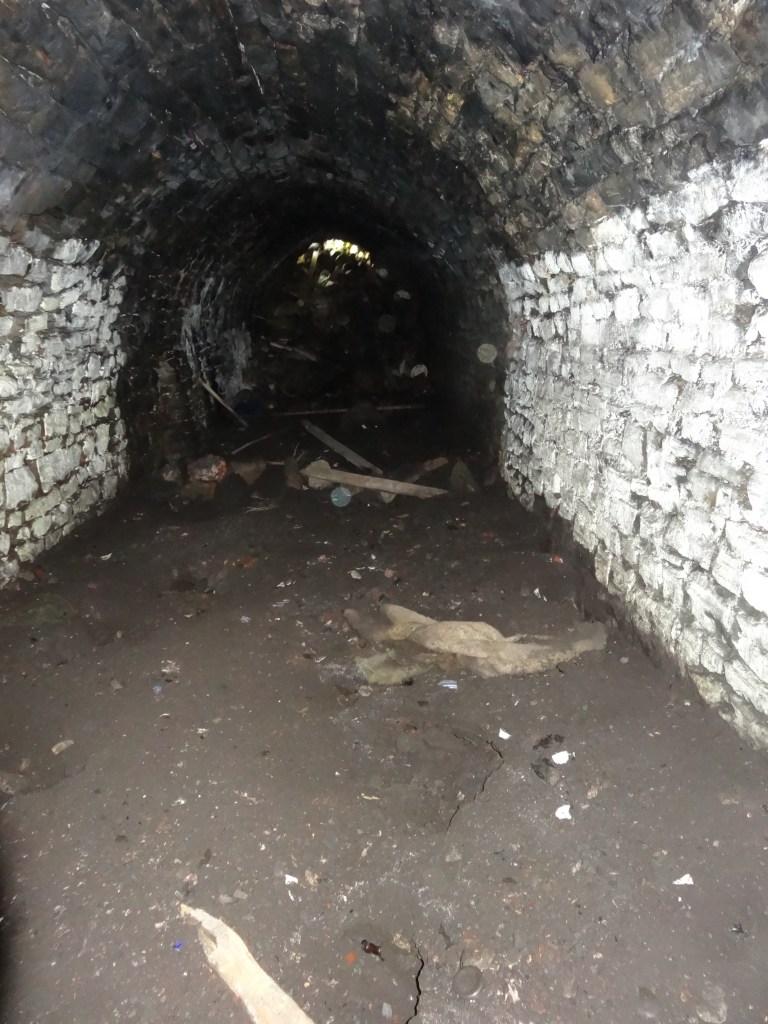
In 1857 County Durham was surveyed and Ordnance Survey maps were published in 1859. Since that time, several sites have been named “Carterthorne Colliery.” In 1872 Carterthorne Colliery employed 90 union members.[2] This Carterthorne Colliery is likely to be that named, “Old Carterthorne Colliery (disused)” on the 1898 OS 2nd edition. This colliery connected into Witton Park Colliery to the east via an “old railway.” A tunnel beneath Sloshes Lane carried the railway. It is an example of the fine workmanship.
Below: 1898 Old Carterthorne Colliery
Below: Photo to show the tunnel used by the railway from the Old Carterthorne Colliery to Witton Park Colliery
New Carterthorne Colliery (pre 1898-1927)
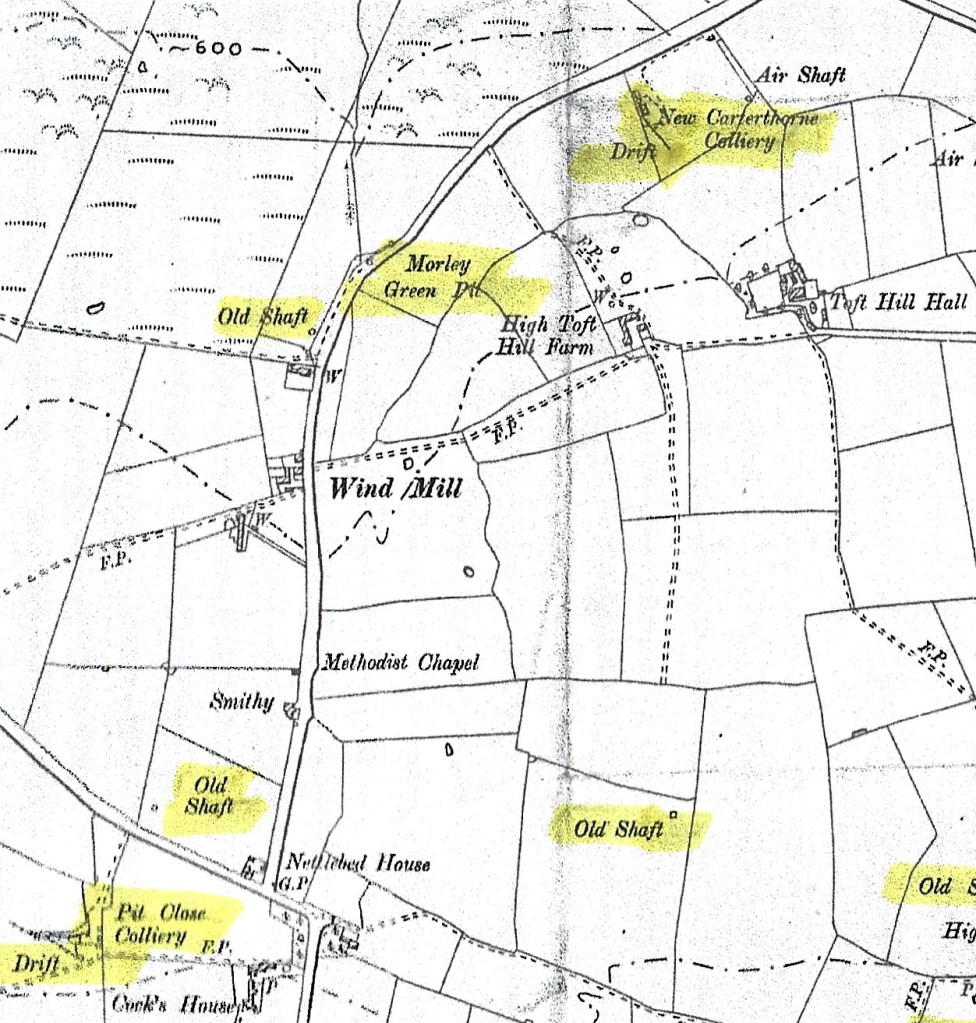
1898, the OS 2nd edition shows New Carterthorne Colliery located to the north of Toft Hill Hall which is about a mile south of the disused old Carterthorne Colliery. In 1896, 37 men, 31 underground and 6 at the surface were employed. J. Simpson was the under-manager. [3] The Five Quarter and Brockwell seams were abandoned in 1927.[4]
Below: 1898: New Carterthorne Colliery
Carterthorne Colliery Co. Ltd. c.1897-1927
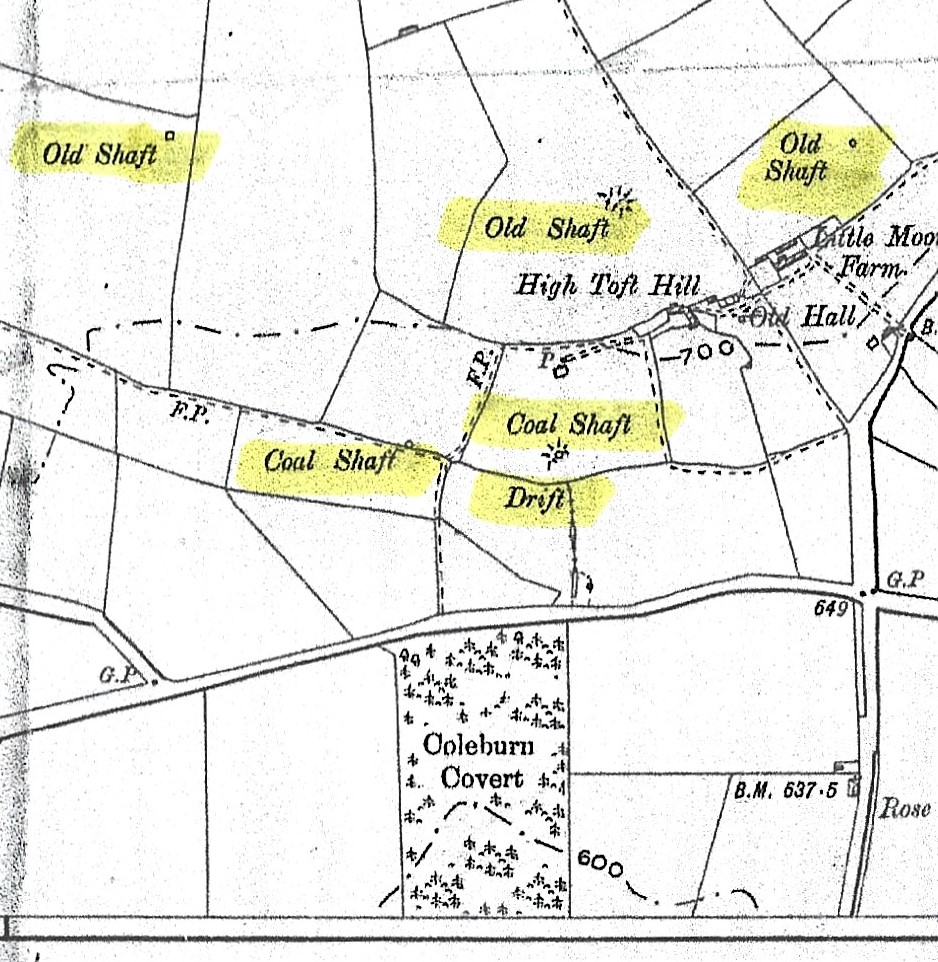
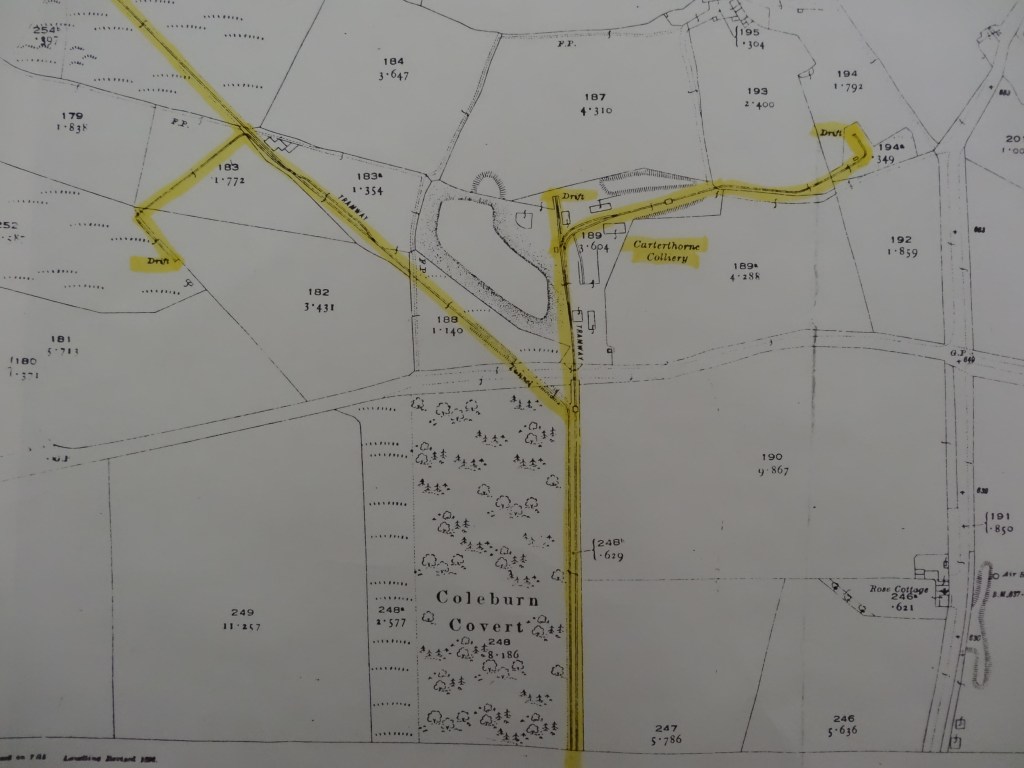
After the First World War, the OS 3rd edition was published (various dates, say 1921) and it identifies Carterthorne Colliery, sited to the west of Toft Hill, north of Coleburn Covet, south west of High Toft Hill. It was worked by the Mein family. It is clear that there were workings here prior to 1898 as can be seen on the OS 2nd edition and the 3 notations, “Old Shaft” north east and north west of High Toft Hill. There were 2 unnamed coal shafts and a drift sited to the south west of High Toft Hill. There are no details listed in the 1896 report for this Carterthorne Colliery.[5] Therefore, it is deduced that this Carterthorne Colliery was commenced about 1897.
Below: 1898: Map to show the site of the then unnamed Carterthorne Colliery
There was an industrial dispute in 1912, and the Auckland Chronicle [6] reported that at Carterthorne Colliery, 38 votes had been cast in the ballot. In 1914, Carterthorne Colliery employed 165 men, 125 underground and 40 on the surface workers.[7]
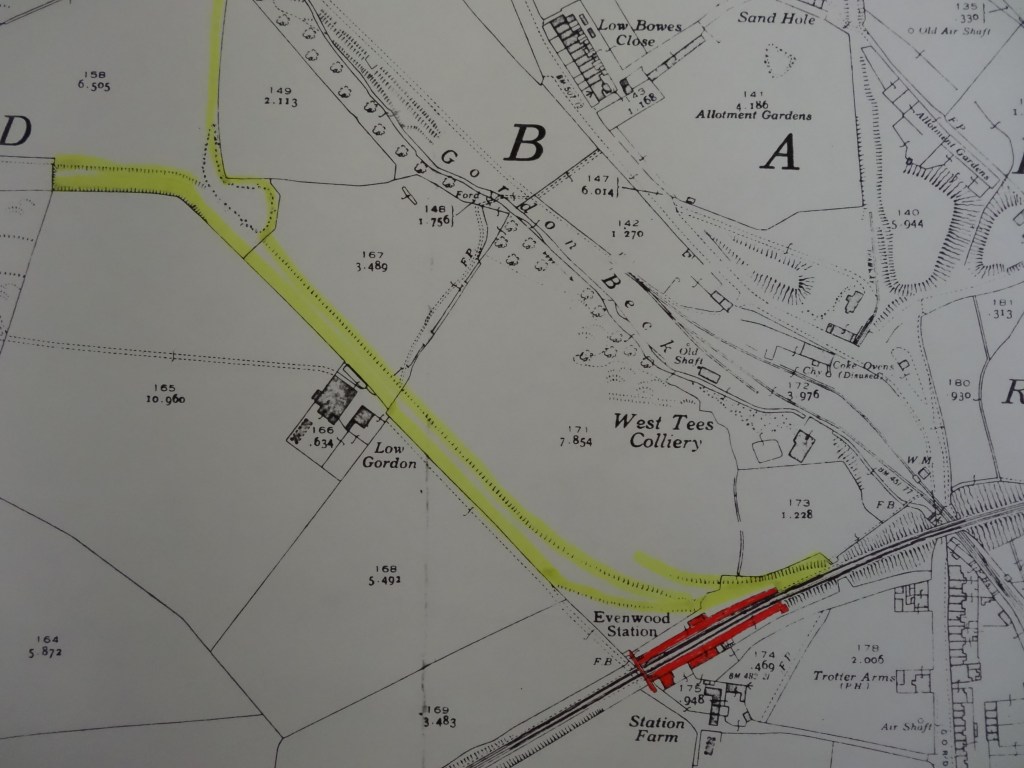
The OS 3rd edition shows that the colliery occupied a larger area and it was worked by 2 drift mines. A tramway connected the colliery to the NER Bishop Auckland to Barnard Castle line ½ mile to the south, at Evenwood Station.
By 1921, the Carterthorne Colliery Co. Ltd. employed a total of 267 men, 208 underground and 59, surface at 5 sites:
- Carterthorne (Hamsterley)
- Carterthorne, Brockwell Drift
- Carterthorne, Moor Hill Drift
- Carterthorne South, Busty Drift
- Carterthorne Windmill Drift
George Daykin was the manager and James Laverick, the under-manager. The company offices were at Zetland Buildings, Middlesbrough.[8]
Below: The Tramway from Carterthorne Colliery leads southwards to Evenwood Station and the NER Bishop Auckland to Barnard Castle railway.
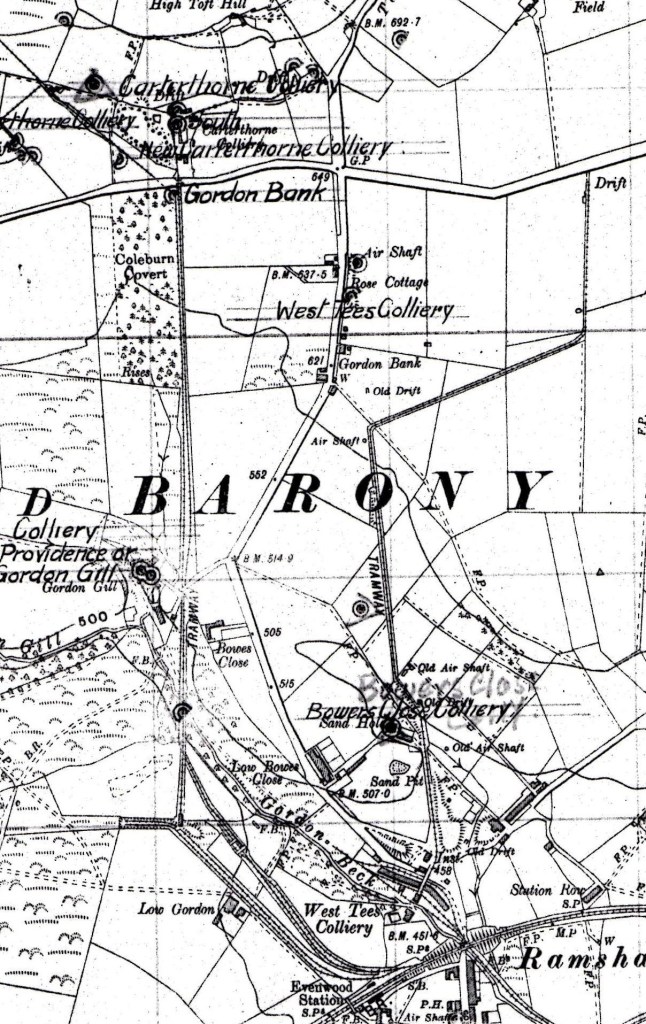
Below: Evenwood Station on the NER Bishop Auckland to Barnard Castle line. Track and signals can be seen to the right on the photo. This line leads to the sidings and tramways which headed northwards to Carterthorne and West Carterthorne Collieries.
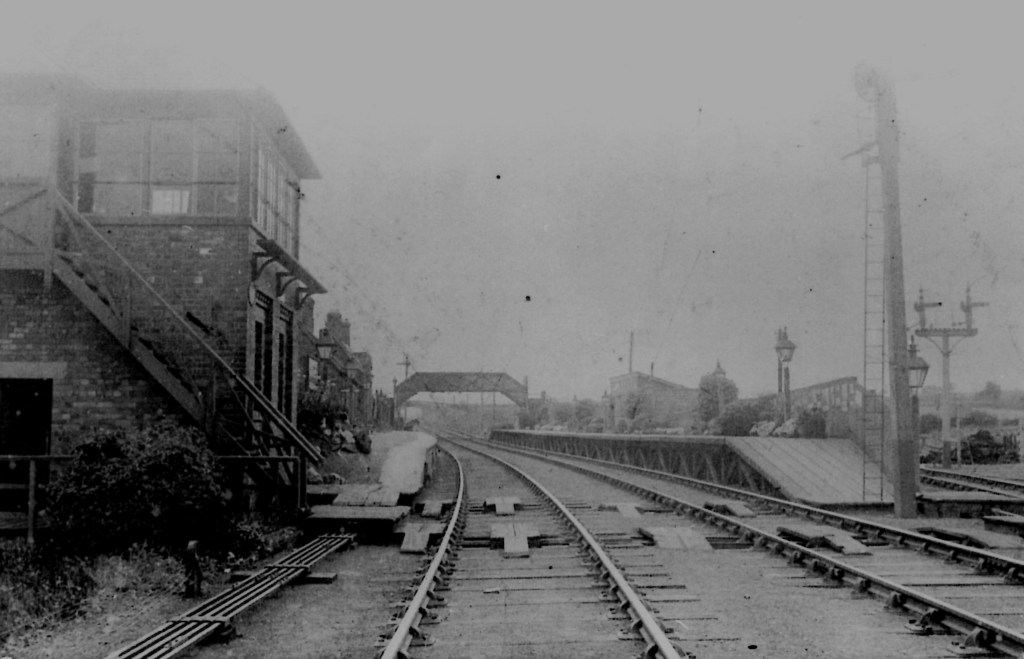
Below: 1921: Map to show Carterthorne Colliery. Another tramway runs north westwards to West Carterthorne Colliery.
Andrew Mein (1831-1905) and his son Henry Johnson Mein (1854-1920) were responsible for the development of Carterthorne Colliery. About 1882, Andrew Mein moved to County Durham from Northumberland to work for the Shildon Coal Co. at Shildon Colliery. In 1883, he was the manager of Morley Colliery. At this time, Morley Colliery was worked by a drift, yielding 30,000 tons p.a. and employing 40 men and boys. In November 1893, it closed when the Brockwell seam was abandoned. It is assumed that Andrew then turned his mining interests to Carterthorne which was in close proximity to Morley.
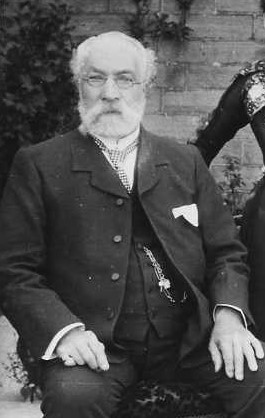
Above: Andrew Mein 1831-1905
In 1882, Henry Johnson Mein was employed as the manager at Middle Bitchburn Colliery at North Bitchburn. He lived at Howden-le-Wear, near to the colliery. In 1896, Henry J. Mein was employed as manager at Coppy Crooks, Etherley Grange and Woodhouses Collieries. By 1901, he had moved to Toft Hill and in 1902, he was recorded as the manager at Carterthorne and Coppy Crooks Collieries. Andrew Mein died in 1905 and Henry succeeded him as director of the Carterthorne Colliery Company and the South Normanton Coal Company Limited. For the next 16 years, he held positions as either agent or colliery manager for Carterthorne Colliery Co. Ltd., West Durham Wallsend Coal Co. Ltd. and the Spoor Bros. Colliery Ltd. at Carterthorne, Adelaide and Coppy Crooks Collieries. In 1916 Henry J. Mein retired and was succeeded by George Daykin.

Above: Henry J. Mein 1854-1920
Demand for coal was high during the First World War and Carterthorne Colliery expanded. It continued working after the war. By 1923, the Carterthorne Collieries Co. Ltd. operated at 2 sites:
- Carterthorne
- Moor Hill.
George Daykin was the manager.[9] These collieries closed in 1927 when the Five Quarter and Brockwell seams were abandoned. [10]
By 1939, little was left of the extensive tramway and its junction near Evenwood Station.
Below: 1939: The route of the tramway was abandoned
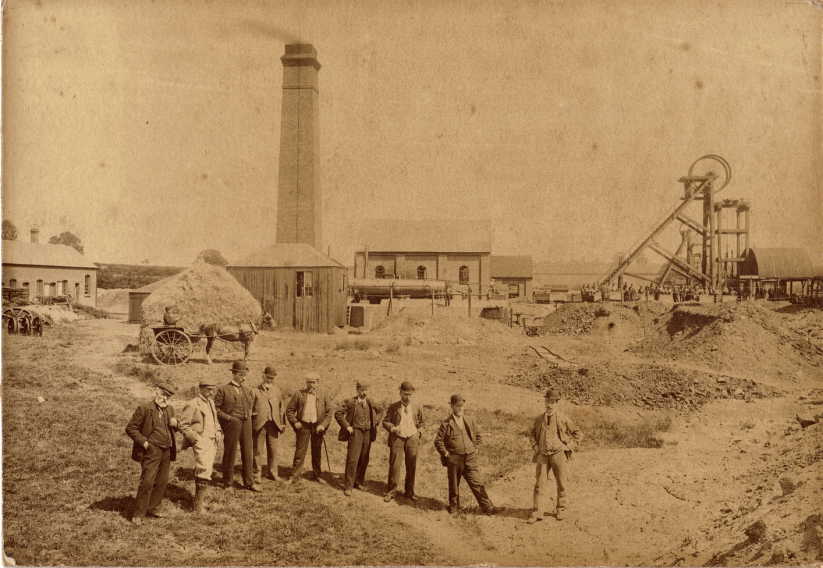
Below: South Normanton Colliery Owners: Left to right: Andrew Main senior, unknown, Andrew Mein Junior, unknown, unknown, James; Henry Johnson Mein; unknown; William Harford Mein.
SOME FAMILY NOTES
Andrew Mein 1831-1905
Andrew Mein was born at Blyth, Northumberland. In 1853, he married Ann Brown at Tynemouth and they had 7 children. Andrew was a coal miner who progressed to be an “Overman”. He moved to south west Durham and by 1882, was manager at Shildon Colliery for the Shildon Coal Co. Between 1883 and 1890, he was manager at Morley Colliery with James Mein, his son, as under manager. In 1891, Andrew and his family lived at Morley. He was recorded as, “Colliery Owner and farmer”. At this time, Morley Colliery was worked by a drift, yielding 30,000 tons p.a. and employed 40 men and boys. In November 1893, it closed when the Brockwell seam was abandoned.
Andrew’s wife, Ann died 1 January 1897, aged 66. By 1901, 69 years old Andrew was a boarder at the Clarenden boarding house, Ventnor, Isle of Wight, perhaps on holiday. His regular abode was Hartford House, Witton-le-Wear. Andrew died 8 June 1905, aged 73 and is buried in St. Cuthbert’s Churchyard, Etherley, Bishop Auckland.
Henry Johnson Mein 1854-1920
Andrew’s oldest son, Henry Johnson Mein, was born at Seaton Deleval, Northumberland and he followed his father into colliery management, being “certified” as a mining engineer in 1877. He also moved to County Durham and in 1882, was employed as the manager at Middle Bitchburn Colliery at North Bitchburn. Between 1888 and 1890, his brother Andrew Mein junior was under manager. In 1891, both Henry and Andrew (junior) lived at Howden-le-Wear, near to the colliery. In 1896, Henry Mein was employed as manager at Coppy Crooks, Etherley Grange and Woodhouses Collieries in the Bishop Auckland area. By 1901, he had moved to Toft Hill and in 1902, he was recorded as the manager at Carterthorne and Coppy Crooks Collieries. When his father died in 1905, he succeeded him as director of the Carterthorne Colliery Company and the South Normanton Coal Company Limited. For the next 16 years, he held positions as either agent or colliery manager for Carterthorne Colliery Co. Ltd., West Durham Wallsend Coal Co. Ltd. and the Spoor Bros. Colliery Ltd. at their Carterthorne, Adelaide and Coppy Crooks Collieries.
In 1911, 56 years old Henry J. Mein and his wife Annie lived at The Hall, Toft Hill with 6 of their children:
- Elizabeth, aged 28, born at Howden-le-Wear
- Annie aged 25, born at Hamsterley
- Florrie aged 24, born at Howden-le-Wear
- Dora aged 22 born, at Howden-le-Wear
- Henry J. (junior) aged 20 born, at Howden-le-Wear, a mining student
- Maggie aged 12, born at Toft Hill
Henry and Annie suffered personal tragedy when 2 of their daughters died – Florence 18 September 1914 and Dora, 13 March 1915. Henry Mein retired in 1916.
Aged 66, Henry J. Mein died 7 November 1920 and is buried in St. Cuthbert’s Churchyard, Etherley. He left his estate worth about £23,920 to his widow Annie, William Hartford Mein (colliery secretary) and Hugh Roddam (solicitor). His personal interests revolved around his faith – he was a Primitive Methodist lay preacher, steward of the West Auckland circuit and held every official position open to laymen. He was also a justice of the peace and from May 1912.
About a month later, 20 December 1920, his son, Henry Johnson Mein (the younger) of Hartford House, Witton-le-Wear, died at the Hall, Toft Hill. His effects, about £3,688 were left to his widow Mary Constance Mein. Henry’s widow, Annie Mein died 18 October 1924. It appears that after the death of senior members of the Mein family namely Andrew (senior), Henry (senior), Henry (the younger) and Annie, and the closure of Carterthorne Colliery in 1927, the surviving members settled in Derbyshire, their commercial interests being with the South Normanton Coal Company Limited.
The above mentioned William Hartford Mein died 14 February 1946. He lived at Storthfield South, Normanton near Alfreton, Derbyshire and left his estate about £27,376 to his widow Barbara Jane Mein, Henry Jameson Mein (colliery secretary) and 2 others.
Acknowledgements & References
Durham Mining Museum website & Ancestry family tree for the Main family.
[1] Durham University Library, Archives and Special Collections. Church Commission Deposit of Durham Bishopric Estate Records: Financial and Audit Records to 1649” ref: GB-0033-CCB B1-110
[2] “The Banner Book” Bill Moyes
[3] “Peak District Mines Historical Society Ltd. From tables compiled by R.D. Bain, HM Inspector for the Durham District in his Report for 1896
[4] NCB Catlogue of Abandoned Mines
[5] “Peak District Mines Historical Society Ltd. From tables compiled by R.D. Bain, HM Inspector for the Durham District in his Report for 1896.
[6] “Auckland & County Chronicle” 11 April 1915 p.5
[7] www.dmm.org.uk Durham Mining Museum
[8] www.dmm.org.uk Durham Mining Museum
[9] 1923 Reid’s Handy Colliery Guide and Directory
[10] NCB Catalogue of Abandoned Mines
 EVENWOOD RAMSHAW & DISTRICT HISTORY SOCIETY