Anthony Pearson was born about 1628 at Ramshaw Hall during the reign of King Charles I. Within his lifetime, he saw the English Civil War (1642-1646), the execution of Charles I, the declaration of the Commonwealth, the period of Oliver Cromwell as Lord Protector, Cromwell’s death, the resignation of his son Richard as Lord Protector, military rule under George Monck and the restoration of the monarchy, Charles II in 1660. This period of history was turbulent to say the least. Anthony Pearson was an influential Quaker from 1653 to 1662 but seems to have renounced his faith upon the restoration of the monarchy in his endeavour to gain favour with the new regime. He died in 1670. Note that other sources state that he was baptised in 1627 and died in 1666.
Below:
A location plan:
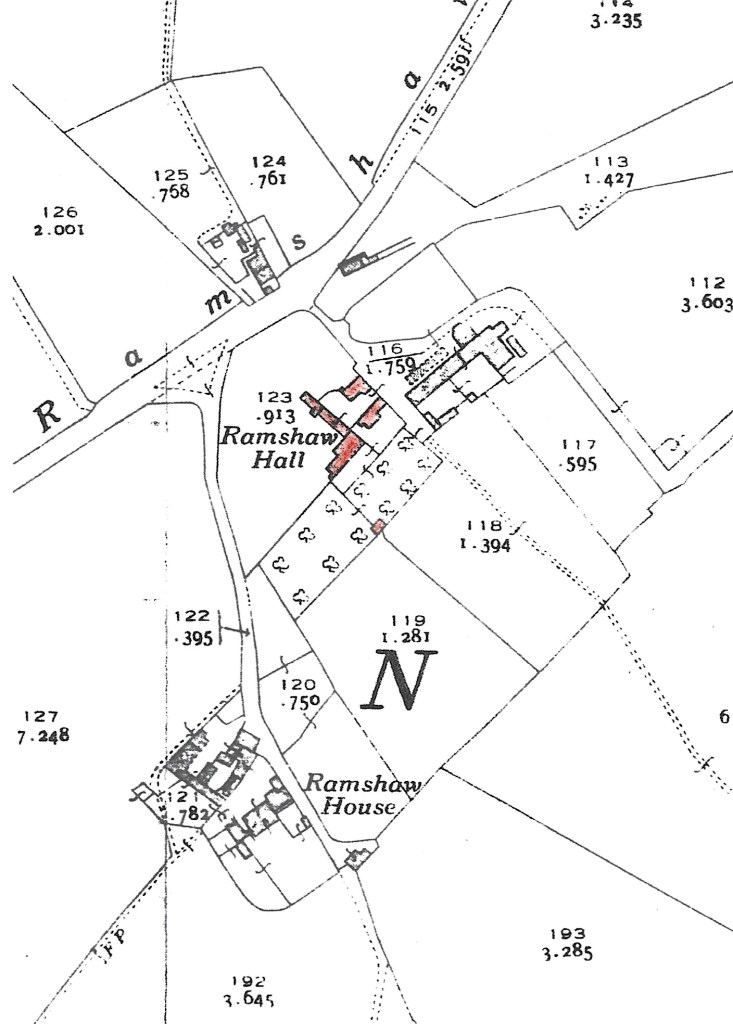
Below:
Ramshaw Hall, photo courtesy of Raf Fulcher, taken 22 August 2012

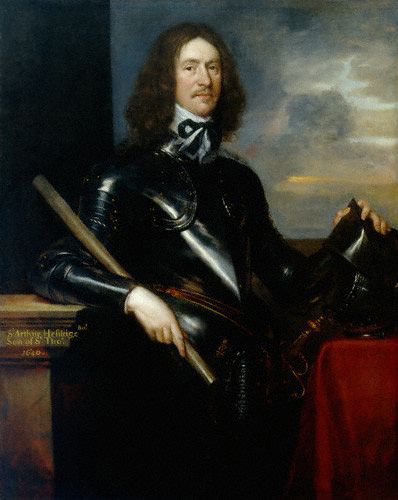
In 1648, he was secretary to Sir Arthur Haselrige, an important Parliamentarian and supporter of Cromwell. Seven years earlier, in 1641, Haselrige was one of the 5 members of parliament who presented a list of grievances against the King which precipitated the civil war. Hostilities commenced in August 1642. Haselrige held various military and political posts between 1639 and 1651. He was appointed governor of Newcastle-upon-Tyne in December 1647. In January 1649, King Charles I was brought to trial for treason, found guilty and executed. Haselrige supported his execution. In 1650, Haselrige accompanied Cromwell to Scotland.
Between 1647 and 1650, Haselrige and his son bought property in the north east including the manors of Bishop Auckland, Middleham, Easingwoodborough and Wolsingham. Anthony Pearson purchased the manors of Aspatricke, Cumberland in May 1650 and Marrowlee, Northumberland, March 1653.
Below:
Sir Arthur Haselrige
It is believed that Anthony Pearson married prior to 1652 and a daughter Grace was born. The family continued to live at Ramshaw Hall despite the purchase of other properties.
In January 1652, he was appointed a Justice of the Peace in three counties and went on circuit to Appleby, Westmoreland.
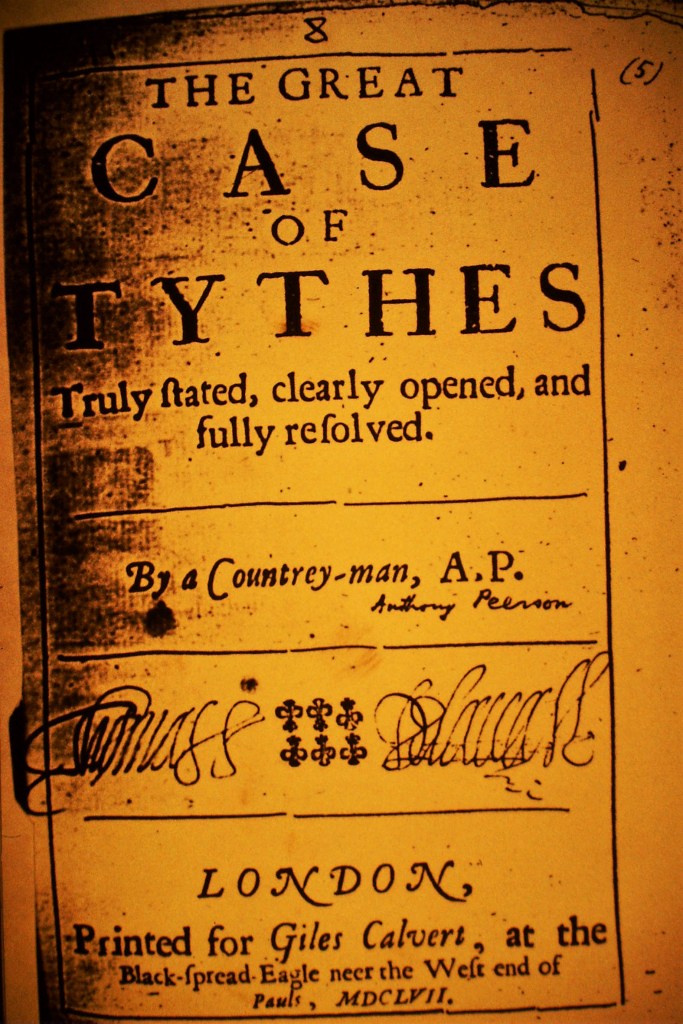
In 1653, Pearson was attracted to the teachings of the Quakers and was a devoted follower of George Fox. In 1657, having collected evidence about the unjust treatment of Quakers, he published his work, “The Great Case of Tythes truly stated, clearly opened and fully resolved by a country man A.P.” He’d previously gained an audience with Cromwell to state his case.
Below:
Front page of, “The Great Case of Tythes” 1657
Cromwell died in September 1658, his son Richard inherited the position as Lord Protector but resigned the post in May 1659.
Pearson held positions of authority in the Quaker movement, for example, in October 1659, he acted as clerk to the general meeting of Durham Friends. At this point, his beliefs appear not have jeopardised his career.
In May 1660, the monarchy was restored, Charles II was the new king. At the Restoration, Pearson’s loyalty was suspected and he was described as, “The principal Quaker in the North.” It was alleged that he held meetings of up to 100 at his home and there were 2 or 3 “horse loads of skeene knives and daggers concealed there.”
In January 1662, he was apprehended for being in London contrary to the proclamation. Pearson was released after the intervention of Sir Edward Nicholas, secretary of state. After this, he seems to have renounced his Quakerism. In proof of his sincerity, he gave up the estates that he had previously purchased. Thereafter, Pearson was employed by the government in Scotland.
In 1665, Pearson was appointed under-sheriff for County Durham and said to be in high favour with Bishop Cosin.
Pearson died at Ramshaw Hall in 1670. His daughter Grace married Giles Chambers and became a noted Quaker minister, preaching throughout the country. She died in 1760 in her 90s.
Anthony Pearson’s book about the tythes was reprinted on several occasions, including in 1850 by the Tract Association of the Society of Friends.
Sources
https://en.wikisource.org/wiki/Dictionary_of_National_Biography,_1885-1900/Pearson,_Anthony
https://en.wikipedia.org/wiki/Anthony_Pearson_(Quaker)
https://m.famousfix.com/topic/anthony-pearson
https://en.wikisource.org/wiki/Dictionary_of_National_Biography,_1885-1900/Hesilrige,_Arthur#top
photo of Sir Arthur Haselrige: Domain, https://commons.wikimedia.org/w/index.php?curid=6829163
RAMSHAW HALL, RAMSHAW LANE, near EVENWOOD is a grade II* listed building under the Planning (Listed Buildings and Conservation Areas) Act 1990 as amended for its special architectural or historic interest.
Below:
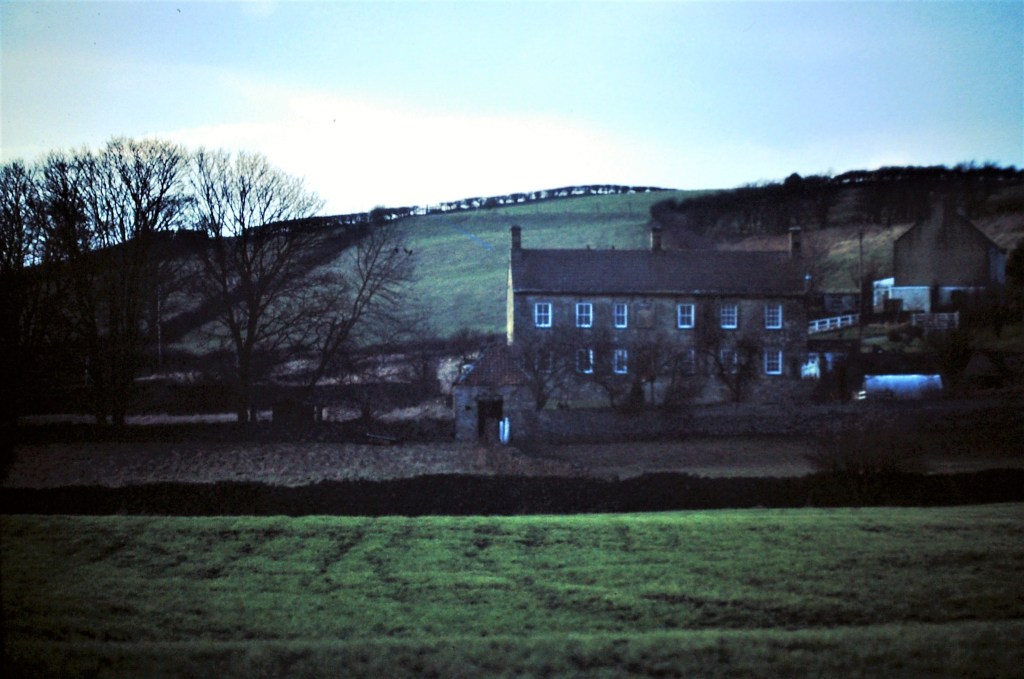
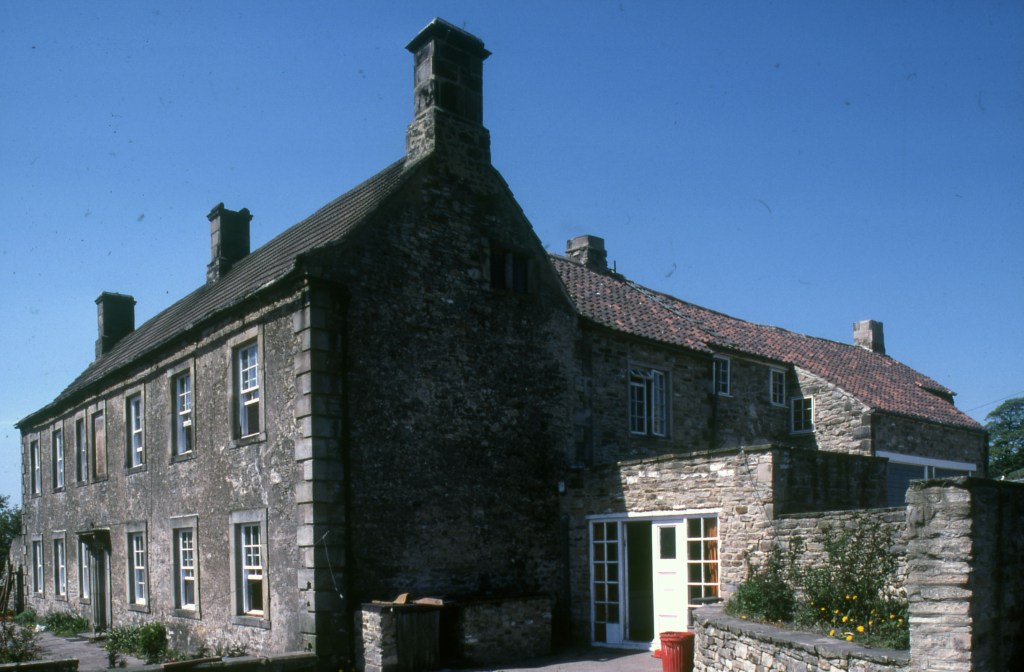
Ramshaw Hall, probably about 1990
Details
House. Circa 1700, possibly incorporating an earlier building. Thinly rendered sandstone with ashlar dressings and projecting quoins; rear wing sandstone rubble with quoins; front range roof concrete tiles, with stone slates at front eaves; rear wing and left extension pantiled, L-plan. 2 storeys, 6 bays with small one-storey, one-bay left privy. Third bay is wider and contains narrow window to left of 8-panel door in architrave under scroll-bracketed stone hood; paired narrow windows above, trompe l’oeil over door. Plain stone surrounds to windows, all sashes; most renewed with 12 or 4 panes; early C19 12-pane sashes on first floor in 2 right bays. Steeply-pitched roof has 3 ashlar ridge chimneys with plinths and cyma recta cornices. Right return has 2-light chamfered, stone- mullioned attic window with leaded glazing; long 2-storey rear wing with irregular fenestration, all renewed. Rear has 2-storey, 2-bay outshut with 2-light stone-mullioned window, under catslide roof; inner return of rear wing blank on ground floor.
Interior: dogleg close-string stair with high grip handrail on diabolo balusters; panelling of C17 proportions in entrance hall and room to left, the latter with segmental-headed cupboards with shaped shelves and shell tops flanking plain stone fire. Large stop-chamfered beams in 2 main rooms. Many panelled doors of c.1700.
Empty at time of survey.
Below:
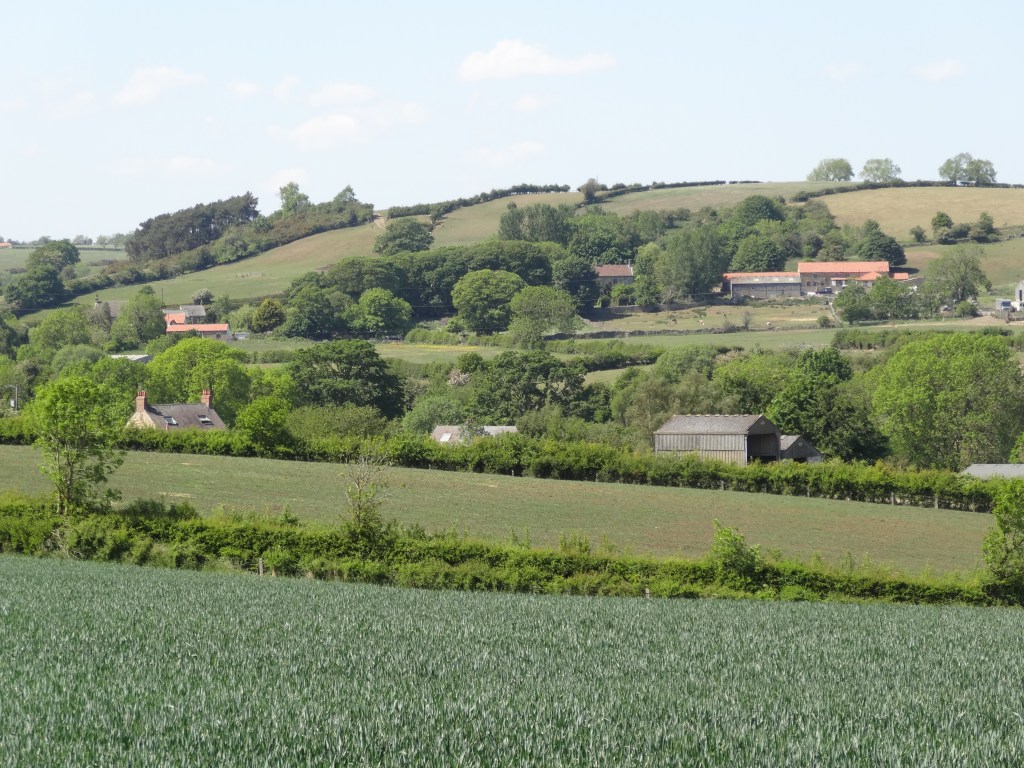
Summer 2020, Ramshaw Hall viewed from the south.
Below:
March 2023, without the tree cover.

MORE LISTING DETAILS: RAMSHAW HALL GARDEN
A formal garden comprising terraces and retaining walls, of later C17 date associated with Ramshaw Hall.
Reasons for Designation
This later C17 multi-terraced formal garden surviving as earthworks and buried archaeology with a C20 planting scheme, is designated at Grade II for the following principal reasons:
- Rarity: this is a relatively rare survival of a pre-1700 formal garden;
- Group Value: it has very strong group value with Grade II listed garden features and the Grade II* listed Ramshaw Hall;
- Aesthetic: taken together with the hall, with which it is inextricably linked, they represent a significant aspect of the architectural, artistic and constructional skills and tastes of the period;
- Social: it is a good example of the small-scale formal gardens constructed at this time by the county gentry rather than Royalty or the Aristocracy;
- Association: the first phase of the garden has historical association with Anthony Pearson, George Fox and James Naylor, leading figures in the C17 Quaker movement.
History
The history of the gardens at Ramshaw Hall are inextricably linked to the history of the hall itself, which documentary and architectural evidence shows has two major phases. Records confirm its existence in 1577 when it was occupied by George Dixon, whose will in 1631 indicates that it comprised three storeys. The house was acquired by Anthony Pearson in c.1650, as part of a land deal involving the powerful republican politician Sir Arthur Hesilrige to whom he was secretary and manager of his estates. At Pearson’s death in 1665, inventories record that it retained its three storey form. In 1688 the will of Andrew Pearson’s son, Thomas describes a house of two storeys, with room layouts and descriptions which fit with the present building. Therefore, the house had clearly been remodelled and re-fronted between 1665 and 1688.
It is considered that the structural layout of the associated terraced gardens also dates to this time. Investigation of the upper terrace, which abuts the house, reportedly revealed it to be constructed of demolition material from the C16 house. Also reportedly discovered was the lower part of a substantial door frame in the west terrace retaining wall c. four feet below the present level of the terrace; this is interpreted as a surviving remnant of an earlier garden associated with the original house, incorporated into the later C17 gardens as a retaining wall for the new terrace. It is possible that similar earlier remains survive beneath the present gardens. In 1724 the hall and its grounds were offered for rent and there is little evidence of alterations to either from the mid C18 onwards. In the late C18 and early C19 the Humphrey family was resident at Ramshaw Hall, and later C19 and early C20 centuries record a series of several families which might imply that they were tenants. By 1960 the hall and, presumably, its gardens were derelict, since when, they have both been partially restored and the gardens replanted.
The architect of Ramshaw Hall is unknown, but it has been suggested that it could have been John Longstaff, also a Quaker and known to both Sir Arthur Hesilrige and Anthony Pearson. Anthony Pearson (bap 1627 d 1666) and owner of the site in the mid C17, was a leading figure and administrator in the Quaker movement supported by his entry in the Oxford Dictionary of National Biography. George Fox and James Naylor (also entered in the ODNB) were regular visitors to his home and Fox records an important meeting in an orchard at Ramshaw where many people were converted. The site of the orchard is uncertain.
Details
LOCATION, AREA, BOUNDARIES, LANDFORM, SETTING Ramshaw Hall is situated at the north-east corner of the small hamlet of Ramshaw with a south-easterly aspect, on land which slopes gently to the south. The setting is rural and agricultural. The boundary of the 0.25ha site is formed by stone walls and the south elevation of the hall on the north and by stone walls on all other sides.
ENTRANCES AND APPROACHES A C20 drive approaches Ramshaw Hall from the north. but the main entrance to the gardens is via a sandstone ashlar pedestrian entrance set within a low stone wall with late C17 moulded copings (Grade II) The entrance has square corniced gate piers surmounted by ball finials.
PRINCIPAL BUILDING Ramshaw Hall (Grade II*) is a later C17 building, possibly incorporating the core of an earlier building known to have been in existence in 1577. It has an L-shaped plan comprising a main, south, front range and a rear service wing. It has six bays with an entrance in the wider third bay.
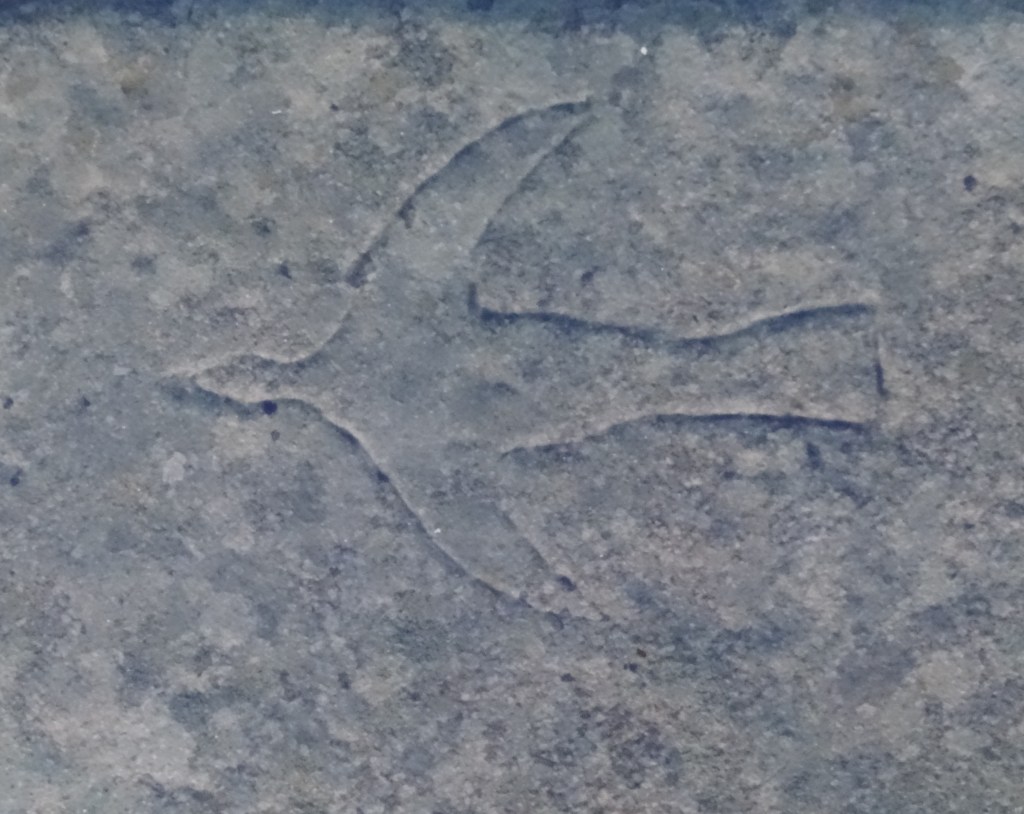
GARDENS AND PLEASURE GROUNDS The gardens occupy a linear compartment (80m long and 30m wide) to the south, south-west and south-east sides of the hall. Immediately south of the hall there is an upper terrace divided in half by a low wall incorporating gate piers (Grade II); east of this wall, the terrace is lawned and west of the wall it is paved with stone flags and occupied by raised beds, all of C20 date. The upper terrace is flanked on the west side by a stone wall incorporating architectural fragments of the earlier hall; beyond this wall to the west the original terrace edge is visible as a prominent linear earthwork scarp. It is flanked on the east side by a low wall incorporating gate piers (Grade II), and is defined on the south side by a stone wall revetment with moulded coping stones probably re-used from the earlier house (one with a carving of a bird). A centrally placed (rebuilt) flight of stone steps leads down to the lower terrace. Dressed edging stones outline a narrow border either side of the stone steps on the lower terrace and there are traces of some earlier path detail, but most of this terrace is occupied by a formal garden comprising C20 parterres and paths. The western extent of this terrace is defined by an earthwork scarp with an outer stone wall incorporating gate piers and finials of an early date, which may be re-used masonry from the original house; beyond this the wall has been removed but its line is visible as low foundations. A compartment to the west of these terraces, contains the earthwork remains of an upper and lower terrace separated by a scarp, occupied by a planted hedge. The upper terrace is part occupied by a C20 parterre and a path, the latter on the site of a line of trees marking a boundary on the 1857 Ordnance Survey map. The lower terrace comprises a lawn with a former dovecote (Grade II) occupying its south-east corner, and this building is cut into the scarp defining its eastern side. The lower western terrace is also bounded on the south by a line of trees within a dry stone wall revetment.
Sources
Books and journals
Airs, M, Tyack, G, The Renaissance Villa in Britain 1500-1700 , (2007)
Strong, R, The Renaissance Garden in England, (1979)
Websites
Accessed from http://www.oxforddnb.com/view/article/13123
Pearson, Anthony (bap. 1627, d. 1666, accessed from http://www.oxforddnb.com/view/article/21708
Below:
The garden wall carving of the bird – is it a representation of a dove? Possibly the sign of peace, a symbol of the Quaker movement?
 EVENWOOD RAMSHAW & DISTRICT HISTORY SOCIETY