1894 The Local Government Act
In December 1894, Thomas Briggs, the Evenwood National School Headmaster, was invited to officiate at an important meeting under the auspices of the Local Government Act of 1894. This Act further reformed local government in England and Wales to established parish councils, urban district and rural district councils following an earlier act of 1888 which established county and borough councils. It transferred powers, duties and liabilities from vestries and other authorities to parish councils. The act also gave women the right to vote and serve on parish councils regardless of their marital status. Evenwood and Barony Parish Council was formed and included the villages of Evenwood including the Oaks, Evenwood Gate, Ramshaw, the colliery rows at High Lands, the farming hamlets of Morley and Wind Mill and farming areas around Toft Hill. The Barony was generally identified as the land to the north of the River Gaunless, more commonly known as Railey Fell. Nominations for councillors were invited and then elected at a meeting to be held, 4 December 1894 at the National School, Evenwood. Samuel Vasey proposed and Edward Hawell seconded the motion that Thomas Briggs should be chairman for this meeting. The motion was carried unanimously. There were 26 candidates. Despite the opportunity, there were no female candidates. All 11 positions as councillors were filled by men:
- HUMES Jacob 101 votes
- WELSH Johnson 98 votes
- HESLOP Thomas 82 votes
- COX John 76 votes
- VASEY Samuel 74 votes
- LONGSTAFF William 71 votes
- CARRICK David 71 votes
- BROWN Michael 56 votes
- ATKINSON William 55 votes
- BUSSEY William 54 votes
- BROWN Robert Michael 52 votes
The poll elected no representatives from the Toft Hill area which falls within the Barony. It appears that Joseph Wake Atkinson and Edward Hawell from Toft Hill were co-opted onto the Parish Council since their names appear in the minutes from the 4 January 1895 meeting, making a total of 13 councillors.
Thomas Briggs was asked to chair another meeting, this time held at Ramshaw School, 10 December 1894. It necessitated the election of a “Waywarden,” a person responsible for the maintenance of highways in the Parish, a position which dated back to the 1555 Highways Act. It was proposed by William Longstaff and seconded by William Carrick that Thomas Heslop be elected waywarden until 31 March 1896. The motion was carried unanimously.
The next Parish Council meeting was held 4 January 1896 and it was unanimously carried that Jacob Humes, a member of the Council, should be Chairman of the Parish Council. Accordingly, Thomas Briggs stood down.
The following notes will provide details of those mentioned above.
Thomas BRIGGS (1858-1919) Headmaster. He was the National School Headmaster for 31 years from 1888 to his death in 1919. He and his family lived at West View, Evenwood. Thomas was a churchwarden, a Sunday School teacher and in 1902 secretary of the Randolph Institute. In 1894, he was about 36 years old, held the responsible position as headmaster at the National School, lived in Evenwood and was considered to be a suitable person to be asked to supervise the first elections for the Parish Council in Evenwood. He died 7 June 1919 aged 61 and is buried in Evenwood Cemetery.
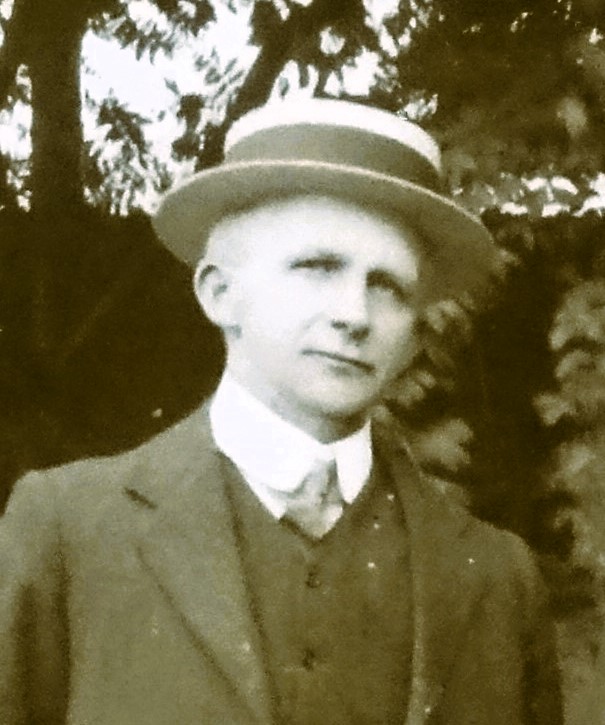
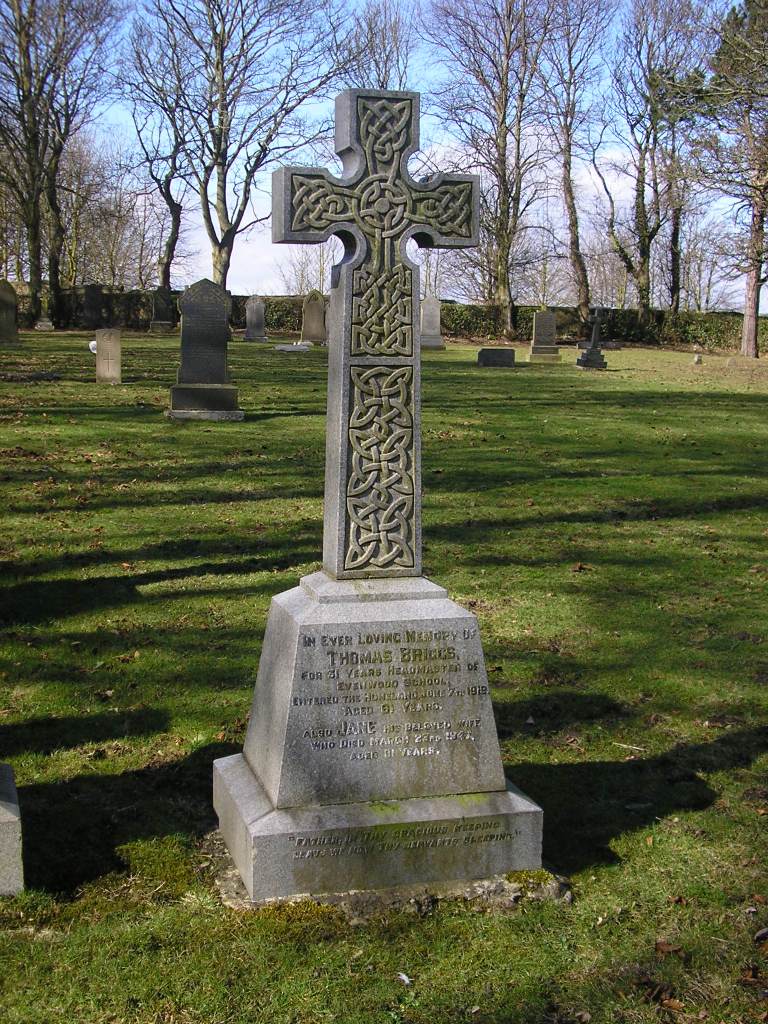
Above: Thomas Briggs and his headstone, Evenwood Cemetery
Jacob HUMES (1845-1908) Farmer. There is only one person with the name of Jacob Humes living locally. That is Jacob Humes, a farmer who lived at Etherley Dene. He seems not to have had any direct link to Evenwood but perhaps some of his farmland may have extended into the Evenwood and Barony Parish therefore he may have been able to stand as a councillor because of a property qualification. He topped the poll thus must have been a man of high standing. In 1894, he was a 49 years old bachelor. He was born in 1845 at Wigdon Walls (a farm between Woodhouses and Escomb) to William and Jane Humes. By 1861, Jacob’s father William farmed 220 acres at Etherley Grange and employed 4 labourers; by 1871, the farmland had increased to 348 acres, with 8 labourers employed; by 1881, the farm was recorded as 300 acres and by 1891, William, now 81 years old was recorded as a farmer at Etherley Dene. By this time, Jacob was 34 years old and unmarried. In 1900, Jacob married Alice Brown. By 1901, he was retired and living with his wife at Hamsterley. Jacob died in 1908, aged 62. He then lived at Prospect House, Hamsterley and left Alice, £5715 12shs 6d (£880,000 in today’s money).
Johnson WELCH (1848-1910) Colliery Official – under manager, Randolph Colliery. He came to Evenwood from the Wingate area between 1885 and 1887 and was employed as an under-manager by the North Bitchburn Coal Co. Ltd. when it moved into the area and, later, at its Randolph Colliery. The family lived at Charlotte Terrace then Randolph Terrace. He was an active member of the community being a Parish Councillor, a sidesman at St. Paul’s Church and a board member for the Bishop Auckland Co-operative Society between 1906 and 1908. In 1910, Johnson Welch was recorded as the land steward to the North Bitchburn Coal Company Limited. He died 20 May 1910, aged 62 and a reported 3000-4000 people attended his funeral. He is buried in Evenwood Cemetery.
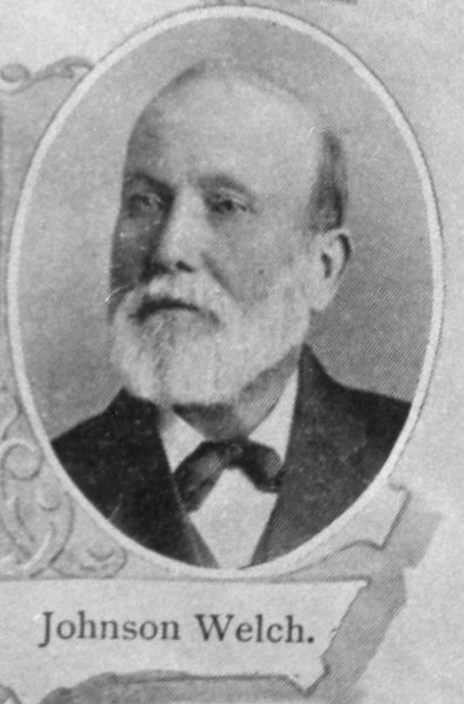
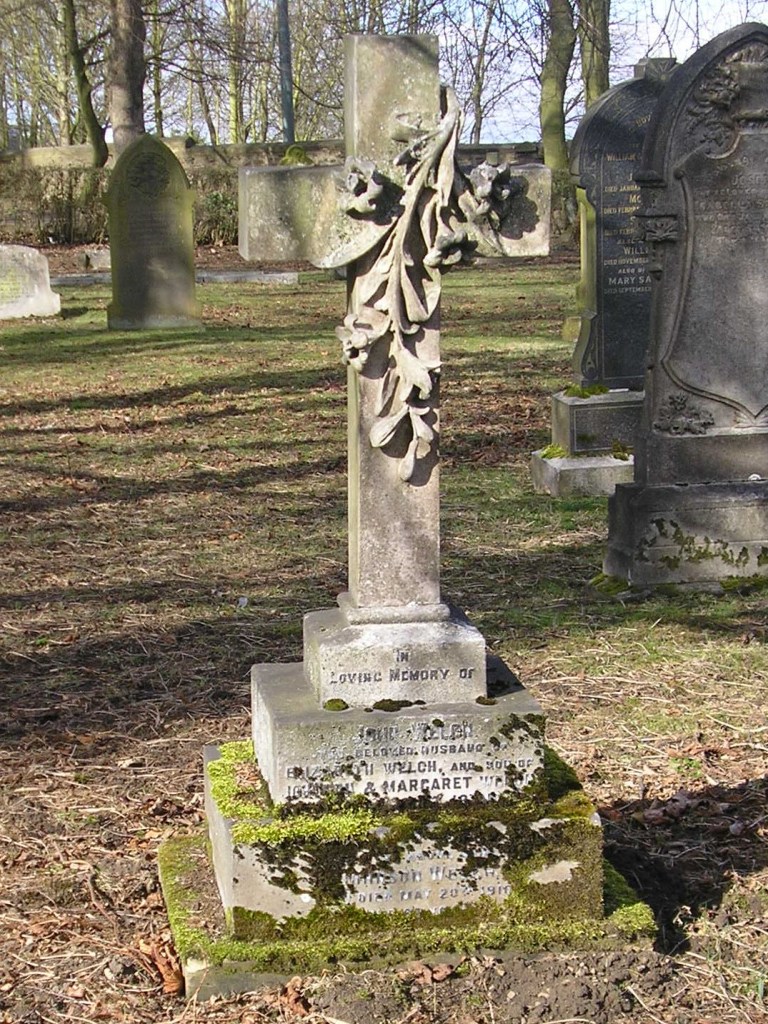
Above: Johnson Welch and his headstone in Evenwood Cemetery
Thomas HESLOP (1858-1923) Colliery Official – Manager at Randolph Colliery. He was employed by the North Bitchburn Coal Company Limited and from 1892 was responsible for the development of the Randolph Colliery and Coke Works at Evenwood. Thomas was born in 1858 at North Bitchburn and lived at Hunwick, initially working as a clerk then progressing to be a mining engineer. By 1901, he moved to Cockfield. In 1911, he was promoted to Chief Agent for the company and lived in a newly built house, Hilton Lodge, at Evenwood Gate. He took an active role in community affairs and represented the Evenwood Parish on the Auckland Rural District Council and Board of Guardians since 1894. Thomas Heslop married Sarah Walker of Cockfield in 1907. He died in 1923 aged 65 at Hilton Lodge, Evenwood Gate leaving over £3M (in today’s money) to his widow, Sarah. He is buried in Evenwood Cemetery.

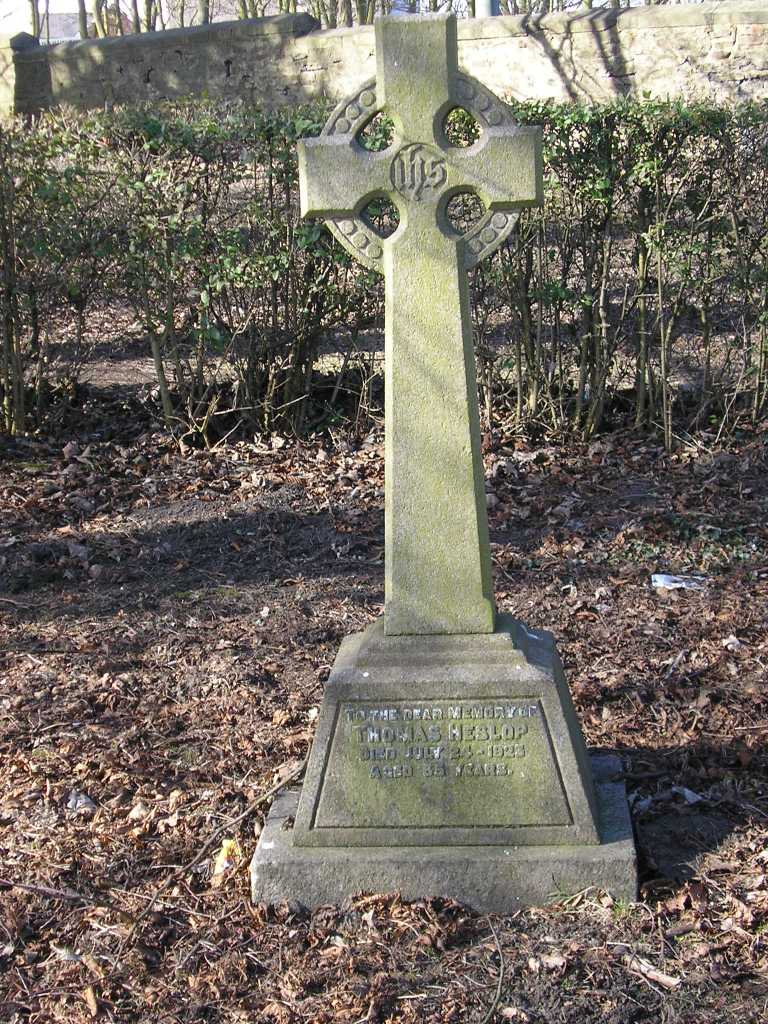
Above: Thomas Heslop and his headstone in Evenwood Cemetery
John COX (1858-1931) Checkweighman. It seems likely that John Cox was elected to the Parish Council as one of the representatives from Lands Bank. He lived at there and worked as a colliery checkweighman. He was born at Saffron Walden, Essex. Several families moved from Essex to the Butterknowle area to find work in the pits, so many in fact, that a terrace at Butterknowle was named Essex Row. It is likely that during the 1870s, a young John Cox joined this exodus from Essex. In 1878, he married Cicely Cook, a daughter of George Cook and granddaughter of Nathan Cook, 2 enginemen who had worked in the Cockfield area for many years. John seems to have married into a well-respected local family and as a checkweighman, he would have a high standing in the workplace. By 1894, he was about 36 years old and had lived in the area for approaching 20 years. By 1901, John was checkweighman (probably at Randolph Colliery) and secretary of the Randolph Institute, living at South View, Evenwood. In 1902, John Cox was recorded as the assistant overseer for the Evenwood District and in 1910, 1914 and 1921, he held this position and was also Clerk to the Parish Council for the Evenwood District.
Samuel VASEY (1865-1934) Shopkeeper. In 1891, Samuel was a grocer’s assistant working with his widowed mother, Elizabeth in the family shop in Evenwood together with his brothers Frederick and Arthur who were employed as a confectioner and draper’s assistant (respectively). By the time of the 1894 election, Samuel was 29 years old and a bachelor. He married relatively late in life, in 1915, aged 45. The shop in the Centre was known as the Central Stores. He died in 1934 and is buried in Evenwood Cemetery.
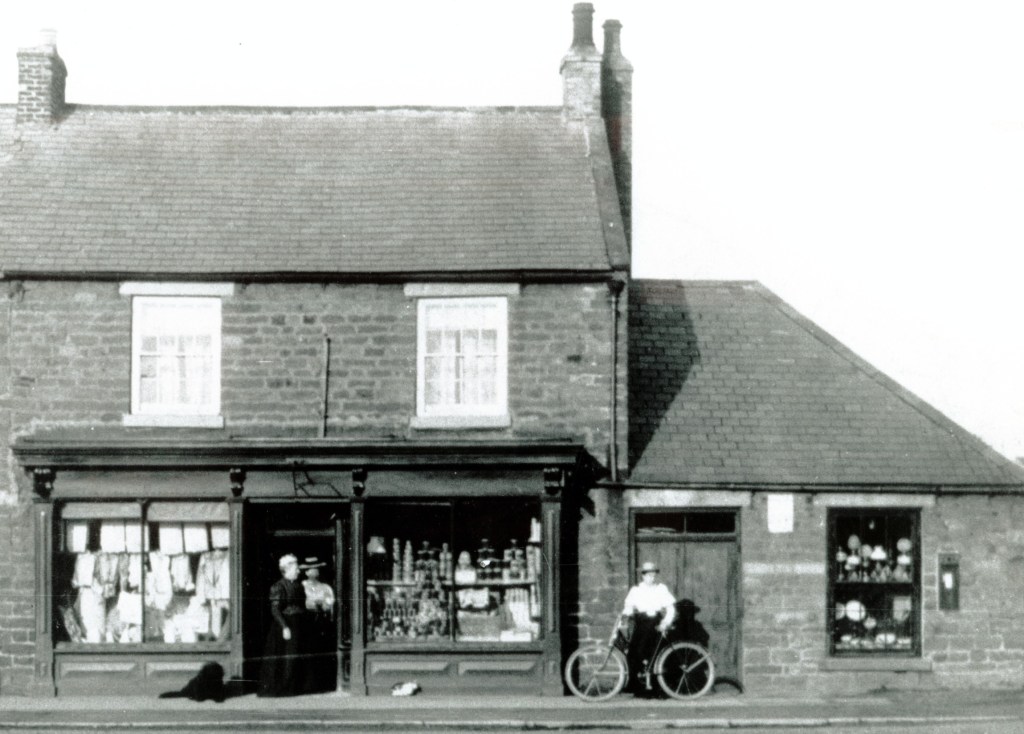
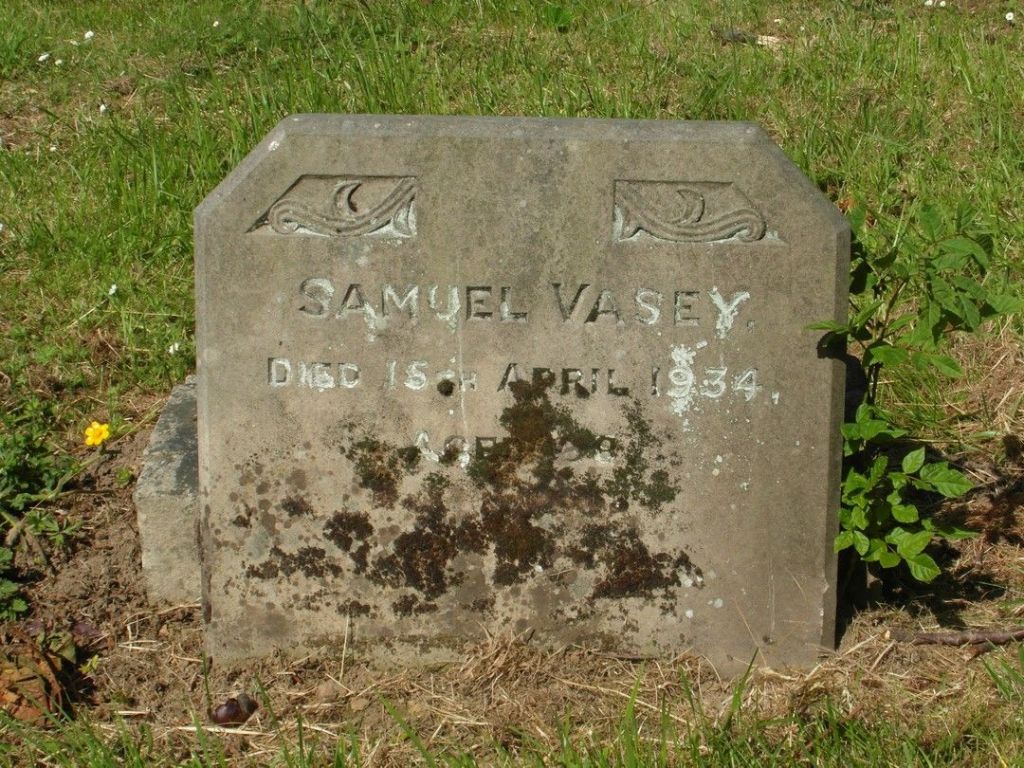
Above: Vasey’s shop, Central Stores, Evenwood and Samuel Vasey’s headstone in Evenwood Cemetery
William LONGSTAFF (1840-1896) Coal Miner. William was born at Stanhope, County Durham and moved to Ramshaw in the early 1860s and worked as a coal miner. He married Maria Place in 1864 and they had 8 children. Maria’s family lived at Gordon Gill and her father worked as a colliery engine driver. By 1894, the Longtaff family was well established at Ramshaw, living at Gordon Lane. William died in 1896, aged 56 so his duty as a councillor lasted only about 2 years.
David CARRICK (1858 – 1934) Coal Miner. By 1894, the Carrick family had lived at Ramshaw for over 20 years having moved from Cumberland. David was actually born on the Isle of Man. In 1880, David married Elizabeth Holmes from Toft Hill and they lived at Gordon Lane. David Carrick worked as a coal miner and was an influential member of the Primitive Methodist Church. A daughter Mary was born in 1892. By 1911, David Carrick was employed by Durham County Council as the school attendance officer.

Above: David Carrick
Michael BROWN (1828-1910) Colliery Official. He was born about 1828 in the Merrington/Chilton area, to Robert and Mary Brown, a farmer of 240 acres. In 1851, he was employed as a clerk. By 1861, he and his wife, Ann lived at Ramshaw and he was employed as a, “Colliery Agent.” By 1871, he lived at Lands working as a colliery agent and in 1881, he held the same position living at Lands House. By 1891, he lived at the Belvedere, Bishop Auckland and was recorded as, “Colliery Agent, Commercial Manager.” By 1894, Michael Brown had lived in the area for over 30 years, holding managerial positions at local collieries. All of his 7 children had been born either at Lands or Ramshaw. The 1901 census records him as 72 years old, a “Retired Commercial Agent” and living at Gordon Lane. He died 2 July 1910, aged 82 and is buried in Evenwood Cemetery.
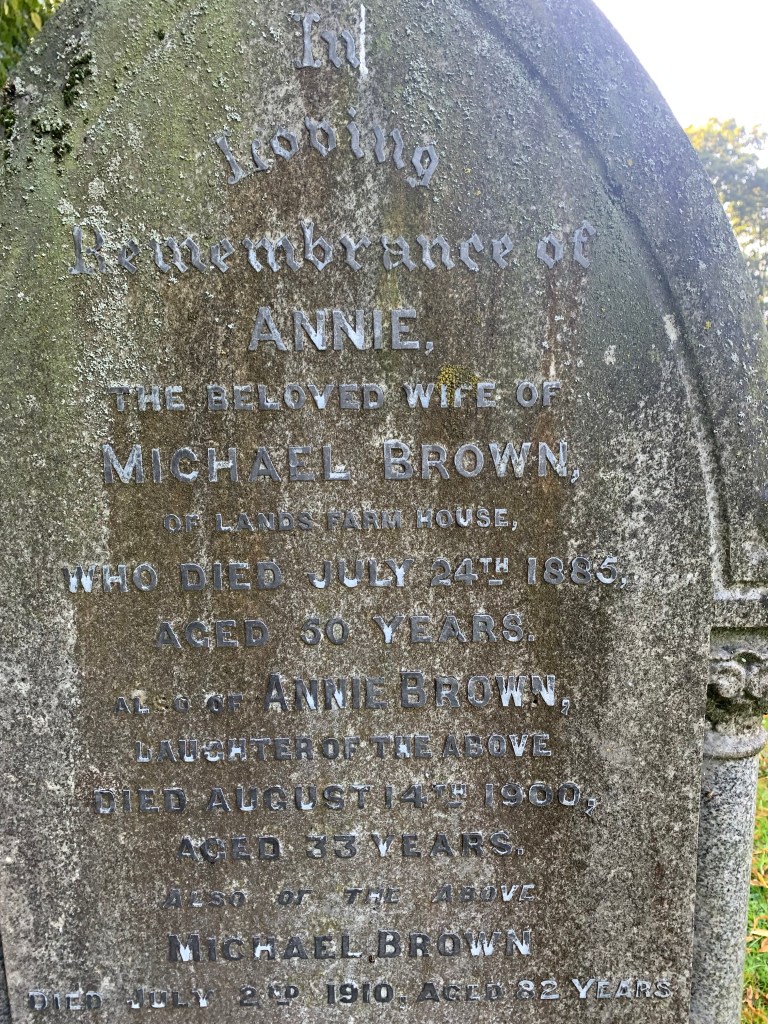
Above: The Brown family headstone in Evenwood Cemetery
William ATKINSON (1846-1921) Checkweighman. He was born at Appleby-in-Westmoreland. By 1861, aged 15, he lived at Bowes Close, Ramshaw with his step mother and worked as a “putter.” He married Esther Featherstone in 1871. She was a local girl, born at St. Helens and by this time lived at Thrushwood. By 1881, William and Esther lived at the Oaks with their 5 children. William was a checkweighman. In 1891, the family lived at Evenwood, William, now 45, worked as a miner. By 1901, he was a deputy. In 1911, William now 65 was recorded as a farmer living at, “Pond Side, Evenwood” with Esther and 3 of their children. William died 6 January 1921 and is buried in Evenwood cemetery.
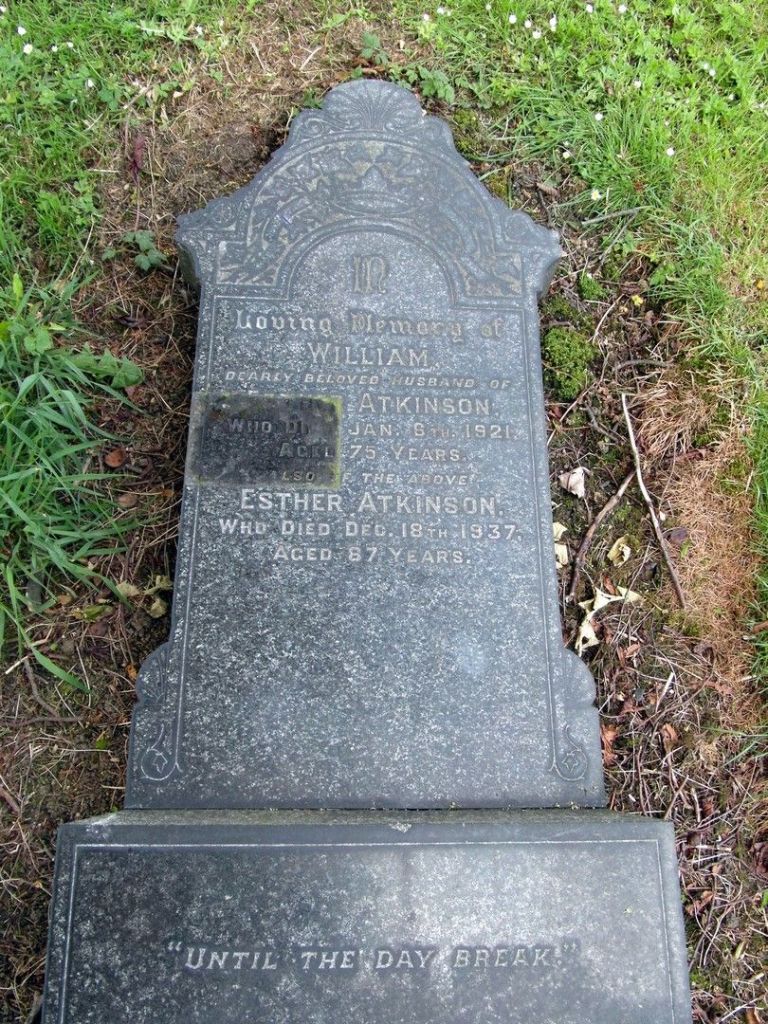
Above: William and Esther Atkinson’s headstone in Evenwood Cemetery
William BUSSEY (c.1860 – date of death unconfirmed) Checkweighman. He was born at Ferryhill, County Durham. In 1879, he married Hannah Raisbeck at Shildon. They moved to Evenwood about 1889, living at Chapel Street with their 4 children. William was a checkweighman. Their 5th child, Thomas was born at Evenwood in October 1889. Thus William was a relative newcomer to Evenwood but his position as checkweighman seems to have held him in high esteem with his workmates and the voters. By 1901, the family lived at Copeland with their 8 children and by 1911, William and Hannah had moved elsewhere, (location unconfirmed). However, their 10 children (Fred was born 1902 and Lily 1906) all lived at Copeland Lane in a 4 roomed house. Their ages ranged from 5 to 25.
Robert Michael BROWN (1858-1908) Colliery Official. He was the oldest son of the Michael Brown mentioned above. In 1886, he married Mary Bruce. By 1901, they lived at Ramshaw House Cottage with their 2 children, Frederick (aged 14) and Laura (11), both were born at Evenwood. He was employed as mining engineer. In 1902, Michael Brown was recorded as the manager to Norwood Colliery. He died in 1908 aged 49.
Joseph Wake ATKINSON (1844-1923) Shopkeeper. He was born 12 December 1844 at High Flatts, Chester-le-Street, the son of Robert and Elizabeth Atkinson. By 1861, the family lived at Etherley and Robert worked as a screen man and 16 years old Joseph as a screen boy at one of the local collieries. In 1867, Joseph married Sarah Raine and by 1871, they lived at Edge Lane with Sarah’s widowed sister and children. Joseph was recorded as a, “Draper.” Edge was the name for what we now know as Woodland. In 1881, Joseph was a Grocer and in 1891, a Draper & Grocer. By the 1894 election, Joseph would have been a respectable 50 years old shopkeeper of more than 20 years standing. He continued this business for the next 20 years and probably handed it over to his son Walter. Joseph Wake Atkinson died 2 July 1923 aged 80. Sarah died in April 1926.
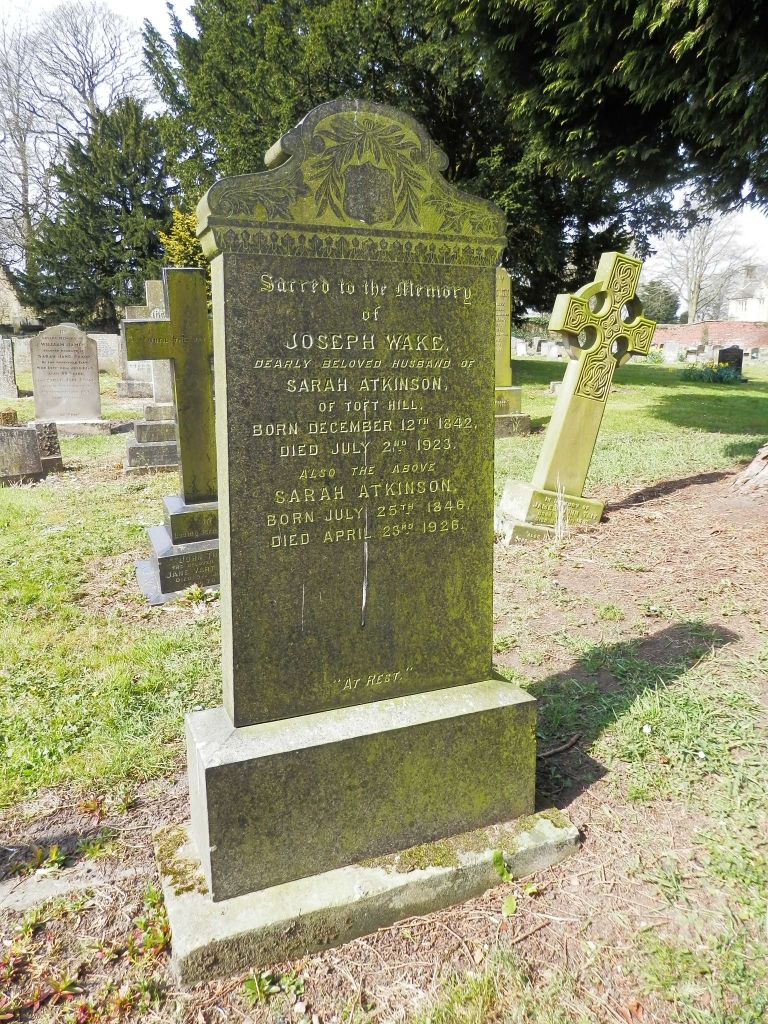
Above: Joseph and Sarah Atkinson’s headstone in the churchyard at St. Cuthbert’s, Etherley
Edward HAWELL – No person with this name living locally has been traced.
The 12 councillors including the 1 known co-opted representation from Toft Hill, comprised 4 colliery officials, 3 checkweighmen, 2 miners, 2 shop keeper and 1 farmer. Details of the 13th, Edward Hawell are unknown.
TO BE CONTINUED
 EVENWOOD RAMSHAW & DISTRICT HISTORY SOCIETY